This is the story of Meche, the woman and the girl, in Mexico city. As a women she returns for her father’s funeral and reluctantly deals with family and friends. As a girl, she struggles her awkward way through high school, ignoring homework and generally not getting along with people. Her family is dysfunctional, her friends are weird, and she learns how to do magic.
I struggled so much to like this book. It is well structured, and the writing is smooth and often very fluid. But lord, the characters are so trite and tedious. The main character, Meche, is sulky and nerdy and the same as every other math-obsessed, sulky nerd in every other teen book. The problem is, she’s the same as an adult! She’s utterly insufferable.
Her friends are the same– the poor kid who escapes toxic masculinity into books and gets called names for it. The chubby rich girl princess whose parents (gasp!) love her and don’t want her to fall in with a bad crowd.
Ugh.
It took me forever to finish this tiny book because I kept rolling my eyes and shaking my head at the stupid, stupid kids who were just as stupid and clumsy as they grew up. I liked nothing about a single character in this book, except that Meche’s father has pretty good taste in music.
The Stars Were Right by K. M. Alexander Reviewed of a TBRindr copy from the author.
This is a noirish murder mystery in a post-Lovecraftian apocalypse city, when “the stars aligned” and various nefarious beasties arose to send the world into chaos. Now, however, things are overall OK, and the world seems at peace. It just happens to be populated by various non-human sentient races in addition to traditional humanity.
The story follows a caravan master named Mal Bell who returns from a voyage only to end up accused of an increasing number of murders–all the victims being people connected to his life. He goes on the run from police as well as the murderers he tries to clear his name and survive to the next day.
This was a fun little noir in the classic “fugitive” tradition. The characters were well built and natural, and the dialog was very smooth. I was eager to follow Mal’s story to the end, and I was satisfied when I got there. This book kept the tension up and paced it right, and stuck a solid ending.
The Lovecraftian trappings, though, often struck me as just that: trappings. There are references galore to the mythos, and to other elements of classic weird literature, but in many cases they don’t really impact the story. The fundamental conflict centers around a reference to Arthur Machen’s work, but in many ways this same story could have been told about a cult in New York. This isn’t necessarily a bad thing, but I think a lot of fans of the Mythos works will feel slightly unfulfilled.
Apart from that, there are certain structural elements of the story that don’t work for me. The opening flashback strikes me as mildly confusing, because it’s actually a flashforward to something that happens in the first quarter of the book. However the book had no typos that I noticed, and the overall structure was pretty tight.
I enjoyed the book, and I was satisfied in the end. That’s all you can ask for, in the end!
I’d like to thank the author for the opportunity to read and review!
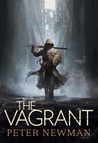
The Vagrant is a silent man, a wanderer with a magic sword, a baby, and a goat. This is the story of his journey through a post-Demonic apocalypse world and the family he starts to build in it.
I loved this book, in a way that kind of astounds me. I bought it on the recommendation of its similarities to Dark Souls, and that recommendation was spot on. The core idea, the feeling of a world and powerful entities within it caught in decay and decline, is evoked perfectly here, and at the same time the glimpse into how people adapt to, and sometimes even embrace, corruption feels so unspeakably real. At the same time, the bleak world is studded with both hope and humor, for a perfect balance of darkness and light. And more than anything, the Vagrant is a good man, a decent man, and it shows in his every action and reaction.
The characterization in The Vagrant is outstanding. I can only assume that Peter Newman is a truly gifted observer of the world, because the way that every character in the books feels true to the core could only come from heart-deep understanding. Even the goat, THE GOAT, is a fully fleshed character while still remaining truly and utterly goatlike. It’s amazing. And Vesper, the baby! She’s perfect. She’s a baby, and a person, and full of character it’s almost painful.
It’s almost shocking, really, how human this book is considering how inhuman the world it depicts is. The people and land are growing ever more tainted by the Demonic invasion, and even the “pure” humanity in the north is wrapped in eerie light of entities that are anything but human. Yet between these two poles, people get on with their lives as they have ever done, and it’s beautiful in a way. There is badness there, of course, but there is also the Vagrant and his simple decency, wrapped up in the power of a sentient, unstoppable sword.
It’s a heady mixture, and one I can recommend wholeheartedly to fans of adventure, action, and human drama alike.
David Mogo, Godhunter by Suyi Davies Okungbowa Review of a free Netgalley Review Copy.
David Mogo is a hunter of godlings, a cleaner of messes made by the minor deities running loose in Lagos, Nigeria after an event called the Fall, when Gods and Goddesses of Africa’s pantheon(s) come to earth and start raising havoc. He himself is a demigod, the son of an unknown goddess who possesses strength, stamina, and an attitude to match. His mentor, Papa Udi, is a wizard and a man of few words, and together they begin to take on stronger gods who plan to take over…The world! (Or maybe just Lagos. Or Nigeria? Plans change).
This was a very fun read. The action is meaty and fast, the overall story engaging, and the characters unique and convincing. But for me, and I think for a lot of readers like me (American fantasy fans) the novelty of the setting, and the richness of the language involved, is what is most appealing.
The story and pacing are not incredibly unusual for this kind of urban fantasy–a damaged protagonist possesses extraordinary powers and uses them to battle beings with even more extraordinary powers in a modern setting in a real place. But the details are so much more inviting in this book.
For one thing, despite being an actual demigod, David is immensely human. He is unsure and hesitant at times, but driven by compassion and a desire to do good. He is not your usual urban fantasy banterer, either. He is sincere, if emotionally conflicted, and it’s refreshing.
The people around him are also complex and involved in their own stories, and things happen around the protagonist without him knowing, making the world seem that much more three-dimensional. And what a world!
I know almost nothing about Lagos, but this book brings the city to life in a way that only someone who truly loves it could. It is flawed (there is a shocking amount of feces mentioned) but vibrant, despite its fallen state in the book. I want to know so much more about the city and its people now.
The god characters are also a fun take. They appear to come from the Yoruba pantheon, based on the names, and their natures are both familiar (gods of war and birth are not uncommon in many pantheons) and new (their characters and expressions are unlike the more familiar European pantheons in many ways). I genuinely felt like I was experiencing something new every few pages, which has gotten to be a rare experience as I get older.
And then there are the languages!
This is where the book really shines. David, the protagonist and POV, uses fairly standard English. However, the characters around him use a variety of languages that you would actually encounter in Lagos. Papa Udi speaks Pidgin, which I imagine many American or European readers will find challenging. Some characters speak Yoruba, which David does not–so the words are left untranslated and an enigma. There are names of clothing and cars and places I have never heard of, and I find it almost thrilling to have that kind of linguistic adventurism in a book like this.
This is not a high-brow work of literature. This is not an essay about African culture. It’s an urban fantasy, a fun afternoon-snack book, that still doesn’t handhold its readers through linguistic challenge. I love it.
For those worried about that challenge, though, it’s OK. The book is clear enough that you can get through it fine without puzzling over the Pidgin or translating the Yoruba. You can just sit back and enjoy the ride as David battle gods, gets to know his roots, and becomes an even bigger bad-ass.
Thank you to the publisher and to Suyi Davies Okungbowa for the chance to read this book!
Quill by A. C. Cobble I was given a review copy by the author.
Quill is a story set in a different universe’s version of the British Empire, one that seems very familiar, but is wholly different. It happens in a world with magic, and spirits, and also airships and trains. There are guns and bombs, and sorcerers and druids, too.
It is the story of nobleman adventurer Oliver Wellesley, the Cartographer of the series title, who is very far down in the line of royal succession so he is merely rich and aimless, and also apparently a sex-magnet. He is finagled into investigating a murder which smacks of the ancient, forbidden art of sorcery, and is partnered with beautiful, sex-hungry (this comes up a lot) sorcerer-killer priestess, Sam No-last-name.
They jaunt all over this not-at-all British Empire (which pays little heed to the true costs of empire and colonialism) and meet sorcerers and hedge witches and lustful heiresses and, generally, spill a whole lot of blood.
It’s an adventure. It’s a romp. It’s two-fisted, leather-pantsed, drunken alley fighting fun.
There’s a lot to recommend this book. It’s got originality, it’s got some very nice structural planning (the alternating viewpoints work very well, and the character tics turn out to be actually quite meaningful), and the dialog isn’t weighed down by hyper-witty banter. People who like airships and hard-punching women will dig the story.
The pacing was nice, and never felt draggy either.
The writing is solid, if a bit too in love with certain turns of phrase (the euphemism “sanguine fluid” for blood appeared a few times, and bothers me still), and generally well-edited. There are more typos than you might find in a pro publication, but far less than in most self-pubs, so it’s on the good side. I was pleasantly surprised by the overall quality of the prose, honestly. It’s better than, say, Sanderson in many respects.
There are a few plot tunnels but they’re really not that important overall. It’s the kind of book that you should go into for a fun read, rather than looking for a deep reflection on human nature or what have you.
I liked it. I’d like to read the sequel, honestly, since the end kind of went for a semi-cliffhanger and I like these characters.
Thank you, A. C. Cobble, for the copy, and the fun read!




 Jim Rion - Translator & Writer