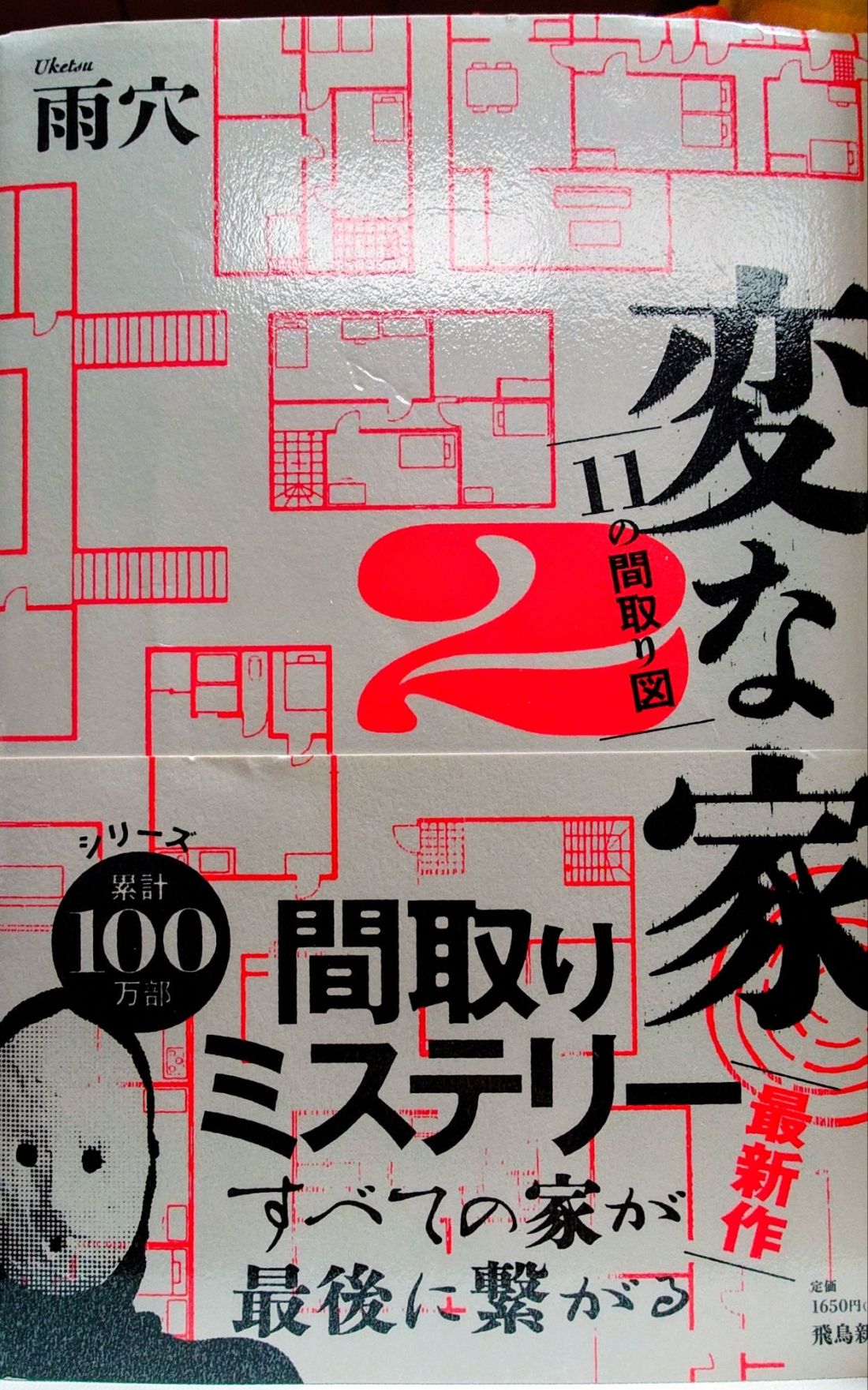
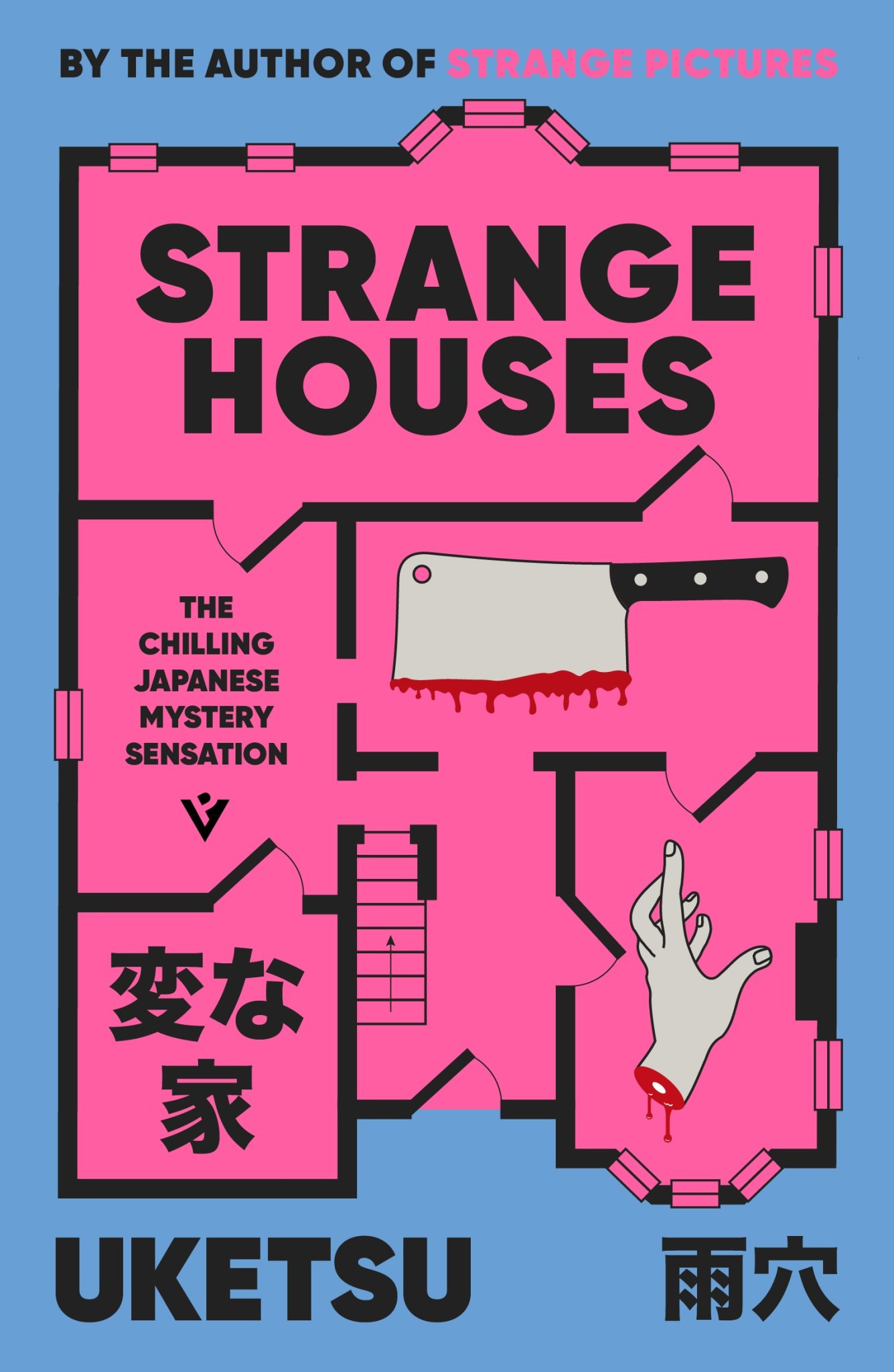
Strange Houses is Out Today in the US

The cover of the US edition of Strange Houses by Uketsu. It is salmon colored with an image of a house floor plan. In the bottom right corner is a picture of the author, Uketsu, wearing a white mask. In the bottom left it reads "Translated by Jim Rion."
The US edition of Strange Houses from HarperVia.

June 3rd is the official release date for the US edition. It is June 3rd in Japan, so I’ll go ahead and announce it now, but your time zone might demand you wait a bit. Apparently the UK pub date has been listed as July 3rd? That strikes me as odd… Anyway.

Confusingly, the original Henna Ie was Uketsu’s debut work in Japan, while Henna E was his second. Anyway, both are now out in English and I hope people like this new addition. I have mentioned this before but I feel like Strange Pictures is a better written, better structured novel, which is natural as Strange Houses is a debut work written as an extension of a short video (basically the first chapter of the book) at the behest of a publisher.

Still, I really like this one. There is such creepiness in it, such oddness, that I find myself drawn back to it sometimes.

I’ll write something a bit more in depth about the translation process later, when people have had a chance to read it, but for now, just know this is a shorter work, with a weirder climax, than Strange Pictures, and worth investigating for people who like dark, bloody secrets and weird family histories.

If you’d like to buy this one, here’s a UK link (releasing July 3rd. WEIRD): Strange Houses on Blackwell’s

And here’s a US link: Strange Houses on Bookshop.org

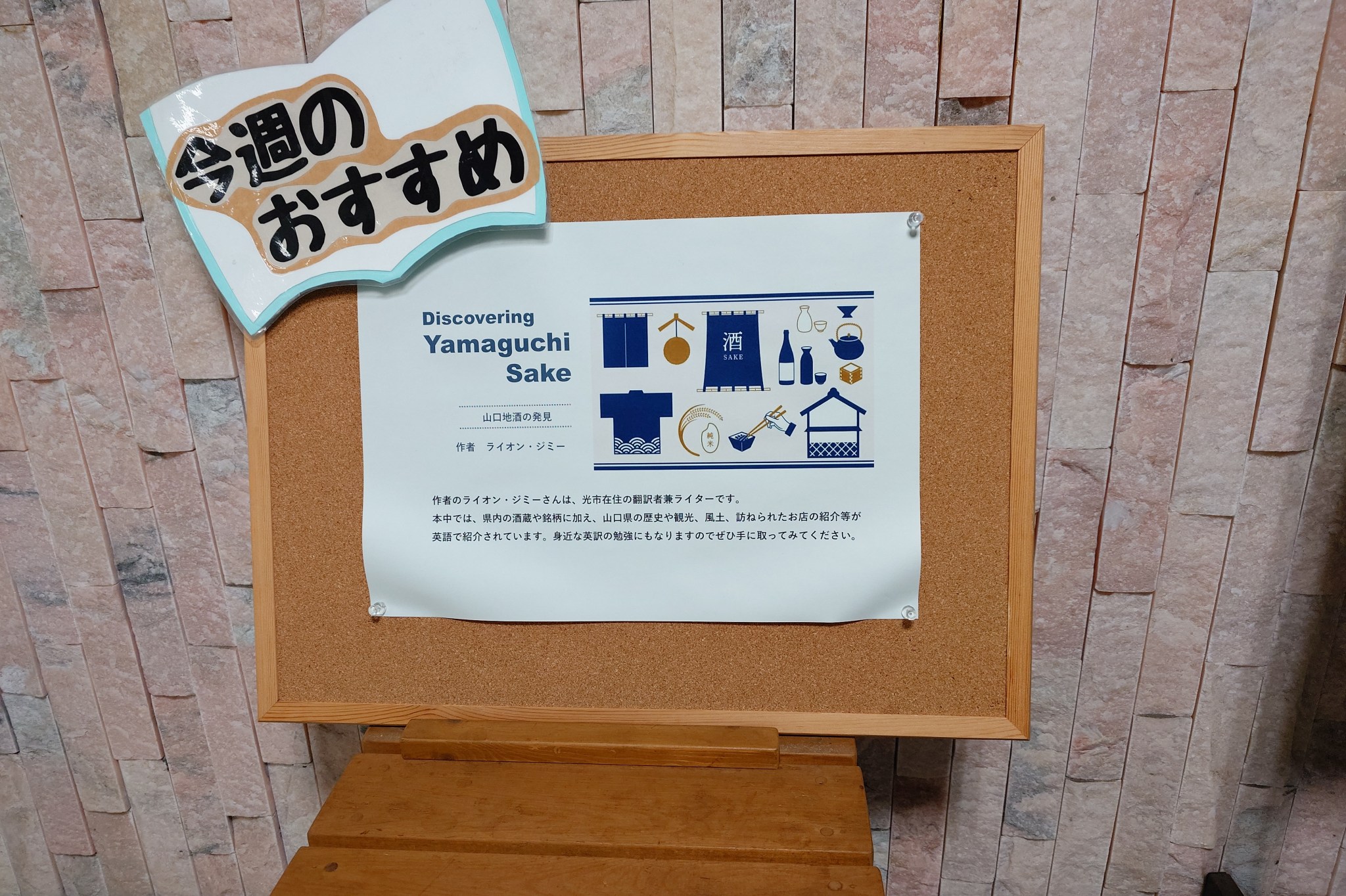
I’m in the library

Figuratively as well as literally.

A tabletop display of The Devil's Flute Murders and the U. S. And U. K. Versions of Strange Pictures, along with a photocopy of a newspaper article about the translation of Strange Pictures.
My books on display.

When I got a whole bunch of comp copies of both editions of Strange Pictures, for more than I knew what to do with, the first place I went was to the library to see if I could donate some to put on their shelves.

Hikari Public Library is small and serves a relatively limited Japanese community, so there isn’t a lot of demand for English materials, but the staff not only accepted the books, they celebrated them. They were openly excited to get copies after seeing the local newspaper article about my Uketsu translations. I’m not sure I can explain how good that feels.

I’m one of those people for whom libraries are borderline sacred. I have been a ravenous reader since I was in first grade, and there were no bookstores in my small town. So, I practically lived in the library. The librarian, Mrs. Beard—who was almost laughably stereotypical librarian: little old lady in glasses on a chain—knew me by name and never tried too restrain my reading by age or “difficulty.” She just helped me find books to love.

That library was utterly foundational to who I am. It’s where I discovered Stephen King. Where I explored art and history and parts of the world that I never dreamed that I might actually one day get to see. It was where I started to see stories as more than just words on a page, but a way to live other people’s lives for a time.

I really could go on and on. The smell of all those old books, the quiet and cool spaces where you can just read and read as long as you want… You know, I’m sure, for yourself.

And now I’m right there on the shelves at the library. How lucky I am too live this life.

Book Review – The Philosophy of Translation

The cover of The Philosophy of Translation. It is a white cover with a black asterisk-like mark. The title is written in white on the black. The author's name is written in black at the bottom.

The Philosophy of Translation
by Damion Searls
Yale University Press

I learned about this book from a post on Bluesky, which included the a quote about translation as reading that sparked something in my brain. I had to read more, because I personally view translation as exactly that: I read the text in Japanese, understand it to the best of my ability, and then write my understanding in English. Here, I thought, was someone who not only understood translation the way I do, but who had a career’s worth of experience and the academic training to articulate it in ways I did not. It filled me with hope that I was perhaps not utterly unfounded in my approach to this work.

When I did get my hands on the book, I was not disappointed.

Searls divides this book roughly in half. Indeed, you could say the first half is “philosophy,” and the second is “translation.” He begins with a historical review of theories and approaches to translation, from the Latin roots of the word itself to German Romanticist views of language. He does get quite deep into the weeds, with elevated language and heavy ideas, but he clearly explains not only the meaning and importance of the language an ideas, but why he’s engaging with them.

It’s a refreshing style of academic book that not only maintains rigor, but opens the gate to those without steeping in the particular obfuscated style that plagues academic writing. It is challenging while remaining accessible, in other words.

But most important of all, it is thoroughly rooted in actual translation. Searls brings all the theoretical discussion back to what real, working translators do, not only in the literary realm but in the practical, business-focused work that most people use to pay the bills. The balance is delicate but solid, which is what is most impressive about the book.

All that being said, what takes this book from being a well-written academic treatise on translation and something that I would recommend to anyone even tangentially involved with translation as a practice (academics, budding translators, authors whose books are being translated, game developers looking into localization, the list goes on) is how it reframes the act itself in new words and ideas that just make beautiful, crystalline sense.

Rather than focusing on the common ideas of “fidelity/faithfulness,” freedom, or even accuracy, he talks about translation as an act of reading.

When I’m translating, I’m just reading-trying to pick up on as much as I can of the original utterance, its meaning and sound and allusions and tone and point of view and emotional impact. As I register what I feel is most important and indispensable, I try to write that indispensable thing in English; then, in revising, I reactivate the reading part of my mind and try to anticipate as much as I can of what an English-language reader with no access to the original will pick up on.

(page 224)

This is really the crux of the book, though the discussion of translating “utterance” rather than “words” also rings true. On page 107, for example, he says “To think of what we translate as ‘utterances’ sweeps away a huge amount of lexical analysis, because we don’t translate words of a language, we translate uses of language.” Thus, issues of “accuracy” are less important than issues of “communication.” When we translate, are we bringing the message/impact/effect/resonance that was actually vital in the original to the new audience?

Which, again, brings us back to reading. Because it is only by reading that the translator knows what is vital in the text, what Searls sometimes calls the “force” of it, to be able to bring it to the new audience. As such, rather than faithfulness to any monumental, immutable “original,” translation is always a question of how the translator read, and how they managed to share their reading with their new audience.

[…] [W]hat’s important to preserve depends on what the translator finds in the original-how the translator reads. Everyone thinks … that they’re “following the original,” but they’re working from different originals: each is trying to produce a text that matches, or does the same as (has the same force as), not the source text but his or her reading of the source text. Even the least literal translations, the most wildly divergent “imitations” or “reimaginings,” try to stay true to whatever ineffable aspect of the original’s vibe the writer of the new version feels they are taking up. That is why there is no objectively best translation, one that is “closest” to “the” original, as talk about faithfulness falsely implies.

(p. 195)

One of the things that has always struck me about translation is how every act of reading is different, no matter the language. Every person brings their own filters to reading (and listening and talking and writing). I am no different. So, whenever a translator experiences a text then takes that experience into a new language for new readers, inevitably, that new text will be colored by their filters. Our job, then, is to expand those filters, to be able to grasp as much of the text as we can, to bring all of that with us when we translate. But also, we need to accept that we will never encompass everything that the original was or potentially could be. All we can do is be the clearest filters we can. Searls, of course, puts it much better:

[W]hat I think a translation should be: Attentive to how the translating language works, overriding any demand for “equivalence” with how the original language works. Keeping in mind and keeping to heart the interests of readers, the author, and the author’s ideas. (This, by the way, is how we use the word “interests” in English.) Feeling some responsibility to enable, or at the very least try to enable, the original author and their new readers to interact with one another at their respective best. An act of care, and ultimately love.

(page 194)

And really, I’m not sure I can add anything else.

There is much more to this book. His formulation of translation in terms of arcs/arrows is fascinating, as well, and I think the practical examples are all excellent sources of education and rumination.

I honestly can’t recommend it enough to anyone even remotely interested in the theory, work, and indeed love of translation.

Translating Strange Pictures

Strange Pictures, my translation of 変な絵 by Uketsu, was published January 16 in both the United Kingdom and the United States. The two versions are the same translation but tweaked for local audiences a bit. Interestingly, the UK version is being marketed as a mystery, while the US is leaning more towards horror. Both are perfectly correct, because Uketsu calls himself a horror writer while clearly using mystery styles and tropes in the books.

The UK cover for Strange Pictures from Pushkin Vertigo

With the release of this book a bit behind us, I’d like to discuss a couple of issues that I dealt with in the translation. Before we go on, let me just say that some of these are spoilery, so PLEASE. If you haven’t read the book yet, save this post for after that.

US cover for Strange Pictures from HarperVia

**Spoilers for Strange Pictures Ahead! You have been warned!**

The first tricky issue that comes to mind when I look back on translating Strange Pictures deals with the second chapter, centered on young Konno Yuta. Within the story, Yuta is learning to write his name in Japanese characters, “kanji,” for the first time. That stirs a memory of seeing his mother’s gravestone, and he starts to draw that gravestone, but changes his mind and converts it to a picture of the apartment building where he lives now with his grandmother—his “mama.” That picture starts out with a large rectangle in which he begins to draw his family name in Japanese: 今野. A fellow student later tells the teacher she saw him draw “A triangle inside a rectangle.” Looking at the first character, of course, you can see the triangle at the top.

Now, how do do all this in English? Well, I kept the Japanese. Indeed, since the reader doesn’t need to READ the Japanese, only see the shape of the character, it seemed obvious. Particularly since the child wrote his name in crayon on the picture, so it’s already evident to readers. I’m hoping that it doesn’t confuse anyone. But we shall see!

The second issue was, well, trickier. It involves the name of a blog that comes up in the very first chapter, and gets a call back at the end. The blog in Japanese is 七篠レン こころの日記, Nanashi Ren kokoro no nikki. It translates to something like “Nanashi Ren’s Diary of the Heart.” The problem is the personal name: Nanashi Ren. This is both a pun, as “Nanashi” can also mean “No-name” AND it turns out very late in the book to be a little trick related to the core mystery.

The trick is complex and based on the fact that in Japanese, there are three writing systems. Kanji are Chinese characters, complex figures that can have both a meaning and a number of “readings,” meaning the pronunciation attached to them. Then there are hiragana, a phonetic system used to write out the readings of words, without the kanji there to carry extra meaning. Finally, there are katakana, a similar system to hiragana that is visually different and used for, well, various purposes to stand out from hiragana.

Hiragana themselves are made of up a few strokes that come together to form characters, but can also sometimes resemble other characters.

It works like this: In the original Japanese, the actual author of the blog is Konno Takeshi 今野武司、or こんのたけし in Hiragana. He creates a pseudonym by breaking the elements of those hiragana up into parts that resemble other hiragana or katakana, mixing them up, and making a new name to which he matches a kanji. There’s a diagram in the original that makes it easier to parse, but it’s super complex and OBVIOUSLY impossible to do in English.

I mean, to be honest, it barely works as a “trick” in Japanese. No one would ever figure it out without being told, because it’s just too complex and arbitrary. It also only fits part of the actual title in Japanese. It’s one of those things that seems incredibly clever after the fact, but nothing within the book itself could guide readers to it.

So, after hours, days, weeks of going back and forth over it, I finally decided with the editor at Pushkin, and Uketsu’s blessing, that we should just use an anagram. Then, having decided that, we couldn’t find any satisfactory anagram using Takeshi Konno. At which point, the editor at Harper Via chimed with with the idea of using some other Japanese name, and with Uketsu said OK. So, that’s how Nanashi Ren Kokoro no Nikki written by Konno Takeshi became Oh No, Not Raku! written by Haruto Konno.

My Work Year in Review

As I sit here typing this on December 31, ostensibly a holiday, I suddenly realize that it might be depressing to be talking about work. At the same time, I both love my job AND don’t honestly work that much (weekdays, 9-3, lots of days out for location visits, interviews, etc.). So, I’m not too fussed about it. I get plenty of time to mess around.

So, anyway, here is my 2024 working year in numbers:

  • Rough number of Japanese characters translated: 645,000
    • (Rough because some projects were more package-based than character based, and one novel overlapped New Year.)
  • Articles written: 15 (12 in Japanese)
  • Translation proposal packages written for publishers/rights agencies: 6
  • Novel translations completed: 3 (including the one that started in 2023)
  • Ceramic artists interviewed for book: 8

And none of that includes the hours spent taking pictures for books/articles, or reading for the job, or—most important of all!—the people I met. The numbers also don’t reflect the kind of seismic change that has happened in my work as I have become more plugged into the publishing industry. I’m now spending much less time on random corporate websites than I did last year (huzzah!) and more time with artists and creative people of all types. Again, Huzzah!

It has been a good year, professionally, and I think one that has sown the seeds for more good years to come. Fingers are crossed, wood is knocked on, salt is thrown over the shoulder, and every other good luck charm that might help it be so is invoked.

Personally, well, the world is what it is, but we’ve weathered things pretty well. I had a bad summer for a couple of reasons, but in general the Rion family in Japan has been blessed with pretty decent luck. I hope that 2025 is better, but I’d settle for roughly the same.

Anyway, I hope everyone has a lovely New Year, and wish you the best in 2025. To finish up, I am indeed curious. How were things for you in 2024?