
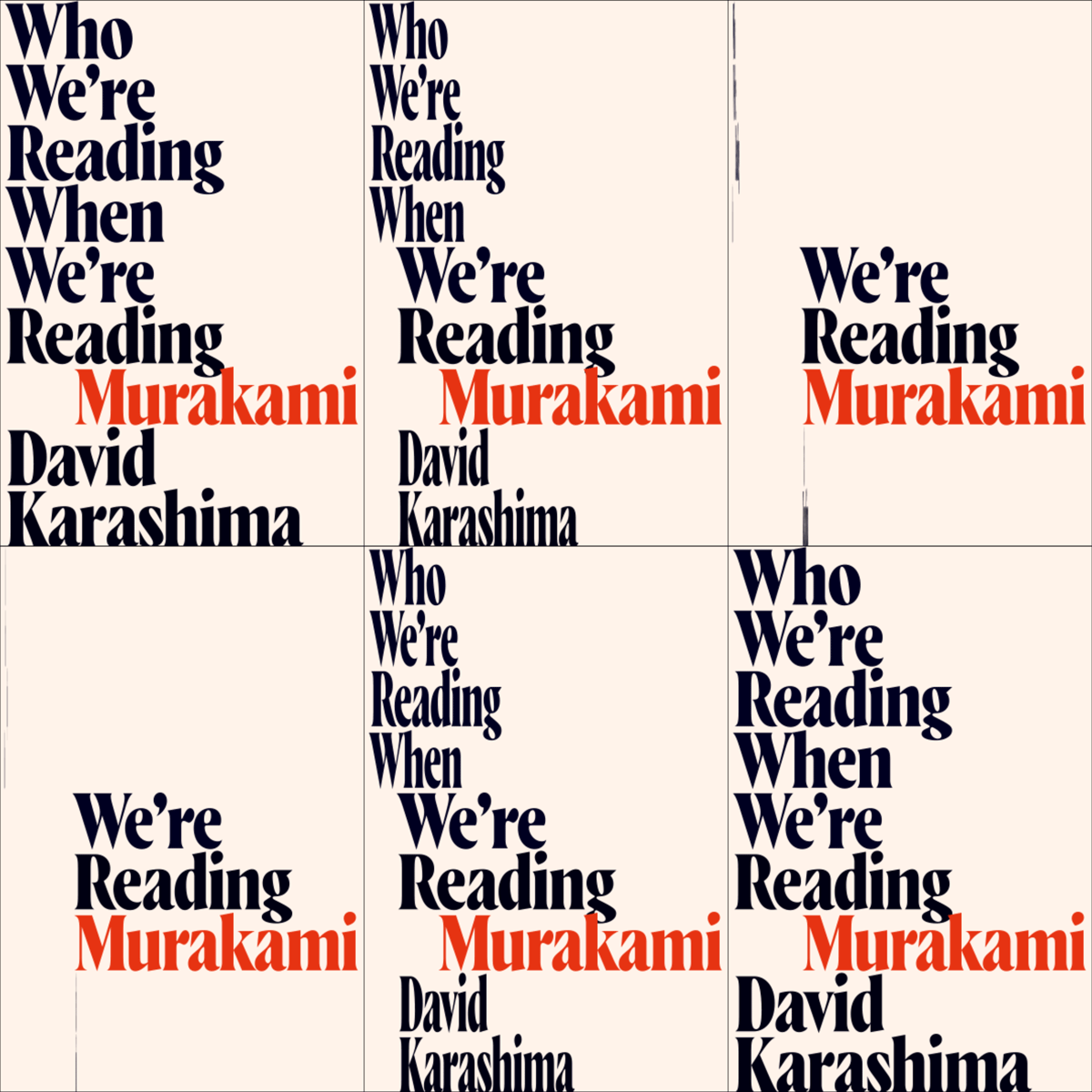
Who We’re Reading when We’re Reading Murakami
by David Karashima
Soft Skull Press
I just finished this book after picking it up based on a passing comment by Matt Alt on social media. I did so not because I am particular fan of Murakami—I’m not—but because I wanted to actually know more about the issue hinted at in the title: how the personality and identity (the “who”) of the translator impacts the end translation.
To sum up, this very well researched and written book follows the whole process of how Haruki Murakami went from fresh new Japanese novelist to global literary darling. Karashima tracks down and talks to all the editors, translators, designers, agents, and the author himself to look at how Murakami’s work up through Wind-Up Bird Chronicle ended up in English.
The result is a really compelling example of how intentional and designed such a career is. Please don’t take that to mean I don’t believe the success is unwarranted or undeserved; I make no such judgment at all.
But it is clear that what people read from Murakami in English has been very tightly controlled by a large cadre of peripheral figures. They selected stories, they cut text, they created the legend. Which is not a surprise to me at all, having been a translator working on pieces for publication.
Which brings me to my only grump about this book: I’d very much like a bit more focus on the question in the title. I want more depth on the people. In parts, I want more concrete looks at how specific choices the individual translators made could influence a resulting literary work’s reception. There are tantalizing tastes of this, with a few examples of people bringing up translation choices, but I’d have loved more.
In all, though, this strikes me as a valuable tool to demonstrate the realities of the translation process to a reading public.
It’s well worth a read to anyone interested in Murakami, translation for publication, outer international fiction.
 Jim Rion - Translator & Writer