Review – The Night That Finds Us All

I think I have to finally admit it. I’m a John Hornor Jacobs fan.
The first book of his I read was Southern Gods, a sweaty, gritty myth of music and cosmic horror that I think I picked up in a bundle not long after its 2011 release. I remember enjoying it, and when I revisited it in later years it’s held up.

But I didn’t really plug into him as a name to watch for until I read The Incorruptibles, his alternative history/dark fantasy book of an infernal-powered Roman Empire in the Old West that he into a trilogy.

Since, I’ve enjoyed all the books of his I’ve read (which is all of them but The Twelve-Fingered Boy trilogy), especially A Lush and Seething Hell. There is something about the weight of his prose that makes it feel rooted deep, in history and myth and humanity, while still just being fun.

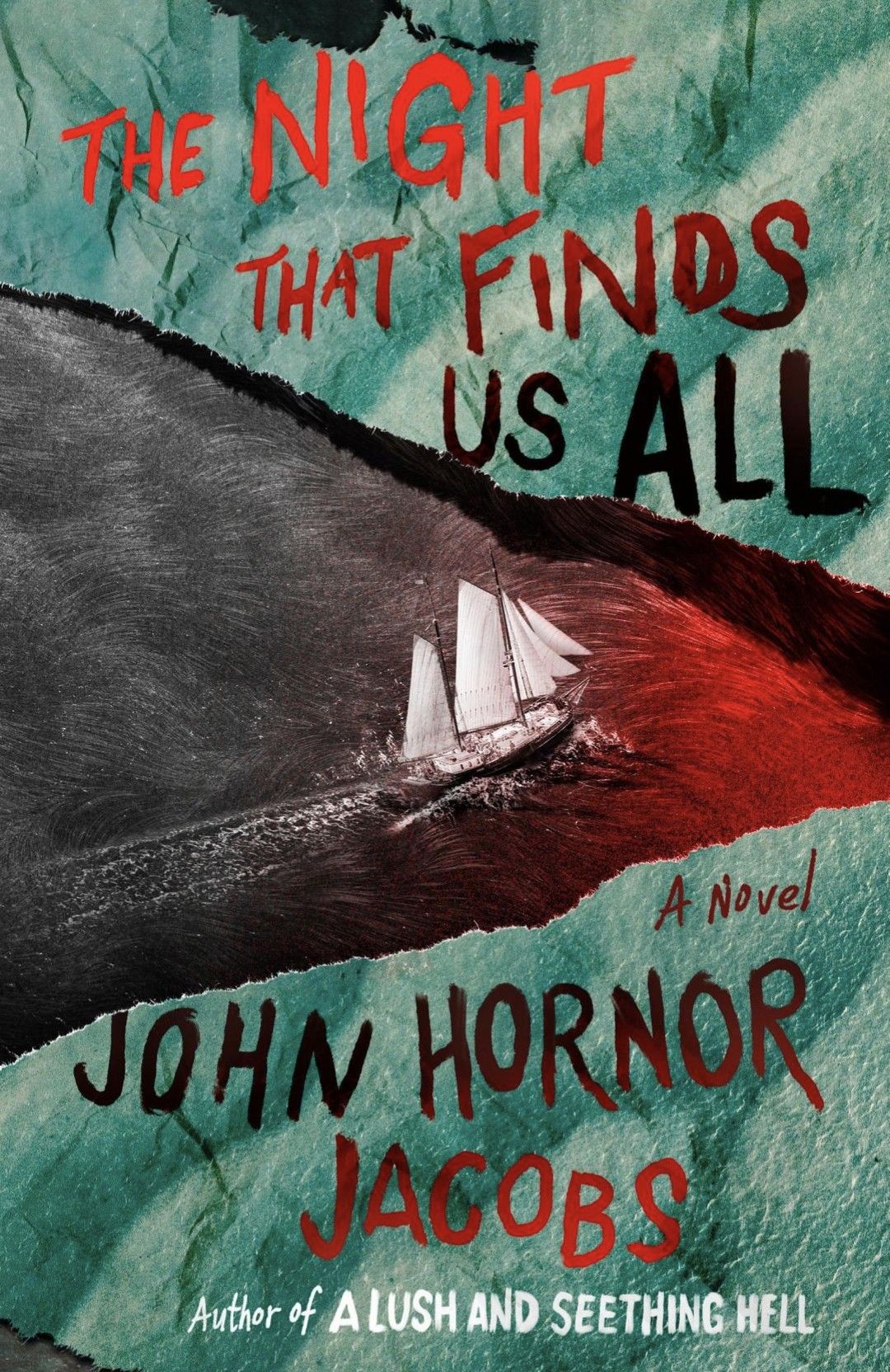
And so we come to his 2025 ocean-going cosmic horror The Night That Finds Us All.

It’s about Sam Vineworth (known affectionately as Sam Vines, which I would have bet was a Discworld nod but would have lost, according to the author), an alcoholic fuckup but he’ll of a sailor, recruited by a friend to help crew a century-old sailing ship from California to Britain.

The ship is, of course, much more than it appears. It has a shadowed history with more than a bit of blood, and it soon starts to prey on the crew.

Once again, Jacobs brings unpretentious flourishes of near-poetry.

I found myself thinking this voracious ocean came before mankind’s puny endeavors and will remain after, in some near future, eroding the shores and drowning the land and taking all our works with us, dragging them down to the bladderwracked mansions beneath the sea.

The bladderwracked mansions beneath the sea. God, what an image. Or…

The sky kills all the sea’s dreams.

This masterful imagery is matched by what I can only a scholar’s depth of nautical knowledge. Mizzens and reef sails and knots… It’s all here, and I’m not sure I understood it but I also duct think not understanding hurt at all. Because nothing hinged on those details, they only added in establishing that Sam, drunken mess that she is, knows her shit on a boat.

But be not afraid, this isn’t Moby Dick, with page-long paragraphs and endless digressions on marine wildlife. It’s a journey into a dark, cursed netherworld that’s full of dread and scares.

Another banger, in other words.
Book Review – The Exes

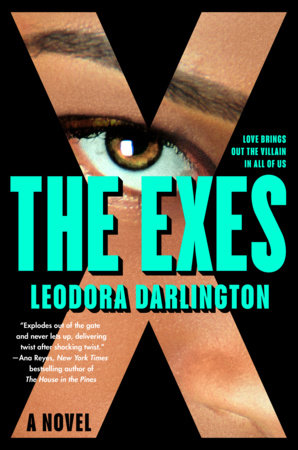
The cover of The Exes by Leodora Darlington.

The Exes, by Leodora Darlington. Releasing Feb 3 2026 from Dutton.

I connected with Leodora Darlington a few months back through my translation work, and she recently asked me for a comment on her upcoming debut novel, The Exes.

I was surprised and honored by the request, my first ever such. I was also a little nervous, because I’ll be honest: I’m kind of an opinionated old guy and I have increasingly little patience for books that don’t grab me. I was a bit worried I’d have to diplomatically dodge the comment.

It turns out that I had no need to worry. This book was a blast.

The Exes is the story of Natalie—Nat—a young woman who has had a very troubled history with men: namely, all her exes end up dead under slightly shady circumstances.

Now, she’s met a new man with whom she really wants things to work out, despite her promise to herself and her estranged sister to never let her heart go again. As you might expect, things take some rather unhappy turns.

So, right off the bat, you think you see where this one is going, but really: you don’t. This book had more twists than a Chubby Checker album. More turns than a rally race. More surprises than a… You get it.

Yes, it’s a thriller, so you know people die and you will look for suspects and try to suss out what’s a red herring and what’s not, but this one kept the guessing fresh to the end. I think I remember at least three “Holy shit, really?” moments. The turns do tread a little close to the excessive at times, but everything is just so well structured that it keeps well within the “just go with it” safe zone.

There were two things about the writing that really stood out to me: the depth and reality of the main character Nat, and the way Darlington handled current social issues and trends (modern sexual politics, toxic masculinity, trauma as a driving force in fiction, etc) in a natural and smooth way.

Nat is a mess, but she’s trying, and the way she handles herself and the crazy shit that happens to her just works. She’s aware of her issues and how they exacerbate things. She works to deal with her weaknesses, and falters like all of us, but doesn’t give up or beat herself up when she does. She fights on through the self disappointment and fear and most importantly does not let her mistakes and her trauma define her future. It’s a refreshing way to handle the increasingly heavy reliance on protagonist psychology that is so common in literature today.

Similarly, Darlington deftly weaves in timely social observations in a way that keeps them from dominating the plot and also avoids any hyperspecificity that could date the story in the future.

For example, one of Nat’s exes was a red-pilled manosphere type. Rather than referencing easy identifiers like Jordan Peterson or Andrew Tate, who will one day surely die and fade into obscurity, Darlington just mentions, “[Nat] should have paid more attention to the podcasts he listened to.” A perfectly light touch to offer context without too much restriction.

I have to admit, it’s really hard to believe that this is a *debut novel.* The writing is so tight and smooth, the characters so alive, that it feels like an old hand was at the pen.

In the end, all I can say is that it was a great ride. Clever, fun, and yes, hard in places. There is grief and suffering and cruelty here, too, but also satisfaction. Loved it.

It releases next February, and I really think thriller fans are in for a treat.

Book Review – Dear Stupid Penpal

I signed up for ARCs from weird horror publisher Tenebrous Press, and this one showed up recently.

I try to be judicious with my reading time and don’t hesitate to stop reading books that don’t interest me. I finished this, and was happy to do so… With some caveats.

Essentially, it’s an epistolary story about love growing over email, between a character name Aku and another, Atticus “Finch” Davani. These are the “Penpals” of the title.

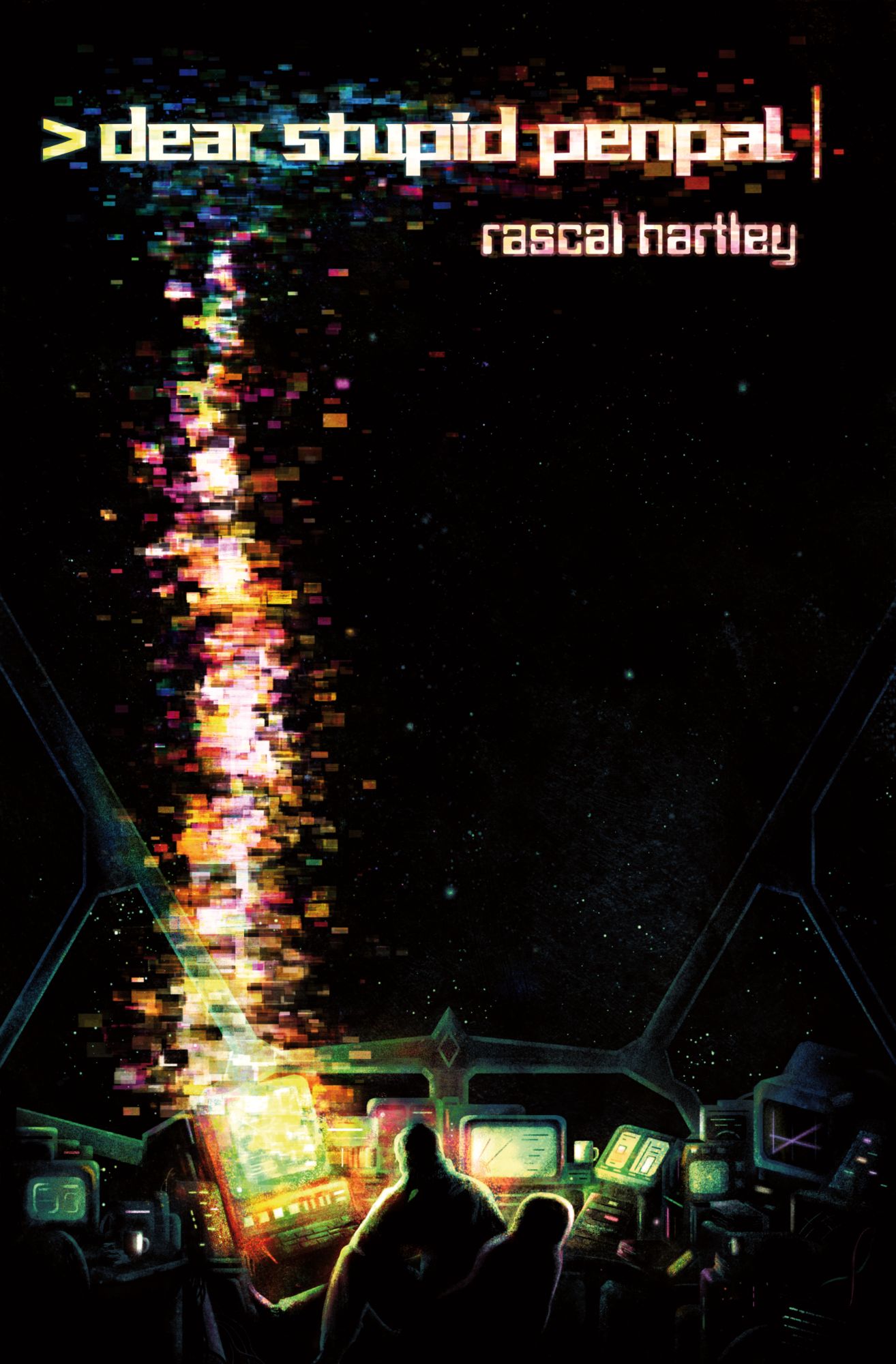
The cover to Dear Stupid Penpal by Rascal Hartley. It looks like a spaceship cockpit against the emptiness of space with digital noise running up the left side.
Dear Stupid Penpal by Rascal Hartley

Finch is on board a spaceship and Aku back on earth, and they fall in love as they communicate across the void. Complications and drama ensue.

There are things I really liked about this one. Aku in the story is a poet, and his voice is actually poetic. Some of the writing in his letters is achingly beautiful.

Hartley did a wonderful job in general with voice and pace. There were lots of fun little interacts that felt really natural.

And, I suppose given the day and age, it’s important to mention that this is a queer love story, of several flavors, with wide representation: disability, religion, and color.

So, I want to commend  Hartley on writing a beautiful story that moves quickly.

If that sounds like something you’d like, in a near future weird SF/light horror story, then I think you’ll really enjoy this one. Stop reading this review and go pre-order/read this book.

And if, by any chance, Rascal Hartley is reading this, good job! Seriously. Now, go live your life happily.

But, like I said, there are caveats. So if you’re curious about some nitpicky details, read on.

Warning: this part has some spoilers, because a basic plot point that I would normally put in a summary ends up being used as major turning point in the story… Oddly.

**Spoilers Start**

So, as mentioned, Finch is on a spacecraft. An interstellar one. Sent to explore the vast reaches of space beyond the solar system using a hyperdrive system.

And along the way, the crew suddenly has the terrifying, shocking realization of the existence of… Time dilation. One of the most basic of all SFnal concepts. One that I, a philosophy/linguistics student with no grasp of physics or math, have known about since elementary school.

I mean, once I saw the mention of “hyperdrive” I started thinking, “These folks sure are blasé about never seeing their friends or families again.”

Because, for those who don’t know, (theoretically) when you travel fast enough to reach other stars within a single human lifespan, you’re at a significant enough portion of light speed that time travels much, much more slowly for you than those not traveling. Your people back on earth will outstrip you, aging and dying while you live on.

But none of the crew of this highly advanced spacecraft with FTL communication equipment etc. knew about that?

Sure, we can assume the government is despicably trying to hide that this is essentially a mission from which there’s  no return to normal life, but the media didn’t notice it before the launch?

None of their friends had ever read any SF books?

The actual scientists aboard that ship didn’t think about it until after they left?

I have to be honest, I just assumed the crew was utterly unqualified  for the mission when that became clear. It’s obvious Atticus shouldn’t be there. I mean, he’s kind of an idiot. So, perhaps the government chose people it saw as useless and disposable to be the guinea pigs for this inaugural trip. They didn’t choose the best and brightest, that’s for sure.

But! If you can ignore all that and not think too deeply about two people who have never met falling so deeply in love over email that their love lasts *literal millennia* then this is a fun book that actually has many more plot points that remain unspoiled by this review.

Book Review – Jibuntoka, Nai Kara

It is probably a bit silly, reviewing in English a book only available in Japanese, but maybe if I can get people interested, it’ll get translated.

「自分とか、ないから」の表紙。黄色いバックで、いくつくかの仏教の偉い人がいる。 The Japanese cover to Jibuntoka,nai kara.
自分とか、ないから/There is no me, really

Anyway, this is a book about “Eastern Philosophy” (really, almost exclusively Buddhist thought) written by failed Japanese comedian Shinmei P. It’s real core, though, is its emphasis on introducing the important ideas that  offered the writer himself ease during his worst lows.

And he did have lows. Much of his life story is in this book, but he started out at an elite university as a great student, but it was all show. He killed it at interviews, but then couldn’t manage to work in teams so failed as an employee.

Everything he tried was a failure. His marriage, his entertainment career, everything. And he eventually ended up holed up in his room, reading philosophy to try and figure out the emptiness he felt.

Apparently, this book was born from an article he wrote about how, after reading fifty books about Eastern Philosophy, his own identity just stopped mattering.

And that is what guides his selection of thinkers (and I apologize for calling the Buddha, Siddhartha Gautama himself, a “thinker”) here. It’s all about emptiness, the negation of self, and the pursuit of freedom from attachment.

The good thing is, this book was overseen by an actual professor of religion, Kamata Tōji, so it’s not just a goofy listicle style of book (although it is that, too).

Personally, I found it a really accessible intro to some important Indian, Chinese, and Japanese figures in the history of Buddhism.

I really liked it, and it wasn’t that hard at all to read. Good stuff!

Book Review – Good Boy

I pre-ordered Neil McRobert‘s Good Boy from Wild Hunt Books and apparently they take the “pre” part very seriously, because I got it quite a while before it was officially published.

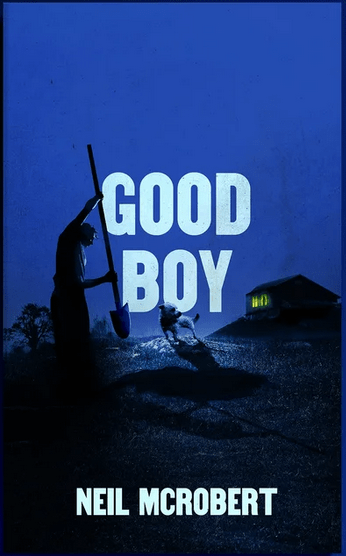
A blue book cover reading Good Boy by Neil McRobert. A man is digging a hole in the ground. A small dog stands nearby, looking rough and ready. A house in the background has yellow lights on.
The cover to Good Boy by Neil McRobert.

I’ve been a fan of McRobert’s horror-focused podcast, Talking Scared, for a while now and one of the biggest reasons is the host’s sincere passion for his subject. He matches it with insight and damned good questions to create simply one of the best interview shows around.

So, when he announced he was finally taking the plunge into authorship, I was there for it.

I am pleased to say that it was the right choice.

Good Boy is a novella/short novel about a man and his dog who team up to keep a small northern English village safe from an ancient evil that feeds on local children. There are obvious touches of classic Stephen King, especially It but also a touch of non-horror work like The Body, but the voice is pure McRobert and above all, it is so obviously rooted in love.

I cannot overstate what a relief that is. Horror as a genre is going through what they call a “moment,” with a flood of lauded authors and works getting big all over the place. But a major element of that is a glut of stories centered around trauma and grief. Not simply in the the obvious way—horror has always been about people experiencing traumatic events—but in ways that center traumatized people experiencing horrific events that seem to grow from that trauma. This is a perfectly fine trope, but as it becomes dominant I find myself wondering, what about people who are live their lives without being haunted by the gaping spiritual holes of lost children/horrific accidents/guilt over terrible mistakes etc.? Don’t they get horror stories anymore? Isn’t there some other emotion we can ground our stories in besides grief?

Of course there is, as McRobert shows us. Love is also a fundamental part of the human condition, and it can also serve as a foundation for horror stories. This is a story about love saving people, despite the frustrations and stresses and doubts that assail all our choices, even when made out of love and the desire to do good. And it feels so genuine. Anyone who listens to Talking Scared knows how much McRobert loves his dog, Ted, and the honesty of that emotion comes through crystal clear in the work.

And the horror is still real. The antagonist in Good Boy is a nasty thing indeed, and well worth Jim, the protagonist, making the difficult choices he does.

I read Good Boy in a single sitting and enjoyed every last page of it. Thanks for bringing the love back to horror, Neil.

Five stars. No notes.