Review – The Night That Finds Us All

I think I have to finally admit it. I’m a John Hornor Jacobs fan.
The first book of his I read was Southern Gods, a sweaty, gritty myth of music and cosmic horror that I think I picked up in a bundle not long after its 2011 release. I remember enjoying it, and when I revisited it in later years it’s held up.

But I didn’t really plug into him as a name to watch for until I read The Incorruptibles, his alternative history/dark fantasy book of an infernal-powered Roman Empire in the Old West that he into a trilogy.

Since, I’ve enjoyed all the books of his I’ve read (which is all of them but The Twelve-Fingered Boy trilogy), especially A Lush and Seething Hell. There is something about the weight of his prose that makes it feel rooted deep, in history and myth and humanity, while still just being fun.

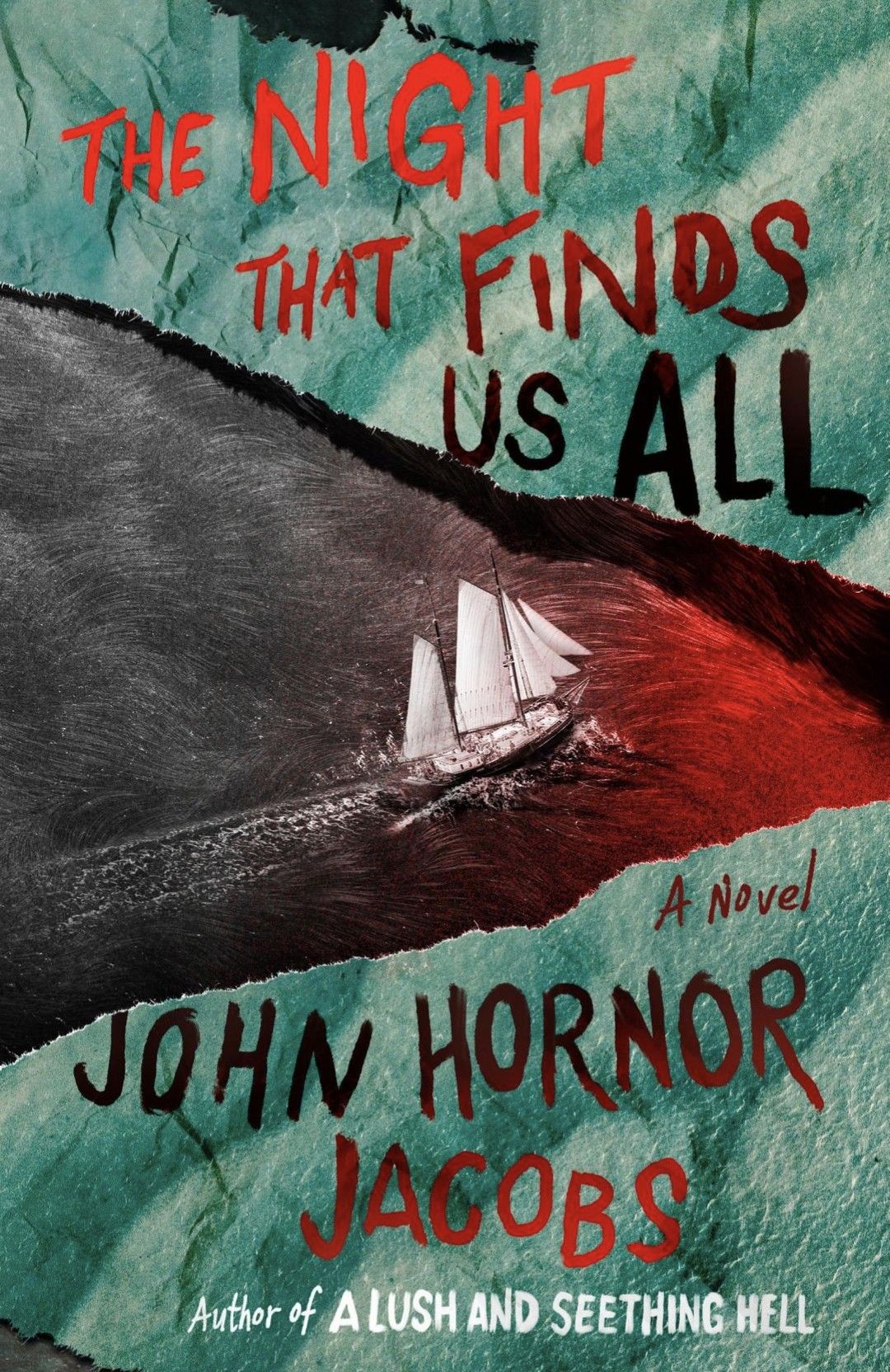
And so we come to his 2025 ocean-going cosmic horror The Night That Finds Us All.

It’s about Sam Vineworth (known affectionately as Sam Vines, which I would have bet was a Discworld nod but would have lost, according to the author), an alcoholic fuckup but he’ll of a sailor, recruited by a friend to help crew a century-old sailing ship from California to Britain.

The ship is, of course, much more than it appears. It has a shadowed history with more than a bit of blood, and it soon starts to prey on the crew.

Once again, Jacobs brings unpretentious flourishes of near-poetry.

I found myself thinking this voracious ocean came before mankind’s puny endeavors and will remain after, in some near future, eroding the shores and drowning the land and taking all our works with us, dragging them down to the bladderwracked mansions beneath the sea.

The bladderwracked mansions beneath the sea. God, what an image. Or…

The sky kills all the sea’s dreams.

This masterful imagery is matched by what I can only a scholar’s depth of nautical knowledge. Mizzens and reef sails and knots… It’s all here, and I’m not sure I understood it but I also duct think not understanding hurt at all. Because nothing hinged on those details, they only added in establishing that Sam, drunken mess that she is, knows her shit on a boat.

But be not afraid, this isn’t Moby Dick, with page-long paragraphs and endless digressions on marine wildlife. It’s a journey into a dark, cursed netherworld that’s full of dread and scares.

Another banger, in other words.

Review – Revival

Revival

Revival by Stephen King

My rating: 4 of 5 stars


What a long, strange trip it has been. I have been reading Stephen King for probably 30 years. When I was in Jr. High I used to sneak away from my mom at Wal-Mart to buy paperbacks, and hide them in my pockets until I could get to the privacy of my room. My mother was not a fan, you could say.

I loved those books. I loved the goriness, the crafty little turns of phrase, and the depiction of rurality that I recognized (being from rural Kansas, I guess there’s not that much difference between little prairie towns and little New England towns). Over the years, I came to see what King himself called his “salami-making.” These were fine, creepy yarns, sometimes even gutwrenchingly sad (Oh, Henry…). But they weren’t “Litrachure.” King had no pretensions of deep exploration of the human condition, he wrote scary stories to read in the dark.

But now, as I approach middle age, I’m starting to question that truism. Because there are stories like Hearts in Atlantis, or The Body, or this one, Revival, that seem to transcend the rough-ground spiciness of, say, Christine. It might just be the decades of life that have come to inform the writer’s thinking. Or it might be the decades of life that have come to inform this reader. But somehow, I think King is tapping into a deeper vein these days.

Revival is at the same time a memoir of a life not wholly unlike Kings, a love letter to the origins of a certain brand of horror, and a look at what makes the first so good, and the last so bad.

For roughly the first half of the book, we read the story of Jamie’s life as something not entirely unusual. There are the purely human pains of tragedy and disillusionment. There are also the more mundane growing pains of rough big brothers, feeling your way through first love, and addiction. There is little that could be called supernatural or ominous, apart from what Jamie himself alludes to in hindsight.

This is a slow burn. It builds a living character, a life of complexity and reality that other writers would rush through. But King does not rush here. He takes his time, because this weaving is what makes the latter half punch so hard.

In the latter half, the ominous shadow of Charles Daniel Jacobs (Charlie Daniels and the Devil in Georgia, huh?) grows heavy, and the threads of the weave begin to darken with the taint of Lovecraft, Derleth, and Machen (three names mentioned right at the top of the book…). For this book is as pure an expression of cosmic horror as any you’ll find. Jacobs, the reverend of Jamie’s youth, is desperate to tap into the powers that run the world behind the world, no matter the cost…

And the cost is great. Because this ending gathers up those threads of youth woven so slowly in the beginning of the book and brings them back to the end to come full circle. The joys of youth become the pain of age, now tainted with darkness from beyond the veil.

It’s masterful.

And yet, there is still some salami here. Because King does what other cosmic horrors often avoided: he made the implicit explicit. He describes in detail what lays behind the veil, and in so doing removes much of its more lingering power. There is still dread here, but I can’t help but think its was blunted by that choice.

I still think that this is one of the best expressions of King’s strength, his characters, and leverages that strength to make a genuinely unsettling horror story. Revival is maybe the best of King, and a transcendence of the limits he placed on himself so long ago.


View all my reviews