The Ark is a mystery/thriller in the honkaku mode. It tells the story of a group of seven friends from university who meet up and hike to an old abandoned underground facility one of them found. They end up deciding to stay the night and a family of three also show up, rather mysteriously, then they all get trapped when an earthquake blocks the door.
Complications start piling up, and then bodies start piling up, and the whole thing becomes a tense, claustrophobic journey into pitch-black nihilism. This is a book where the ending hits like a punch in the gut.
Translators often talk about the linguistic challenges of the job, of trying to find the right way to convey the author’s message and so on.
It’s less common, I think, to talk about the emotional element.
The act of translation starts (and proceeds, and ends!) with reading. Reading deeply. Reading repeatedly. Eking out all the nuance and meaning I can from a work. I can’t speak for everyone, but when I translate a book I get emotionally invested in a way I rarely do otherwise. I have to, or the whole thing falls flat.
Which means that in translating a dark work like this, I am immersed in all that bleakness and cold-blooded murder for literal months.
It was hard to translate The Ark. Unpleasant. It weighed on me.
Which is not to say there is anything wrong with the book. It’s tight, clever, and written from a place of real care for the genre. It’s a good book. Very good.
But it’s not a happy one. I was glad when I was finished with this one.
And now it’s out there for readers to experience for themselves. There are some who will love the weight of the tension, like a mountain hanging above your head. Others will hate the breathless atmosphere of creeping doom, like water slowly rising up to steal your breath. But for fans of deduction-focused mysteries and darker tales, I think this one will satisfy indeed.
As I wrote at the end of last year, I think that celebrating the end of one year and the beginning of the next is best done by thinking about the moments of happiness that dotted what was, I think we can all agree, a pretty dark year. And so, I present to you a few of the things that I loved and enjoyed in 2025. I’m going to group them by type because I was blessed with a lot of enjoyment in this past year.
Music
Music has always been a source of comfort and happiness. Seems like I should recognize that more.
Moisturizer – Wet Leg – This album is straight fire. Holy hell. I stumbled on Wet Leg through the NPR Tiny Desk concert and the groove, man, the beat, the dirty, dirty funk grabbed me and wouldn’t let go. This is rock at its nastiest, sexiest, slipperiest best.
Strong Songs: A Podcast About Music – Podcasts are always such a mixed bag. The talky ones depend so much on guests and takes and pandering that even the best can sometimes get bogged down in PR kowtowing. But Kirk Hamilton seems to have built a podcast out of pure love and expertise, which is freaking amazing. Like, every episode is a full on music education, while never getting all high and mighty. Hamilton treats the Mario theme song with the same respect and erudition as he does Miles Davis’s So What. Want to learn about how Jazz works? He’s got you covered. Want to know about the inspirations behind Yoshi’s theme in Super Mario World? It’s there. Want to just bask in the simple genius of Lean On Me? Hope you’re ready to cry.
Books
Jeez, I read so many books this last year, and a ton of them were good. A few were GREAT. Here are a couple. I really couldn’t list them all in a reasonable way. I reviewed them here or elsewhere, so I won’t go into too much depth. Also, anyone who is interested can keep up with my reading on Bookworm.social.
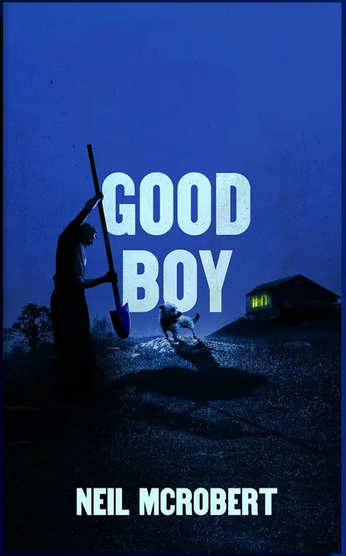
The cover to Good Boy by Neil McRobert.
Good Boy by Neil McRobert – Click for the full review, but I just want to reiterate, there was so much love in this horror book.
Re:Re:Re:Re:ホラー小説のプロット案 by 八方鈴斗 – Yes, yes, this is a Japanese book and I’m not going to talk much about it, but it was really cool and innovative and surprising. I want to translate it. Someone buy the rights! My review is on the Bookworm page.
The Philosophy of Translation by Damion Searls – I sometimes forget what a heady, intricate thing I do for a living. Searls shines a light on it that revealed things I never even considered.
Work
I write about work a lot here, but it’s how I spend most of my life and it has dominated so much of my thinking this year that I guess that’s natural. But, I am happy. I love my job. I love working with books and authors and publishers. I love seeing my name on book covers (ahem) and man, I cannot believe how much this work has grown this past year. I am so lucky.
Family
Cheesy and sappy and cliched as it sounds, my family continues to astound me with joy. My son, who turned 13 this year, is growing into an amazing young man, healthy and strong and curious about the world. My wife continues to be the unshakable rock on which we all rest. I am grateful to be able to be with such amazing people every day.
The Sea
I live on the Seto Inland Sea coast. I can walk to the beach in about three minutes. Every day I can, I go to it. Watch the sea birds, listen to the waves, feel the breeze. The sea is big, and constant, and always different. I grew up in a place far from the sea, so it remains something mysterious to me, sometimes even fearful. But when the anxiety roils and the future growls like a hungry beast, I can go to the sea and let it all sink into the deeps.
Crossing paths
I’m sure there was more that got swept away by my aging memory, but these things stood out. All things considered, 2025 was a decent year for me personally, though I know many cannot say the same. I go into 2026 with only the wish that it does get better, that peace spreads and hate fades and love wins.
I seem to have become known as “Uketsu’s English translator,” which is certainly not a bad thing to be. But it does mean I get quite a lot of questions about the works, some of which I can’t even answer. Like, no, I don’t know how Uketsu got his ideas. No, I haven’t seen under his mask.
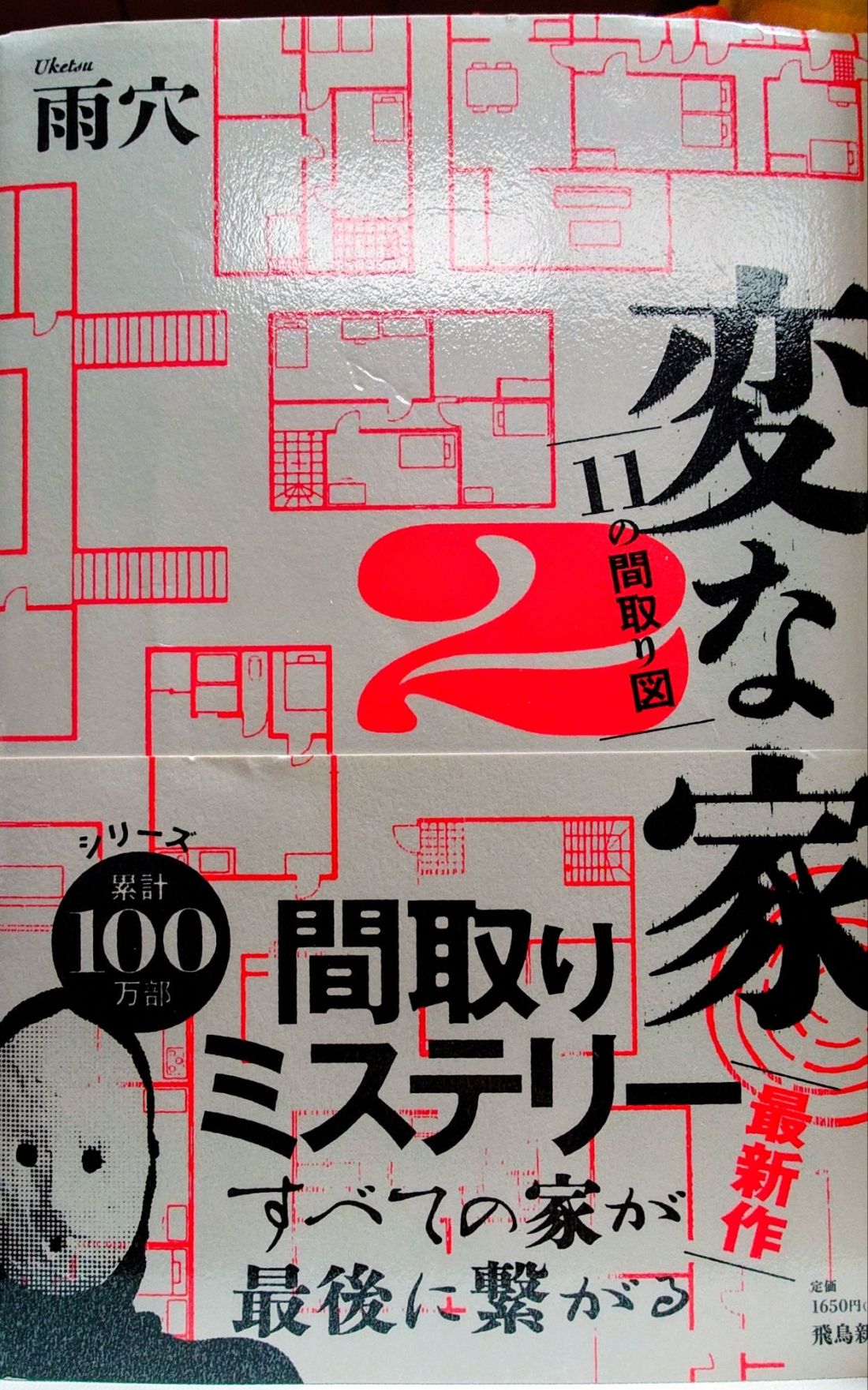
The Japanese cover to Henna Ie 2, coming soon in English as Strange Buildings.
But some questions, I can answer. And the most common of those is: Are you translating more Uketsu?
The answer? Yes, yes I am.
Uketsu currently has four books in print. Henna Ie (Strange Houses), Henna E (Strange Pictures), Henna Ie 2 (Strange Houses 2), and Henna Chizu (Strange Maps). Obviously, the first two are out and selling like hotcakes.
Henna Ie 2 is currently in editing and is scheduled for release in February 2026 under the title Strange Buildings. It’s quite an ambitious book that takes the core idea of Strange Houses in totally wild new places. It is also extremely dark, and there are some disturbing elements that are a departure from the first two books.
Henna Chizu was just released in Japan and the plan is certainly in place, but work hasn’t started yet. I have read the book, though, and it strikes me as the closest to a conventional “mystery” of all Uketsu’s work. It’s kind of a Kurihara memoir, talking about a puzzle in his family history, and he gets to play the great detective, solving not only his own family mystery but a couple of other murders. It should be a fun one to translate, with a very neat little trick. It also delves into Kurihara as a character and makes him quite human.
So, yes, there are more strange Uketsu books coming in English. I hope you all enjoy!
I’m using that term “talk” cautiously, because I’ve had public effects and appeared on TV in Japanese before, but in terms of “standing at a podium giving a prepared presentation in Japanese,” my first time was October 21st, 2025.
The Crowd
The Hikari Community Development Support Center, which hosts local clubs and plans public events, invited me to be part of their annual local seminar series. I think my book and city newspaper column caught their eye, but it might also be that two former students from my business English days are on staff.
Whatever the case, I was scheduled to speak from 10 to 11:30, with a short break in the middle. I prepared a two-part talk, “Rediscovering Yamaguchi Prefecture.” The name is a play on my old TV segment, and featured since if the things I love most about this place.
Mostly, it was some of my favorite pictures taken here. Most of them are on this site somewhere.
I also included a segment on local sake, of course.
I’d say it went pretty well, but my Q&A segment ended up being way too long because I was just too damned tired to keep talking. And no one wanted to ask questions.
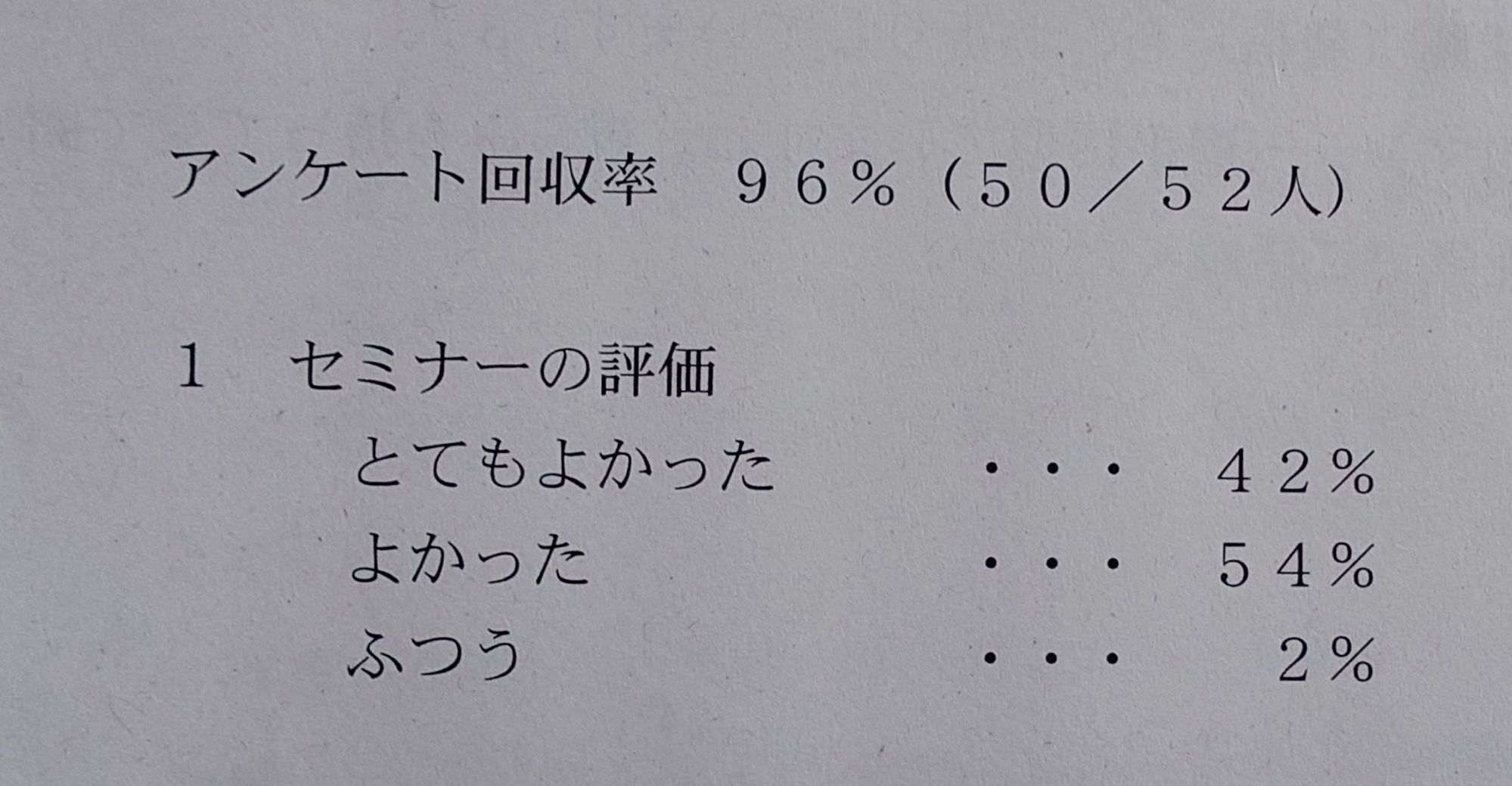
Anyway, they took a survey of the audience afterwards and the reaction was really good.
I had a bunch of 2L sized prints left over from photo club meetings that I put out for people to take home and almost all were give afterwards, so that’s felt good, too.
It is probably a bit silly, reviewing in English a book only available in Japanese, but maybe if I can get people interested, it’ll get translated.
自分とか、ないから/There is no me, really
Anyway, this is a book about “Eastern Philosophy” (really, almost exclusively Buddhist thought) written by failed Japanese comedian Shinmei P. It’s real core, though, is its emphasis on introducing the important ideas that offered the writer himself ease during his worst lows.
And he did have lows. Much of his life story is in this book, but he started out at an elite university as a great student, but it was all show. He killed it at interviews, but then couldn’t manage to work in teams so failed as an employee.
Everything he tried was a failure. His marriage, his entertainment career, everything. And he eventually ended up holed up in his room, reading philosophy to try and figure out the emptiness he felt.
Apparently, this book was born from an article he wrote about how, after reading fifty books about Eastern Philosophy, his own identity just stopped mattering.
And that is what guides his selection of thinkers (and I apologize for calling the Buddha, Siddhartha Gautama himself, a “thinker”) here. It’s all about emptiness, the negation of self, and the pursuit of freedom from attachment.
The good thing is, this book was overseen by an actual professor of religion, Kamata Tōji, so it’s not just a goofy listicle style of book (although it is that, too).
Personally, I found it a really accessible intro to some important Indian, Chinese, and Japanese figures in the history of Buddhism.
I really liked it, and it wasn’t that hard at all to read. Good stuff!





 Jim Rion - Translator & Writer