Zan’E – Thoughts On a Japanese Horror Classic

I’m not sure I’d exactly call this a review, but I read Ono Fuyumi’s Zan’e—the movie version is The Inerasable in English but I’d call it “Tainted” if anyone ever asked me—and I have thoughts.

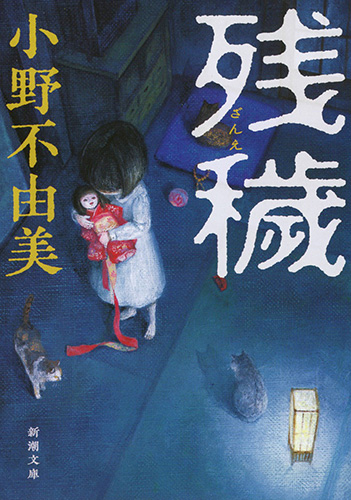
The Japanese cover to Zan’e.

Here’s a bit of a summary, since I’m sure not that many English speakers have read it.

The story is told in the first person by an unnamed “I” who is ostensibly Ono herself. The narrator is a Kyoto-based horror writer and collector of jitsubanashi kaidan, so-called “true ghost stories.” She puts out calls for readers of her work to send her their stories, and one day she gets a letter from a young woman named Kubo who seems to live in a haunted apartment.

Her story reminds Ono of another she’s heard before. She finds another letter in her records with the same story, essentially, sent in by another reader who lived in the same apartment building as Kubo.

And so begins a long investigation. Kubo and Ono interview other residents of the building and of the neighborhood, going back further and further in history to track the haunting. They slowly unravel a story of a diffuse, metamorphic haunting that covers the block where Kubo lives, but also seems to spread and change. They find terrible mass murders, suicides, and arson linked to it, and realize they themselves might be “infected” because the odd things follow them even when they move to new houses.

Eventually, nearly seven years after Kubo’s first letter, they track the origin of the haunting to a terrible accident at a coal mine almost a hundred years ago, on the other side of Japan.

And that’s it. The great conceit of Zan’e, and one of the reasons it has become so influential in Japanese horror is that from start to finish, it maintains the aura of real people investigating a real “strange story.” There are no great climaxes, no battles with evil, no conclusion, really. They encounter something odd, wonder where it came from, and find out.

And this book has left its fingerprints all over Japanese horror since its 2012 publication. It’s on every “Best of” or “Must Read” horror list I’ve ever seen, and authors and filmmakers alike cite it as an influence.

After reading it, I can see the influence they mean. The figure of the “kaidan collector” has become a standard trope now, with examples to be found in Kamijo Kazuki’s Shinen no Terepasu/The Bright Room, Niina Satoshi’s Sorazakana/Fish Story, and many more. The concept of “haunting as infection” is not original to Zan’e, but the evolution of that haunting from a lingering form of resentment or anger a la Sadako in Ring into essentially a mindless natural phenomenon reached its zenith here.

And then there is semi-documentary approach, without any reliance on fiction elements like plot, arc, denouement, etc. It’s just a flat record of events, some of which are really creepy or disturbing but are mostly just… Stuff happening. That has been enormously influential in the “fake documentary” style of horror that is so popular right now. Sesuji, of Kinkichiho no Are Basho ni Tsuite fame, has cited it as an influence for that reason.

For fans, it has earned a reputation as one of the most frightening horror books in the Japanese language. And I get it! At its core, what Zan’e presents is a cosmology that truly is terrifying.

The basic idea is based in the Japanese spiritual concept of kegare. Kegare is a taint, a metaphysical stain that gets on people who come into contact with things considered unclean: death, blood, rot, filth, and (in the dreadfully misogynistic ways of olden days) things involved with being a woman like menstruation and childbirth.

Zan’e takes up kegare based on the very traditional idea that a place where people die is stained by that death. Usually that stain fades naturally, but in her book Ono speculates that perhaps, if more death happens there before it fades, the stain is intensified, and so a cycle can begin. Couple that with the idea that people who simply go that tainted place—simply be present—then become carriers of the kegare, and you begin to see the danger.

Then, she postulates that the very intense kegare may carry echoes of the death, or the deceased’s state of mind at the time. Their misery, or anger, or pain. The stain whispers, it weeps, the sound of a suicide’s belt dragging over the floor lives on in the stain. What if some people are more susceptible to the influence of the kegare than others? The sounds and visions of shadowy figures truly disturb them, the voices whispering in their ears successfully convince them to kill others and themselves… Won’t that create a new, stronger stain? And on and on, ad infinitum…

This is the terrifying heart of Zan’e that made one award judge say “I don’t even want to put this book on my shelf.”

But. With all that said, I don’t know that I would recommend this book to anyone except horror completist nerds (like me). Because this book is dull. Deadly, painfully dull. Which could well be the intention, given the dedication to the realistic style. Anyone who has ever interviewed members of the public knows that most people just aren’t good at telling stories. They meander, they repeat themselves, they get confused. And given that much of this book is a documentary-style record of just such interviews, you get all of that.

There is, for example, a twenty page chapter that is just one elderly neighbor of Kubo’s talking about all the many people who have moved in and moved out, the buildings that have gone up and come down, the changes over the years… You know, old people stuff. Within that twenty pages are roughly two paragraphs that actually pertain to events of interest. The rest is simply there to add weight to the idea that some houses in this neighborhood just don’t get lived in long. Which isn’t all that interesting a point.

I would say that basically nothing interesting as such happens for over half of the book. It’s all just talking, with hints of the taint scattered through to keep the monologues relevant to the story. So. Dull.

I had to force myself to finish Zan’e. I only did it because I want to better understand modern Japanese horror, and it’s such an influential book that I felt it necessary. But God, it took me forever.

The movie is pretty good, though.

Exploring Choice in Translation – A Case Study

A lot of the talk about translation done by people who don’t think all that deeply about it—even professional translators!—focuses on things like accuracy and faithfulness, but I find that tends to work around assumptions that are worth investigating. Like, when something is “accurate,” we tend to think of it as closely reflecting some kind of observable truth or fact. In the case of, say, a machine manual, accuracy does often come down to a reflection of the physical specifications of the machine and its use.

But when we are translating communication of a less tangible sort, things aren’t so clear. Even in the realm of non-fiction, writers often layer intent and meaning and reference in ways that force translators to decide which layer to convey in the translation, because there is no sensible way to convey them all together in the same way as the original does. They have to choose.

I was recently reading a book in translation that got me thinking about that kind of choice.

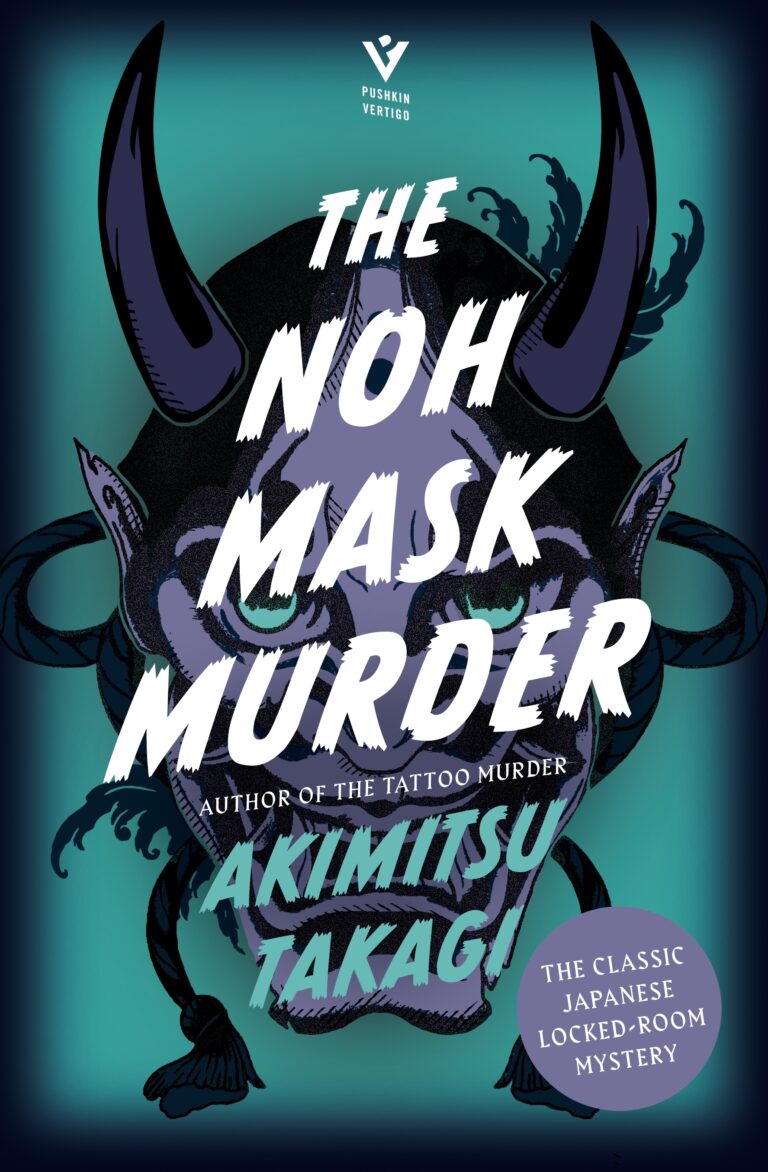
The cover of The Noh Mask Murder by Akimitsu Takagi. It features a blue-green background with a drawing of a horned, demonic mask.

The book was The Noh Mask Murder by Akimitsu Takagi in a translation by Jesse Kirkwood. Now, let me preface this by saying the translation was great. The book itself is lurid and its prose rather purple, but Kirkwood made it readable and interesting. So, don’t even think of taking anything I say here as a criticism.

But there was one single passage that made me stop and wonder, really wonder, what was going on, and it had nothing at all to do with the murder.

The scene is this. Near the beginning of the book, we are in the POV of an older public prosecutor reminiscing about attending a local festival with a lost love. He says “and yet the face of my companion back then, asking me to wait while she bought me a whelk egg case, had been lost to the winds of time.”

Record scratch.

Whelk egg case? What the fuck? I’ve lived in Japan for over twenty years. I’ve been to countless small town festivals and fish markets. I’ve never, ever seen a whelk egg case at any of them. I do know that whelks themselves are fairly popular seafood, so I could only assume it was some kind of regional dish. But “egg case?” Not “eggs” or “egg sac” or some other more… Appetizing word?

I had to figure this out, for my own sake. My dictionary told me that the Japanese for “whelk egg case” is 海ホオズキ umi hoozuki and a quick google search brought me to a page on Wikipedia with the explanation: “かつての日本ではグンバイホオズキ等の卵嚢が、口に含んで音を鳴らして遊ぶ使い捨ての玩具として縁日や海辺の駄菓子屋で売られていた。” Or, roughly, “Once, in Japan, the egg cases of whelks were used as a kind of disposable toy, taken into the mouth to make noise, often sold on fair days or at cheap snack shops near the seaside.”

Further searching took me to this Japanese page that talks about how they used to be sold. It describes a “buzzing” sound when you use them. So… You put them in your mouth and blow, and they make a buzzing sound

They’re like kazoos. Weird, snail-made kazoos.

Which, in fact, subtly changed my reading of this (mostly unimportant) scene. Without the investigation, I assumed it was some little seafood snack. So, the man is wistfully remembering a thoughtful girl who bought him food when he was hungry. But after I knew what was going on, my view of the girl changes. She’s whimsical, fun, trying to buy the serious guy a little children’s toy at a festival stall.

She’s the playmate rather, than the mother figure.

Now, I have no way of knowing the late writer’s intent. My experience of the reading in both cases might be totally different from someone else’s. But this, I think, is a very clear example of how even a very minor choice can influence the reading experience of a translation.

Kirkwood translated 海ホオズキ 100% accurately as “whelk egg casing” and was perfectly justified in doing so. That’s what the writer wrote, end of story. Mostly.

But. If I had translated this, I might well have chosen to translate it “kazoo” or even “whistle.” Because that would better convey what I felt was happening between those two people at that local festival to readers in English, which arguably is more valuable to readers than accurately translating the word 海ホオズキ. To once again paraphrase Damion Searls, it’s about translating the usage rather than just the word.

Now, I have no idea what kind of path led to the choice that Kirkwood made. Or even if it was a choice as such. He might not have given it all that much thought. I also know that editors have enormous say in the final choices made in a book, so there might have been some behind the scenes conversation about this. Or not. Who knows!

So, let me once again reiterate that I do not, in any way, shape or form, even want to imply that there is something wrong with this translation. There isn’t! It’s just an interesting thought experiment about choice, “accuracy,” and the reading experience.

A Tale of Two Horror Movies

Much like (from what I hear) the English speaking world, Japan is having a bit of a horror “moment.” In print and on the screen, what has always been a pretty solid side-branch of the entertainment mix has begun to blossom into something bigger and more mainstream. We can point to new authors like Uketsu or Nashi, and older ones bringing out new work like Koji Suzuki’s new novel Ubiquitous, as signifiers in the publishing world. On screens, though, I think the most interesting examples are to be found in shorts, like the YouTube creepfest My house walk-through or (hands down my favorite horror shorts) Fake Documentary Q.

I am not a scholar of the cinema or Japanese horror or anything, but I do keep my eyes open, and I stumbled on a collection of horror shorts on Amazon that were apparently all entrants in a biennial competition sponsored by Kadokawa, the Japan Horror Film Competition. I watched, and there were some real bangers in there, including one called みなに幸あれ/Best Wishes to All. Lo and behold, I later saw a full feature length version with the same name—Ah! I realized. The winner of that competition got their short made into a full-length feature film!

And it was well worth doing. Best Wishes to All—which apparently now has an English release—was a creepy, surreal, original, and ambitious movie. Excellent acting, excellent screenplay, the whole shebang. It also presented an approach to horror that stood outside the usual ghosts and curses of “J-horror” with the kind of social edge that makes good horror great.

The story, essentially, is about a young nurse in Tokyo going home to visit her grandparents in the countryside and discovering a dark secret–one that redefines her entire understanding of life and the world. It also touches on how Japan’s young people are almost seen as fodder for older generations’ expanding lifespans, and the sacrifices of some that society demands for happiness for others. And also, it has old people acting like pigs. Pretty wild.

And when I saw that the second contest collection was out, *and* that the winner movie was also coming, I was hopeful indeed! Shorts were clearly fertile ground for original horror, and Kadokawa et al. were throwing money at it, so I was eager for more. The winner of that round, and the film that came from it, was ミッシング・チャイルド・ヴィデオテープ/Missing Child Videotape.

I think I’m not alone in the eagerness I felt for this one. It seemed to combine some of the same ambition and originality that BWtA had with beloved tropes of cursed videos, haunted mountainsides, and family trauma. The short was a quiet, brooding story with a hefty dose of chilling menace.

The feature film, though… Well, that was something else. I should say here that, while I’m not planning to out-and-out spoil the story, I will be looking at elements that might end up ruining the movie for you. So, if you are hoping to watch Missing Child Videotape—or Best Wishes to All, for that matter—save this to read for later. And watch the latter IMMEDIATELY.

So. Just like the short, Missing Child Videotape is about two young friends, Keita (Kyosuke in the shot) and Tsukasa (Hiromu in the short). Keita gets a package from home which includes a VCR tape. It is one he made as a child, when out playing with his younger brother. The two boys stumble on some vaguely industrial looking abandoned building and play hide-and-seek. The younger brother goes to hide, despite his fear, and is never seen again. The child is, well, missing.

Tsukasa is apparently a “spiritual sensitive” and can see ghosts. He reacts strongly to the tape… Oh! It must be cursed.

Soon after, the film truly diverges from the short. They both deal with the emotional trauma of a lost child and brother, but while the short is all about suggestion and menace and dread, the film veers toward folk horror and weird mountain towns and a reporter running from ghosts… With a dose of time loops and places that don’t exist… Well. Lots of stuff. It never goes wacky with it. It always maintains its slow, heavy, almost emotionless tone. But honestly, from a purely plot-based perspective, it shares more with Shiraishi’s Senritsu Kaiki File Kowasugi! series than with its spiritual companion, Best Wishes to All.

Let’s just say, I have problems with the movie version of MCV. It tries to be too many things and fails at most of them. It takes the “unexplained” much too far, such that it becomes almost nonsensical. Individual elements are fascinating and worth exploring, but they are left behind to fade into background noise, and rather than leaving the fear of the unknown, they left me with the dissatisfaction of the seemingly unconnected. I mean, there was this whole story about how the mountain was a garbage heap for kami that basically went unmentioned for the rest of the movie?! Come on! And the reporter was running from some kind of ghost. Why? Who is she, actually? What is she muttering under her breath when she’s scared? Why is she essentially set dressing most of the time?

I can only assume that the demands of turning a twenty-minute short into a 100-minute feature put too much pressure on the story, and the production team struggled to find effective filler. So, the end result feels like they just started throwing things at it to see what stuck.

Meanwhile, Best Wishes to All seems to avoid that pitfall by taking some of the surreality of the short and leaning into it. Even as it sometimes borders on the absurd, it’s an absurdity that remains rooted in the qualities that made the short work so well, creating a kind of incomprehensible view of reality that is as confounding for the protagonist as for the audience. In expanding the short, the filmmakers preserved its essential nature, just writ large.

Anyway, what does all this signify? I think what I’m getting at is, the value of the horror short today is clearly difficult to translate to long form media, but not impossibly so. I just hope that the pressures of making bigger budget, larger-scale works don’t harm get in the way of the vibrance of the smaller scale scene.

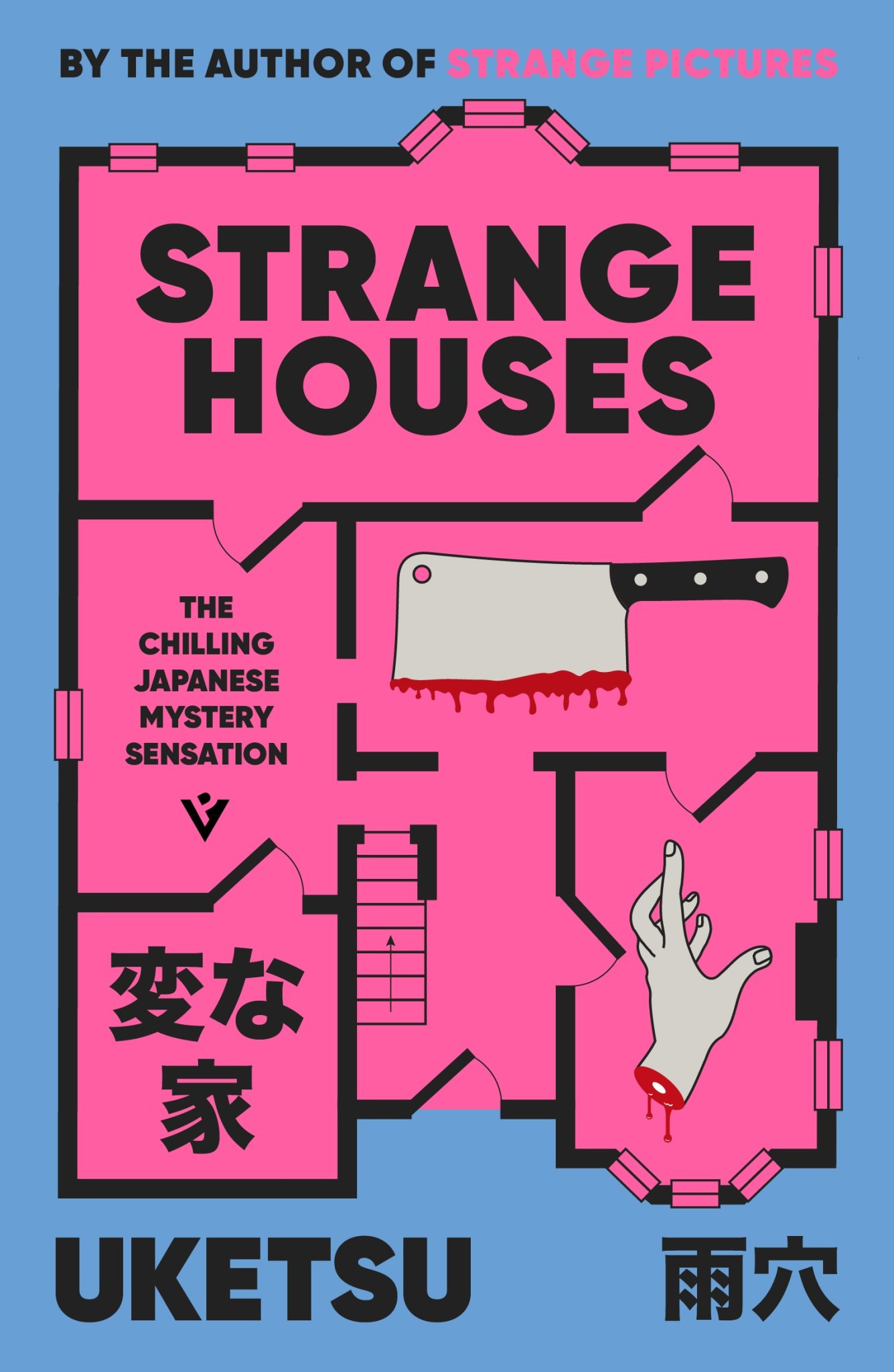
Strange Houses is Out Today in the US

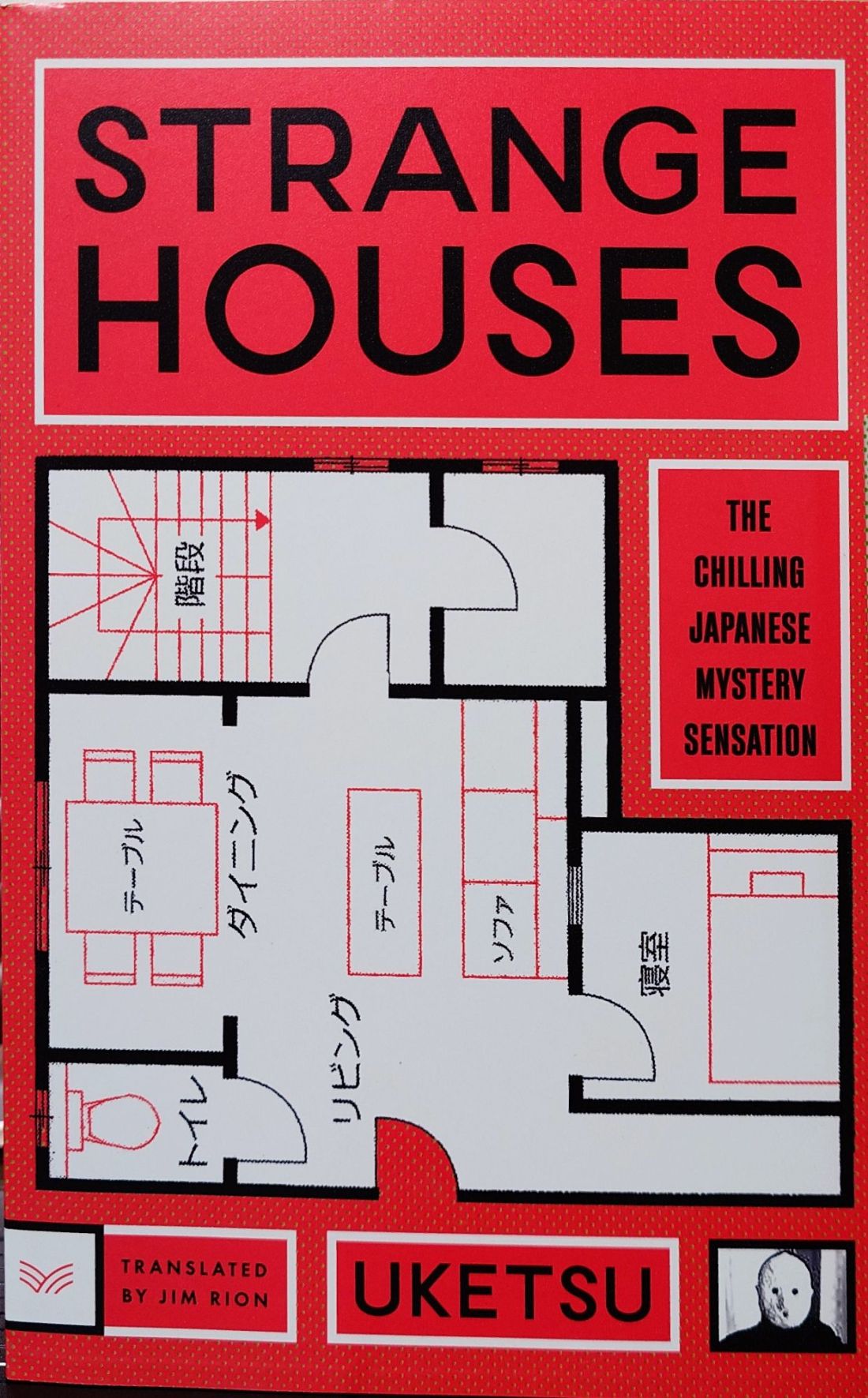
The cover of the US edition of Strange Houses by Uketsu. It is salmon colored with an image of a house floor plan. In the bottom right corner is a picture of the author, Uketsu, wearing a white mask. In the bottom left it reads "Translated by Jim Rion."
The US edition of Strange Houses from HarperVia.

June 3rd is the official release date for the US edition. It is June 3rd in Japan, so I’ll go ahead and announce it now, but your time zone might demand you wait a bit. Apparently the UK pub date has been listed as July 3rd? That strikes me as odd… Anyway.

Confusingly, the original Henna Ie was Uketsu’s debut work in Japan, while Henna E was his second. Anyway, both are now out in English and I hope people like this new addition. I have mentioned this before but I feel like Strange Pictures is a better written, better structured novel, which is natural as Strange Houses is a debut work written as an extension of a short video (basically the first chapter of the book) at the behest of a publisher.

Still, I really like this one. There is such creepiness in it, such oddness, that I find myself drawn back to it sometimes.

I’ll write something a bit more in depth about the translation process later, when people have had a chance to read it, but for now, just know this is a shorter work, with a weirder climax, than Strange Pictures, and worth investigating for people who like dark, bloody secrets and weird family histories.

If you’d like to buy this one, here’s a UK link (releasing July 3rd. WEIRD): Strange Houses on Blackwell’s

And here’s a US link: Strange Houses on Bookshop.org

I’m in the library

Figuratively as well as literally.

A tabletop display of The Devil's Flute Murders and the U. S. And U. K. Versions of Strange Pictures, along with a photocopy of a newspaper article about the translation of Strange Pictures.
My books on display.

When I got a whole bunch of comp copies of both editions of Strange Pictures, for more than I knew what to do with, the first place I went was to the library to see if I could donate some to put on their shelves.

Hikari Public Library is small and serves a relatively limited Japanese community, so there isn’t a lot of demand for English materials, but the staff not only accepted the books, they celebrated them. They were openly excited to get copies after seeing the local newspaper article about my Uketsu translations. I’m not sure I can explain how good that feels.

I’m one of those people for whom libraries are borderline sacred. I have been a ravenous reader since I was in first grade, and there were no bookstores in my small town. So, I practically lived in the library. The librarian, Mrs. Beard—who was almost laughably stereotypical librarian: little old lady in glasses on a chain—knew me by name and never tried too restrain my reading by age or “difficulty.” She just helped me find books to love.

That library was utterly foundational to who I am. It’s where I discovered Stephen King. Where I explored art and history and parts of the world that I never dreamed that I might actually one day get to see. It was where I started to see stories as more than just words on a page, but a way to live other people’s lives for a time.

I really could go on and on. The smell of all those old books, the quiet and cool spaces where you can just read and read as long as you want… You know, I’m sure, for yourself.

And now I’m right there on the shelves at the library. How lucky I am too live this life.