The Ark is a mystery/thriller in the honkaku mode. It tells the story of a group of seven friends from university who meet up and hike to an old abandoned underground facility one of them found. They end up deciding to stay the night and a family of three also show up, rather mysteriously, then they all get trapped when an earthquake blocks the door.
Complications start piling up, and then bodies start piling up, and the whole thing becomes a tense, claustrophobic journey into pitch-black nihilism. This is a book where the ending hits like a punch in the gut.
Translators often talk about the linguistic challenges of the job, of trying to find the right way to convey the author’s message and so on.
It’s less common, I think, to talk about the emotional element.
The act of translation starts (and proceeds, and ends!) with reading. Reading deeply. Reading repeatedly. Eking out all the nuance and meaning I can from a work. I can’t speak for everyone, but when I translate a book I get emotionally invested in a way I rarely do otherwise. I have to, or the whole thing falls flat.
Which means that in translating a dark work like this, I am immersed in all that bleakness and cold-blooded murder for literal months.
It was hard to translate The Ark. Unpleasant. It weighed on me.
Which is not to say there is anything wrong with the book. It’s tight, clever, and written from a place of real care for the genre. It’s a good book. Very good.
But it’s not a happy one. I was glad when I was finished with this one.
And now it’s out there for readers to experience for themselves. There are some who will love the weight of the tension, like a mountain hanging above your head. Others will hate the breathless atmosphere of creeping doom, like water slowly rising up to steal your breath. But for fans of deduction-focused mysteries and darker tales, I think this one will satisfy indeed.
2026 is well under way. January has blurred by, and as February approaches I am stunned to realize that I have two translations coming out next month.
First up is a title that has probably flown under the radar for many. The Ark by Haruo Yuki is a dark mystery about a group of university friends and one hapless family trapped in a bizarre underground building after an earthquake. Not only are they in danger of drowning as water floods the building with no way out, one of their group begins murdering the others for unfathomable reasons.
This one was, if I’m honest, very difficult to translate. Not on a technical level, but on an emotional one. Translation is an act of reading. The deepest kind of reading. As a translator, I try to wring every bit of nuance out of a book, plumb the depths of every reference, and to do that I have to read the book repeatedly. And this one is bleak. Almost nihilistic. But at the same time, it is a deeply clever book, and compelling in its exploration of how people behave in the most extreme of situations.
I think this one will appeal particularly to hard-core mystery fans. It comes out February 12, 2026 from Pushkin Vintage Press.
And later that month comes the long awaited Strange Buildings by Uketsu. This is his third novel, and the follow-up to Strange Houses. It is an entirely new story, but once again features “The Author” and Kurihara looking into secrets hidden within floor plans. This time, the chilling mystery spreads across Japan and goes into some of the darkest places imaginable.
It really feels like a bit step up for Uketsu as an author. More ambitious, more confident, and more skillful. If you liked either of his other books, you will LOVE Strange Buildings. But do be warned: it includes frank discussion of the exploitation of women and children, and heartbreaking descriptions of child abuse.
And, of course, I have not been sitting idle in the meantime. I have two more translations underway, with another two in contract negotiations. Keep your eye on this blog for updates!
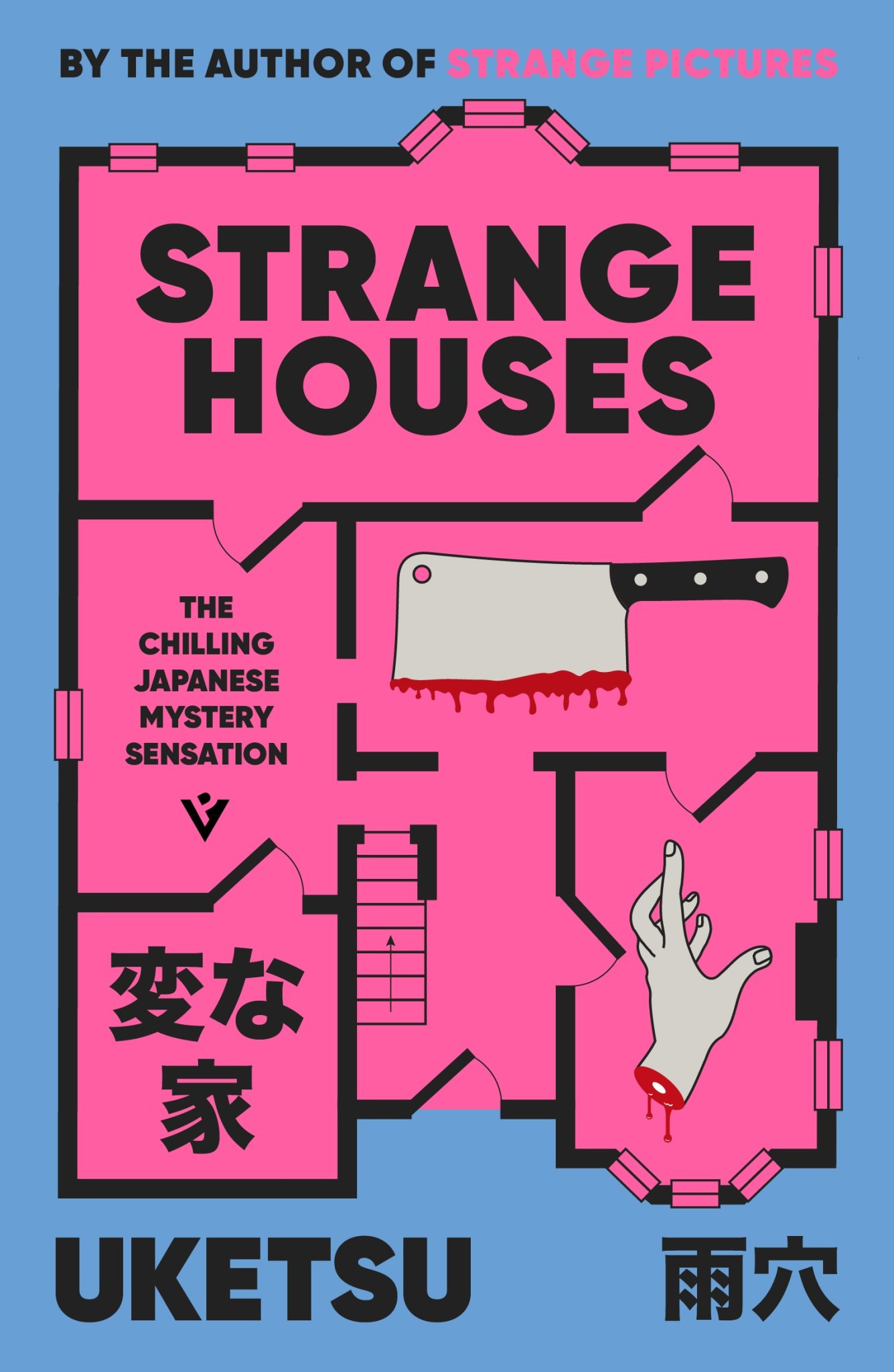
It has been a couple of months since Strange Houses, Uketsu’s debut novel in Japan and second in English translation, came out in both the US and UK. I figure it’s about time to address some of the particular issues translating this one, given that people have probably had a chance to read it.
The UK cover of Strange Houses by Uketsu.
Just to warn you, this is not a spoiler free effort. I won’t go out of the way to include hidden details, but I’m going to go where I’m led.
So.
To recap a bit, I first encountered Uketsu as a YouTuber. My wife became a fan during the height of the pandemic and introduced me in 2022. I shared her interest, but being more interested in books than videos, I was pleased to see that he was also publishing books. Strange Houses actually began from a long-form video and a simultaneous story published on the fiction site Omokoro. An editor at the publisher Asuka Shinsha then reached out to Uketsu and said it would make a great novel if expanded. The existing story became the first chapter of the novel, and I think this helps explains some of the roughness that people might notice in Strange Houses as a whole. Don’t get me wrong, I love the mood and characters it introduces, but in terms of storytelling it is a little loose. And the ending is… Eh. It has its flaws, though I honestly believe the charms outweigh them.
That story is about a friend reaching out to Uketsu about an odd house he was thinking of buying. Poking into the house’s design, Uketsu’s other friend, Kurihara, speculated that the house had been designed for the purpose of murdering and dismembering people. The original friend ended up not buying the house because a dismembered body was discovered in a nearby wooded area and it just felt like a bad omen.
Now, here is where we get to the “translation issue.” In the original publication, that first dead body—the dismembered body missing its left hand, which becomes a significant plot point as other bodies missing hands are discovered—is never mentioned again. The conclusion seems to wrap up all kinds of plot points, but no one even says “Hey, what about that one guy.”
The English editor and I were both rather nonplussed by that. It seemed a rather significant plot point, indeed the instigating incident for the whole book, to just let fade into nothing.
We reached out to Uketsu about this, and about the possibility of adding something, even some simple comment like “It’s crazy that the first body was just a coincidence” so it didn’t feel like people just forgot about a whole dismembered body.
His response was initial surprise, since, as he said. “In the two years since publication not a single person has even asked about that.” But then he said that there was a new mass market paperback edition (or bunkoban) coming out in Japan with a new Afterword “by Kurihara,” which added some doubts and twists to the story as recounted by the fictional Uketsu. Real world Uketsu proposed both adding the Afterword to the English version and making some adjustments that would incorporate the initial body into the doubts Kurihara expressed, which was both a rather neat solution to our doubts and a very cool idea in general.
What this also means is that the English version of Strange Houses is in a very real way a different story from either version in Japanese—and I want to emphasize, it was made so by Uketsu himself. This wasn’t some rogue decision by the editor and I.
I think this should tell you something about the “literary” translation process. On top of cultural/linguistic issues, translators are some of the closest readers you’ll ever find. We dig deep, deep, deep into the stories we translate because, honestly, most of us are terrified of missing something important. We get confused. Sometimes it’s because we do miss things. Sometimes it’s because the author missed something. And sometimes it’s because of a gap in values, world-view, or cultural assumptions. And that’s where we, as translators, start to dig and clarify so we can ensure that the readers of the translated story have the best experience possible.
It also speaks to the role of editors. I think many people assume that in publishing, the author is some kind of towering, monolithic talent whose words are inviolate. It just isn’t true. Editors have enormous power to shape a story and even an author’s voice, and almost always for the better. You think it’s a coincidence that F. Scott Fitzgerald, Thomas Wolfe, and Ernest Hemingway all just happened to be discovered by the same editor? Look up Maxwell Perkins. It is an edifying example of how editors can influence literary output. The same is true of translation, perhaps even more so. See my review of Who We’re Reading when we Read Haruki Murakami for more on that.
So, yeah, it turns out that published stories are far more collaborative than is often believed. That’s not a bad thing! It makes the experience better for readers, if a bit stressful for writers…
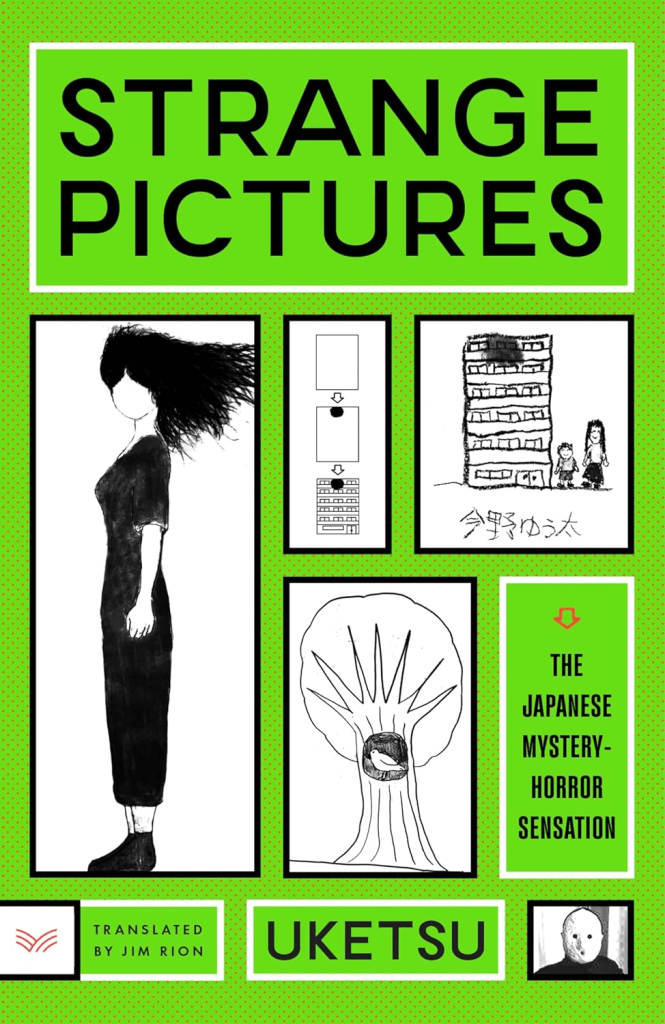
Strange Pictures, my translation of 変な絵 by Uketsu, was published January 16 in both the United Kingdom and the United States. The two versions are the same translation but tweaked for local audiences a bit. Interestingly, the UK version is being marketed as a mystery, while the US is leaning more towards horror. Both are perfectly correct, because Uketsu calls himself a horror writer while clearly using mystery styles and tropes in the books.
The UK cover for Strange Pictures from Pushkin Vertigo
With the release of this book a bit behind us, I’d like to discuss a couple of issues that I dealt with in the translation. Before we go on, let me just say that some of these are spoilery, so PLEASE. If you haven’t read the book yet, save this post for after that.
US cover for Strange Pictures from HarperVia
**Spoilers for Strange Pictures Ahead! You have been warned!**
The first tricky issue that comes to mind when I look back on translating Strange Pictures deals with the second chapter, centered on young Konno Yuta. Within the story, Yuta is learning to write his name in Japanese characters, “kanji,” for the first time. That stirs a memory of seeing his mother’s gravestone, and he starts to draw that gravestone, but changes his mind and converts it to a picture of the apartment building where he lives now with his grandmother—his “mama.” That picture starts out with a large rectangle in which he begins to draw his family name in Japanese: 今野. A fellow student later tells the teacher she saw him draw “A triangle inside a rectangle.” Looking at the first character, of course, you can see the triangle at the top.
Now, how do do all this in English? Well, I kept the Japanese. Indeed, since the reader doesn’t need to READ the Japanese, only see the shape of the character, it seemed obvious. Particularly since the child wrote his name in crayon on the picture, so it’s already evident to readers. I’m hoping that it doesn’t confuse anyone. But we shall see!
The second issue was, well, trickier. It involves the name of a blog that comes up in the very first chapter, and gets a call back at the end. The blog in Japanese is 七篠レン こころの日記, Nanashi Ren kokoro no nikki. It translates to something like “Nanashi Ren’s Diary of the Heart.” The problem is the personal name: Nanashi Ren. This is both a pun, as “Nanashi” can also mean “No-name” AND it turns out very late in the book to be a little trick related to the core mystery.
The trick is complex and based on the fact that in Japanese, there are three writing systems. Kanji are Chinese characters, complex figures that can have both a meaning and a number of “readings,” meaning the pronunciation attached to them. Then there are hiragana, a phonetic system used to write out the readings of words, without the kanji there to carry extra meaning. Finally, there are katakana, a similar system to hiragana that is visually different and used for, well, various purposes to stand out from hiragana.
Hiragana themselves are made of up a few strokes that come together to form characters, but can also sometimes resemble other characters.
It works like this: In the original Japanese, the actual author of the blog is Konno Takeshi 今野武司、or こんのたけし in Hiragana. He creates a pseudonym by breaking the elements of those hiragana up into parts that resemble other hiragana or katakana, mixing them up, and making a new name to which he matches a kanji. There’s a diagram in the original that makes it easier to parse, but it’s super complex and OBVIOUSLY impossible to do in English.
I mean, to be honest, it barely works as a “trick” in Japanese. No one would ever figure it out without being told, because it’s just too complex and arbitrary. It also only fits part of the actual title in Japanese. It’s one of those things that seems incredibly clever after the fact, but nothing within the book itself could guide readers to it.
So, after hours, days, weeks of going back and forth over it, I finally decided with the editor at Pushkin, and Uketsu’s blessing, that we should just use an anagram. Then, having decided that, we couldn’t find any satisfactory anagram using Takeshi Konno. At which point, the editor at Harper Via chimed with with the idea of using some other Japanese name, and with Uketsu said OK. So, that’s how Nanashi Ren Kokoro no Nikki written by Konno Takeshi became Oh No, Not Raku! written by Haruto Konno.
It might be a bit premature, but as it looks like I’m moving into the year-end holidays a little early, I think this is as good a time as any to look back on my work life during 2022
Despite the ongoing pandemic, this was one of my most productive and exciting years as a translator and writer.
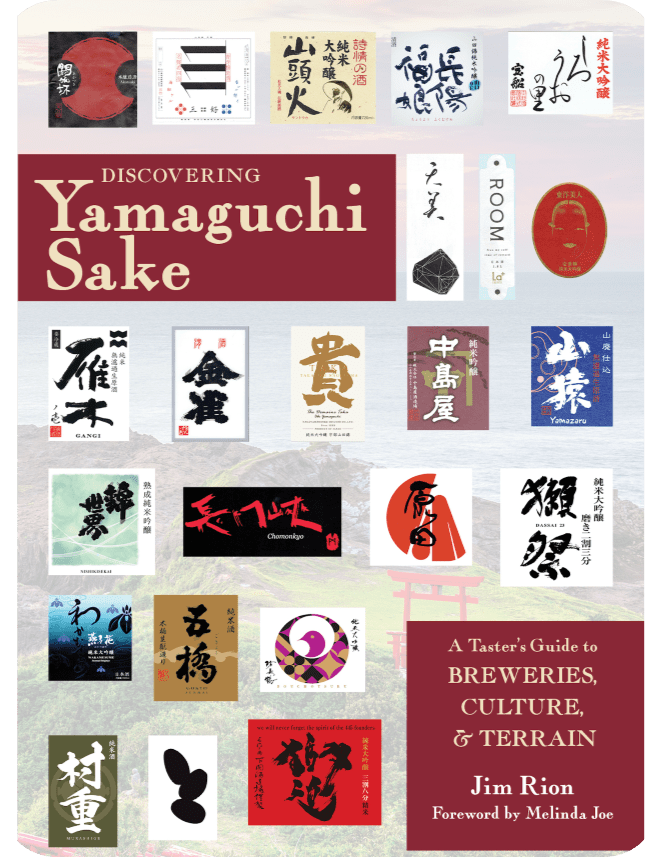
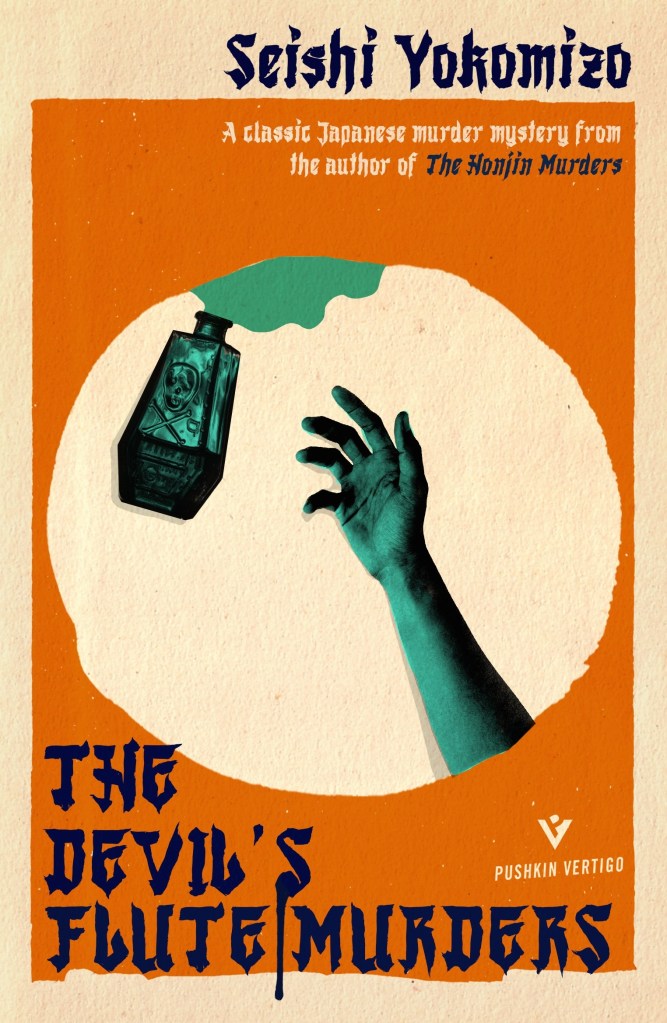
The biggest individual developments were two books. I signed a contract with Stone Bridge Press to publish my book Discovering Yamaguchi Sake in February, and signed with Pushkin to translate Akuma ga kitarite fue wo fuku/The Devil’s Flute Murders in June. Both books are coming out in 2023, and do feel free to buy as many as you want!
I also had a big year on other fronts that might break down a little more numerically.
I translated 285 pages worth of articles for Nippon.com, which is over 100,000 characters by their count.
As for other random website and article translations, it looks like I did over 450,000 characters worth.
I also wrote seven articles for outlets like Sake Today (upcoming), Sake Times, Nippon.Com, and AllAbout Japan.
I hosted online events, made connections, and generally made good use of my time. I also took some photography classes and started getting serious about learning to take proper pictures for my stories.
I plan to make use of all this experience in 2023 with a new book (I’m thinking pottery, this time), and hopefully another book translation.
Despite lots of chaos on the global scale, personally, 2022 was pretty good. I hope you can find a way to say the same.



 Jim Rion - Translator & Writer