2025 – Stuff I loved

As I wrote at the end of last year, I think that celebrating the end of one year and the beginning of the next is best done by thinking about the moments of happiness that dotted what was, I think we can all agree, a pretty dark year. And so, I present to you a few of the things that I loved and enjoyed in 2025. I’m going to group them by type because I was blessed with a lot of enjoyment in this past year.

Music

Music has always been a source of comfort and happiness. Seems like I should recognize that more.

Moisturizer – Wet Leg – This album is straight fire. Holy hell. I stumbled on Wet Leg through the NPR Tiny Desk concert and the groove, man, the beat, the dirty, dirty funk grabbed me and wouldn’t let go. This is rock at its nastiest, sexiest, slipperiest best.

Strong Songs: A Podcast About Music – Podcasts are always such a mixed bag. The talky ones depend so much on guests and takes and pandering that even the best can sometimes get bogged down in PR kowtowing. But Kirk Hamilton seems to have built a podcast out of pure love and expertise, which is freaking amazing. Like, every episode is a full on music education, while never getting all high and mighty. Hamilton treats the Mario theme song with the same respect and erudition as he does Miles Davis’s So What. Want to learn about how Jazz works? He’s got you covered. Want to know about the inspirations behind Yoshi’s theme in Super Mario World? It’s there. Want to just bask in the simple genius of Lean On Me? Hope you’re ready to cry.

Books

Jeez, I read so many books this last year, and a ton of them were good. A few were GREAT. Here are a couple. I really couldn’t list them all in a reasonable way. I reviewed them here or elsewhere, so I won’t go into too much depth. Also, anyone who is interested can keep up with my reading on Bookworm.social.

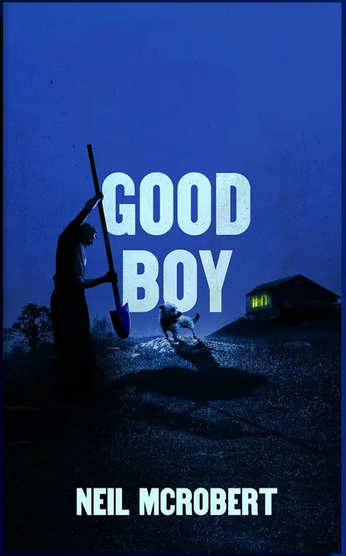
A blue book cover reading Good Boy by Neil McRobert. A man is digging a hole in the ground. A small dog stands nearby, looking rough and ready. A house in the background has yellow lights on.
The cover to Good Boy by Neil McRobert.

Good Boy by Neil McRobert – Click for the full review, but I just want to reiterate, there was so much love in this horror book.

Re:Re:Re:Re:ホラー小説のプロット案 by 八方鈴斗 – Yes, yes, this is a Japanese book and I’m not going to talk much about it, but it was really cool and innovative and surprising. I want to translate it. Someone buy the rights! My review is on the Bookworm page.

Lost in the Dark by John Langan – Click for the review. Man, what a writer. Man, what a collection. so great.

The Philosophy of Translation by Damion Searls – I sometimes forget what a heady, intricate thing I do for a living. Searls shines a light on it that revealed things I never even considered.

Work

I write about work a lot here, but it’s how I spend most of my life and it has dominated so much of my thinking this year that I guess that’s natural. But, I am happy. I love my job. I love working with books and authors and publishers. I love seeing my name on book covers (ahem) and man, I cannot believe how much this work has grown this past year. I am so lucky.

Family

Cheesy and sappy and cliched as it sounds, my family continues to astound me with joy. My son, who turned 13 this year, is growing into an amazing young man, healthy and strong and curious about the world. My wife continues to be the unshakable rock on which we all rest. I am grateful to be able to be with such amazing people every day.

The Sea

I live on the Seto Inland Sea coast. I can walk to the beach in about three minutes. Every day I can, I go to it. Watch the sea birds, listen to the waves, feel the breeze. The sea is big, and constant, and always different. I grew up in a place far from the sea, so it remains something mysterious to me, sometimes even fearful. But when the anxiety roils and the future growls like a hungry beast, I can go to the sea and let it all sink into the deeps.

A distant shot of a small white fishing boat sailing to the right across a grayblue sea. Mountains are barely visible on the horizon. A seagull flies to the left.
Crossing paths

I’m sure there was more that got swept away by my aging memory, but these things stood out. All things considered, 2025 was a decent year for me personally, though I know many cannot say the same. I go into 2026 with only the wish that it does get better, that peace spreads and hate fades and love wins.

Strange Translations

I seem to have become known as “Uketsu’s English translator,” which is certainly not a bad thing to be. But it does mean I get quite a lot of questions about the works, some of which I can’t even answer. Like, no, I don’t know how Uketsu got his ideas. No, I haven’t seen under his mask.

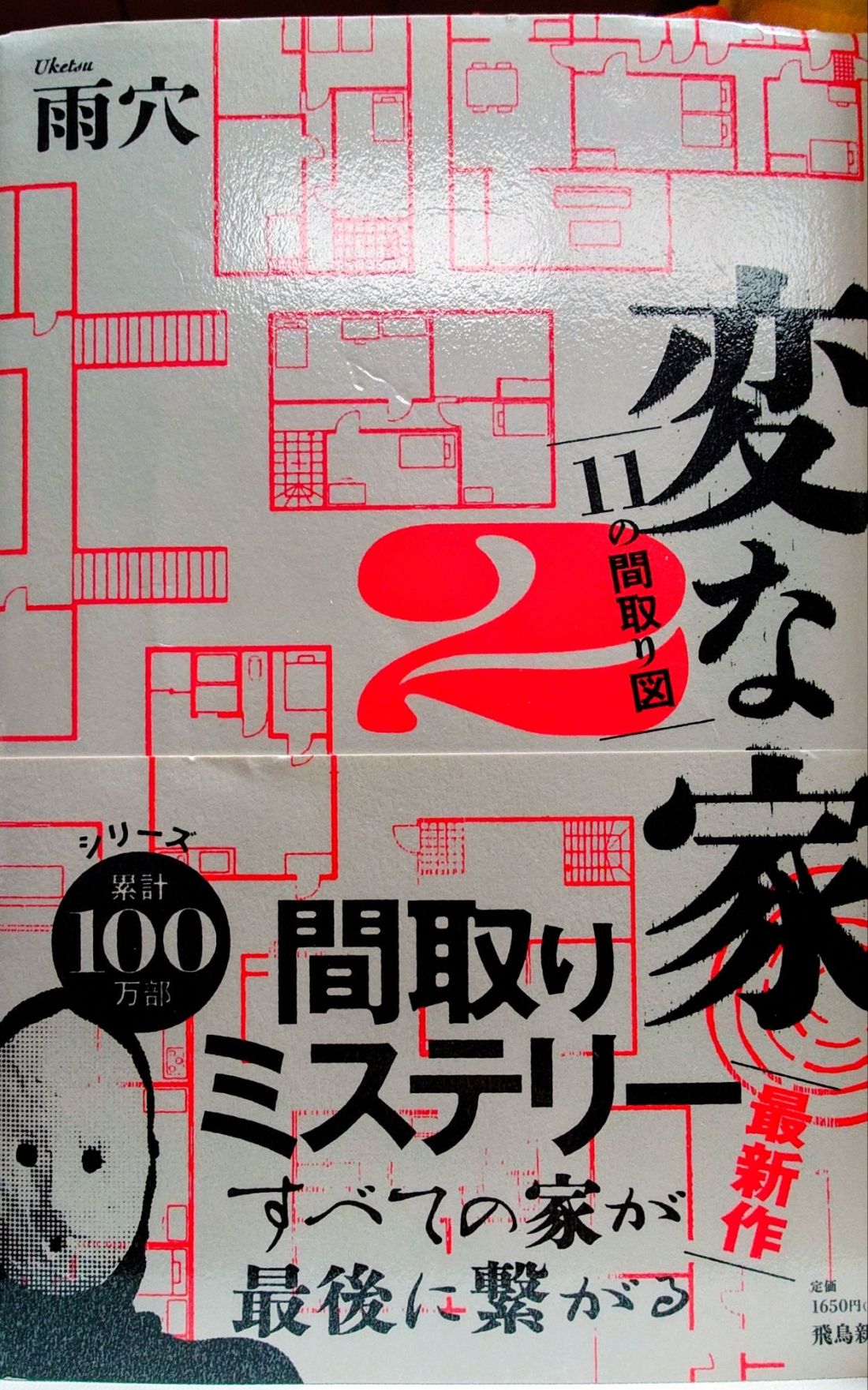
A gray cover with red line drawings of building plans. It has a picture of Uketsu in one corner.
The Japanese cover to Henna Ie 2, coming soon in English as Strange Buildings.

But some questions, I can answer. And the most common of those is: Are you translating more Uketsu?

The answer? Yes, yes I am.

Uketsu currently has four books in print. Henna Ie (Strange Houses), Henna E (Strange Pictures), Henna Ie 2 (Strange Houses 2), and Henna Chizu (Strange Maps). Obviously, the first two are out and selling like hotcakes.

Henna Ie 2 is currently in editing and is scheduled for release in February 2026 under the title Strange Buildings. It’s quite an ambitious book that takes the core idea of Strange Houses in totally wild new places. It is also extremely dark, and there are some disturbing elements that are a departure from the first two books.

Henna Chizu was just released in Japan and the plan is certainly in place, but work hasn’t started yet. I have read the book, though, and it strikes me as the closest to a conventional “mystery” of all Uketsu’s work. It’s kind of a Kurihara memoir, talking about a puzzle in his family history, and he gets to play the great detective, solving not only his own family mystery but a couple of other murders. It should be a fun one to translate, with a very neat little trick. It also delves into Kurihara as a character and makes him quite human.

So, yes, there are more strange Uketsu books coming in English. I hope you all enjoy!

48 isn’t too late, right?

I am not an ambitious person, as it goes. I’ve always been of the opinion that above a certain baseline of “providing comfortably for my family” I’m content with whatever kind of work comes along. That’s partly because that I’ve always been lucky enough to achieve that doing stuff that wasn’t terrible, and often quite interesting. And now that I’m not only making it as a translator, but actually translating and working with stuff I genuinely enjoy, I really have no need to look for more.

But.

If you were to twist my arm, I have always had this tiny part of me that dreamed of being an author. (Yes, yes, I have a non-fiction book out, but that’s different. Don’t ask me how.) Ever since I was a kid. Sometimes it was fantasy, sometimes horror (even a short time when I toyed with noir crime fiction). Over the past couple of years, with the published translations I’ve got my name on, I’ve had a vicarious taste of what being that kind of author feels like. And I like it. I’m really proud of the work I’ve done on Strange Pictures and the other books, books that people really seem to like (By the way: Strange Buildings is coming in February 2026!). That has partially satiated the tiny little hungry writer part in my ego. Still, though, there is part of me that wonders if I couldn’t make my own stories that people enjoy.

And then the other day, literary agents Eric Hane and Laura Zats of the excellent Print Run publishing industry podcast announced their own take on the National Novel Writing month concept, with Zoom check ins and shared writing goals and… Well. It got me a bit hot and bothered. Because I’ve had ideas lately, and this seems like the time to poke them and see what comes out. Like a sign, if you will.

So. Here I am. Trying to write. An hour a weekday/five hours a week. More or less. I’m not good with tight structures. But I’m getting up momentum and soon inertia will keep me on it. I’m already a good 3,000 words in on my very first epistolary/fake documentary horror “novel” on top of a short story I wrote last month.

I also got my wife roped into a ghostly photo shoot TO GREAT EFFECT and that in itself inspired the shit out of me.

Jim the novelist, on his way. Hopefully I’ll finish this thing by the time I’m 50…

Translating Strange Houses

It has been a couple of months since Strange Houses, Uketsu’s debut novel in Japan and second in English translation, came out in both the US and UK. I figure it’s about time to address some of the particular issues translating this one, given that people have probably had a chance to read it.

The UK cover of Strange Houses by Uketsu. It is a pink-colored house layout against a blue background. Inside the house diagram is a bloody meat cleaver, a severed hand, and the caption "The chilling Japanese mystery sensation." It also has the Japanese title.
The UK cover of Strange Houses by Uketsu.

Just to warn you, this is not a spoiler free effort. I won’t go out of the way to include hidden details, but I’m going to go where I’m led.

So.

To recap a bit, I first encountered Uketsu as a YouTuber. My wife became a fan during the height of the pandemic and introduced me in 2022. I shared her interest, but being more interested in books than videos, I was pleased to see that he was also publishing books. Strange Houses actually began from a long-form video and a simultaneous story published on the fiction site Omokoro. An editor at the publisher Asuka Shinsha then reached out to Uketsu and said it would make a great novel if expanded. The existing story became the first chapter of the novel, and I think this helps explains some of the roughness that people might notice in Strange Houses as a whole. Don’t get me wrong, I love the mood and characters it introduces, but in terms of storytelling it is a little loose. And the ending is… Eh. It has its flaws, though I honestly believe the charms outweigh them.

That story is about a friend reaching out to Uketsu about an odd house he was thinking of buying. Poking into the house’s design, Uketsu’s other friend, Kurihara, speculated that the house had been designed for the purpose of murdering and dismembering people. The original friend ended up not buying the house because a dismembered body was discovered in a nearby wooded area and it just felt like a bad omen.

Now, here is where we get to the “translation issue.” In the original publication, that first dead body—the dismembered body missing its left hand, which becomes a significant plot point as other bodies missing hands are discovered—is never mentioned again. The conclusion seems to wrap up all kinds of plot points, but no one even says “Hey, what about that one guy.”

The English editor and I were both rather nonplussed by that. It seemed a rather significant plot point, indeed the instigating incident for the whole book, to just let fade into nothing.

We reached out to Uketsu about this, and about the possibility of adding something, even some simple comment like “It’s crazy that the first body was just a coincidence” so it didn’t feel like people just forgot about a whole dismembered body.

His response was initial surprise, since, as he said. “In the two years since publication not a single person has even asked about that.” But then he said that there was a new mass market paperback edition (or bunkoban) coming out in Japan with a new Afterword “by Kurihara,” which added some doubts and twists to the story as recounted by the fictional Uketsu. Real world Uketsu proposed both adding the Afterword to the English version and making some adjustments that would incorporate the initial body into the doubts Kurihara expressed, which was both a rather neat solution to our doubts and a very cool idea in general.

What this also means is that the English version of Strange Houses is in a very real way a different story from either version in Japanese—and I want to emphasize, it was made so by Uketsu himself. This wasn’t some rogue decision by the editor and I.

I think this should tell you something about the “literary” translation process. On top of cultural/linguistic issues, translators are some of the closest readers you’ll ever find. We dig deep, deep, deep into the stories we translate because, honestly, most of us are terrified of missing something important. We get confused. Sometimes it’s because we do miss things. Sometimes it’s because the author missed something. And sometimes it’s because of a gap in values, world-view, or cultural assumptions. And that’s where we, as translators, start to dig and clarify so we can ensure that the readers of the translated story have the best experience possible.

It also speaks to the role of editors. I think many people assume that in publishing, the author is some kind of towering, monolithic talent whose words are inviolate. It just isn’t true. Editors have enormous power to shape a story and even an author’s voice, and almost always for the better. You think it’s a coincidence that F. Scott Fitzgerald, Thomas Wolfe, and Ernest Hemingway all just happened to be discovered by the same editor? Look up Maxwell Perkins. It is an edifying example of how editors can influence literary output. The same is true of translation, perhaps even more so. See my review of Who We’re Reading when we Read Haruki Murakami for more on that.

So, yeah, it turns out that published stories are far more collaborative than is often believed. That’s not a bad thing! It makes the experience better for readers, if a bit stressful for writers…

Exploring Choice in Translation – A Case Study

A lot of the talk about translation done by people who don’t think all that deeply about it—even professional translators!—focuses on things like accuracy and faithfulness, but I find that tends to work around assumptions that are worth investigating. Like, when something is “accurate,” we tend to think of it as closely reflecting some kind of observable truth or fact. In the case of, say, a machine manual, accuracy does often come down to a reflection of the physical specifications of the machine and its use.

But when we are translating communication of a less tangible sort, things aren’t so clear. Even in the realm of non-fiction, writers often layer intent and meaning and reference in ways that force translators to decide which layer to convey in the translation, because there is no sensible way to convey them all together in the same way as the original does. They have to choose.

I was recently reading a book in translation that got me thinking about that kind of choice.

The cover of The Noh Mask Murder by Akimitsu Takagi. It features a blue-green background with a drawing of a horned, demonic mask.

The book was The Noh Mask Murder by Akimitsu Takagi in a translation by Jesse Kirkwood. Now, let me preface this by saying the translation was great. The book itself is lurid and its prose rather purple, but Kirkwood made it readable and interesting. So, don’t even think of taking anything I say here as a criticism.

But there was one single passage that made me stop and wonder, really wonder, what was going on, and it had nothing at all to do with the murder.

The scene is this. Near the beginning of the book, we are in the POV of an older public prosecutor reminiscing about attending a local festival with a lost love. He says “and yet the face of my companion back then, asking me to wait while she bought me a whelk egg case, had been lost to the winds of time.”

Record scratch.

Whelk egg case? What the fuck? I’ve lived in Japan for over twenty years. I’ve been to countless small town festivals and fish markets. I’ve never, ever seen a whelk egg case at any of them. I do know that whelks themselves are fairly popular seafood, so I could only assume it was some kind of regional dish. But “egg case?” Not “eggs” or “egg sac” or some other more… Appetizing word?

I had to figure this out, for my own sake. My dictionary told me that the Japanese for “whelk egg case” is 海ホオズキ umi hoozuki and a quick google search brought me to a page on Wikipedia with the explanation: “かつての日本ではグンバイホオズキ等の卵嚢が、口に含んで音を鳴らして遊ぶ使い捨ての玩具として縁日や海辺の駄菓子屋で売られていた。” Or, roughly, “Once, in Japan, the egg cases of whelks were used as a kind of disposable toy, taken into the mouth to make noise, often sold on fair days or at cheap snack shops near the seaside.”

Further searching took me to this Japanese page that talks about how they used to be sold. It describes a “buzzing” sound when you use them. So… You put them in your mouth and blow, and they make a buzzing sound

They’re like kazoos. Weird, snail-made kazoos.

Which, in fact, subtly changed my reading of this (mostly unimportant) scene. Without the investigation, I assumed it was some little seafood snack. So, the man is wistfully remembering a thoughtful girl who bought him food when he was hungry. But after I knew what was going on, my view of the girl changes. She’s whimsical, fun, trying to buy the serious guy a little children’s toy at a festival stall.

She’s the playmate rather, than the mother figure.

Now, I have no way of knowing the late writer’s intent. My experience of the reading in both cases might be totally different from someone else’s. But this, I think, is a very clear example of how even a very minor choice can influence the reading experience of a translation.

Kirkwood translated 海ホオズキ 100% accurately as “whelk egg casing” and was perfectly justified in doing so. That’s what the writer wrote, end of story. Mostly.

But. If I had translated this, I might well have chosen to translate it “kazoo” or even “whistle.” Because that would better convey what I felt was happening between those two people at that local festival to readers in English, which arguably is more valuable to readers than accurately translating the word 海ホオズキ. To once again paraphrase Damion Searls, it’s about translating the usage rather than just the word.

Now, I have no idea what kind of path led to the choice that Kirkwood made. Or even if it was a choice as such. He might not have given it all that much thought. I also know that editors have enormous say in the final choices made in a book, so there might have been some behind the scenes conversation about this. Or not. Who knows!

So, let me once again reiterate that I do not, in any way, shape or form, even want to imply that there is something wrong with this translation. There isn’t! It’s just an interesting thought experiment about choice, “accuracy,” and the reading experience.