As I sit here typing this on December 31, ostensibly a holiday, I suddenly realize that it might be depressing to be talking about work. At the same time, I both love my job AND don’t honestly work that much (weekdays, 9-3, lots of days out for location visits, interviews, etc.). So, I’m not too fussed about it. I get plenty of time to mess around.
So, anyway, here is my 2024 working year in numbers:
Rough number of Japanese characters translated: 645,000
(Rough because some projects were more package-based than character based, and one novel overlapped New Year.)
Articles written: 15 (12 in Japanese)
Translation proposal packages written for publishers/rights agencies: 6
Novel translations completed: 3 (including the one that started in 2023)
Ceramic artists interviewed for book: 8
And none of that includes the hours spent taking pictures for books/articles, or reading for the job, or—most important of all!—the people I met. The numbers also don’t reflect the kind of seismic change that has happened in my work as I have become more plugged into the publishing industry. I’m now spending much less time on random corporate websites than I did last year (huzzah!) and more time with artists and creative people of all types. Again, Huzzah!
It has been a good year, professionally, and I think one that has sown the seeds for more good years to come. Fingers are crossed, wood is knocked on, salt is thrown over the shoulder, and every other good luck charm that might help it be so is invoked.
Personally, well, the world is what it is, but we’ve weathered things pretty well. I had a bad summer for a couple of reasons, but in general the Rion family in Japan has been blessed with pretty decent luck. I hope that 2025 is better, but I’d settle for roughly the same.
Anyway, I hope everyone has a lovely New Year, and wish you the best in 2025. To finish up, I am indeed curious. How were things for you in 2024?
There is a part of me that is almost embarrassed at the fact that, after having written and published one book, and having three translations published, with two more scheduled in the next year, I am JUST NOW realizing that hey, maybe I’m not just faking this? Maybe I’m in the book business?
I have been a reader since, well, ever. I think I started reading when I was five, and by the time I was in first grade I was burning through the library. Books were just… There. They were a fundamental building block of my identity. It’s not even something I consciously thought about, but hey. I love books and the reading (and purchasing, borrowing, lending, touching etc. thereof) about as much as anything I can think of.
And of course I always toyed with writing, the way a cat toys with a mouse that it never really intends to eat. “Someday, I shall pounce and then success will be mine!” I would think, while my prey sneaked away, limping but triumphant. Because, of course, writing takes perseverance and dedication and effort, and I sometimes fail to find those virtues in stock.
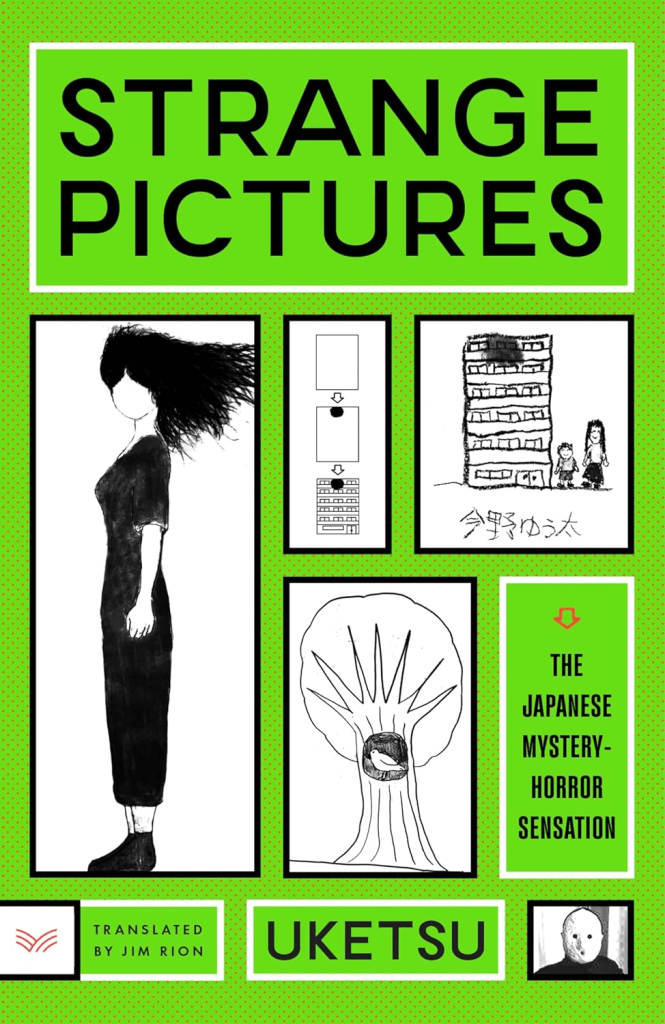
But now that I am not only someone whose name is on book covers, but someone whose name is familiar to PUBLISHERS and AUTHORS (a famous horror author just posted a pic of his ARC of Strange Pictures, with my name on the cover!!!), I think I can finally admit… This is something that I’ve wanted, without really knowing it, all my life.
I think I must have always wanted to be a book person. A writer, an editor, a guy in the biz. And I think that’s what I’ve got now. I’m visiting a book publisher and two international rights agencies in Tokyo at the end of the month. When I mentioned I would like to visit, they all said “Great! We’d love to meet! When?” rather than “Who are you again?”
The feeling of that. The—admittedly ego-centric, selfish, privileged, yes, I am so privileged and lucky but still—DAMN GOOD feeling of it is something else. I don’t deserve to have this good a life, but it’s here. So I guess I’ll live it.
There’s this… I suppose “content creator” is the right term, though I hate it, in Japan called Uketsu. Uketsu is a mystery. He (it seems they’re a he, or at least the agencies involved have confirmed that for international sales purposes) writes articles for websites, creates narrative and music videos on YouTube, and publishes books, all in this very strange overlap of creepy, humorous, and cute. Uketsu appears in a black body suit and white mask, and uses a voice changer set to a rather cute, high pitched tone.
My first hint that Uketsu should be a “he.” Internet Writing Man…
My wife started out watching the videos in late 2021, I think, and got me hooked. Then I found the articles, and soon came the books, and my translator sense started tingling. I wanted to bring this very odd, very unusual ouevre to English audiences, and I thought it would sell. So, around the end of 2022, I put together a little sample of the debut book Strange Houses (変な家) and author intro for Pushkin Vertigo, with whom I had just finished working on Seishi Yokomizo’s The Devil’s Flute Murders (available now wherever you buy your books!). I sent it—as well as my strong personal recommendation to get on this very new, very original author—to Daniel Seton, the editor I’d worked with on that previous book. I made sure to mention my belief that, while Strange Houses was a fascinating book, Uketu’s second Strange Pictures 変な絵, was perhaps a more solidly structured, more confident work. Pushkin started doing their whole thing.
The video that started things off, Strange Houses 変は家, with English subtitles.
I’ve only seen the process from the outside, so I can’t say exactly how it works. I’m assuming there was some kind of internal meeting and review process, and they probably asked someone else to read the books and give impressions. I know for sure that last does happen because I’ve done it for other works. Anyway, sometime in the spring of 2023, Pushkin told me that they had made a successful offer on Uketu’s two books (these have since been announced officially, so I think I’m safe to say that much) and Daniel asked if I would be available to translate them.
Of course, of course, of course.
At that point, it was simply a happy outcome. I had set my sights on getting a project through, and it had been successful. I could get about my work as a translator, like I had so many times before.
Then, things began to change. It started to feel like this was going to be a big deal.
Earlier this year, right around when I finished the initial draft for Strange Pictures—which Pushkin (rightly, in my opinion) decided to release first, despite it technically being Uketsu’s second book—I heard that the author had become “the” hot topic at the Frankfurter Buchmesse, the largest international book event in the world. Someone from a major international author agency contacted me because they were handling international rights for all the languages except English (since Pushkin had beaten everyone else to the punch on that…) and wanted my help putting together PR material. Pushkin asked me for quotes to use in their press releases and promotional materials.
I’d never experienced that sense of being “plugged in” with anything before. My previous translations for publication had been much more subdued, even with the Yokomizo book. It’s all very unexpected, and I don’t know what might be coming next. There’s this silly little part of me that’s like, “Movie deal when? Netflix series next?” but of course, I’m just the translator. None of that has anything to do with me.
Still.
It feels new. It feels exciting to be part of a thing that makes a splash. I’m glad I could help share Uketsu’s very weird but very fun work with a broader audience and I hope it brings him more well deserved success. Whatever comes, I think it’s OK to feel a bit of pride that I helped get Pushkin and Uketsu together before anyone else.
When the time comes, I plan to post something a bit more detailed about the books as they come out, but for now, take this as an announcement, too. Strange Pictures is scheduled for release in January 2025 from Pushkin Vintage, translation by me. Jim Rion. Strange Houses will follow. Both have also been sub-licensed to an American publisher, but I don’t know their schedule.
I’m a lucky guy, all in all. Bad things have happened in my life, but I’ve made it through them more or less intact. I have a loving, healthy family. A career that is basically ideal. And through it all, I’ve been able to experience the world in ways I never dreamed of.
I sometimes feel like I’m so lucky it’s kind of scary. Because luck can turn on you in an instant, can’t it? All this can disappear like a tears in the rain (IYKYN). That thought has haunted me in a very real way, and I think I’ve developed a weird psychological tick because of it.
The thing that made me understand my own way of interacting with life’s vicissitudes was a bit in one of Terry Pratchett’s Discworld books, about the blacksmith Jason Ogg. Because of the fundamental importance of a skilled blacksmith, and the magical nature of the Discworld, Jason Ogg can shoe anything. Donkeys, unicorns, even Death’s pale horse. But to have the power to shoe anything that comes to you for shoeing, you have to shoe anything that comes. If Death comes to you to shoe his horse, you shoe his horse. If your drunk friends bring an ant for shoeing as a joke, you shoe the ant. If you deny the request to use a power, you lose the power.
A blessing must be used, or you lose it. That is how I have come to interact with what I view as my luck. In practical terms, that means that if a chance that seems “lucky” comes along, I take it.
When someone emailed me years ago asking if I was interested in coming to Japan to teach English, I wasn’t, actually. But it seemed like a lucky chance, so I took it. And now I have lived in Japan, happily, for two decades.
When my barber asked if I wanted to go out to dinner with him and his niece, whom I had never met, I went. I married his niece a year later.
When my wife and I went for a walk one day in the neighborhood and saw a house with a for sale sign in the window, we took a tour and made an offer that day because it felt perfect to me. We’ve lived in it for almost 11 years now, and never plan to move.
This tendency of mine, to say “yes” to pretty much every major opportunity that comes down the line has also guided my career. It’s how I survived the bankruptcy of the English school I first worked at, it’s how I became a semi-regular TV guest, and it’s now guiding my literary translation work.
As if to reinforce the idea, the lucky chances keep coming, and I’ve not had to say “no” to any yet. That idea, that I have not had to say no, is perhaps the other half of my theory of luck. Because, if you want to say yes to opportunities, you need to be able to take them. You need skills, flexibility, time, attitude… You need to be open and prepared. Which is why I study things almost constantly, because you never know when you’ll need to know, oh, trends in the Japanese mystery publishing industry.
Anyway. I was just thinking about this, because sometimes I wonder what would have happened if I had said “no” to some of the things that have come along. But all in all, I’m glad I didn’t.
I know that, in doing this, I contribute to the problem in its own way, but I simply can’t bear it anymore.
The AI frenzy I have seen among my fellow translators has to stop. It feels like I’m watching otherwise intelligent, literate folks suddenly spouting flat earth theory.
LLM/Generative AI/Whatever you want to call it doesn’t actually do what it says it does. It isn’t a useful tool. It doesn’t think, it doesn’t translate, it doesn’t explain. LLMs are sophisticated statistical algorithms that spit out words they got off the internet in “likely arrangements.” Any meaning that those words seem to have is provided solely by the reader. Any time you ignore the fact that nothing of what LLMs generate is rooted in factual reality, you are deceiving yourself. The idea that some part of the communication might be “wrong” is, in itself, a mistake. It’s all generated the same way, from statistical analysis and algorithmic generation. The good and the bad are both equally likely. Seemingly accurate BS and clearly inaccurate BS are both equally BS.
The industry calls LLM mistakes “hallucinations” but they’re really just expressions of the nature of the beast.
The great success of LLMs is only in that they *feel* right, so no one really takes the time to check if they are, actually, so. It certainly seems amazing that the words string together in clear sentences that we can interpret as more or less connected to our prompts. But we are professionals at working with words. We should be holding our work to a higher standard that “Eh, it feels right.”
Because folks, there’s nothing under there. It’s empty. Let’s take a recent Facebook post froma a translator I saw. It was a query about the pros and cons of different translations of a tricky term. The results included sources, for example, and a lot of double talk that boiled down to “it all depends on the context.” If you actually took the time to read those sources, though, none of them actually supported any of the points of the response. They were just linked by including the terms in question. Sometimes. One of them was actually Vietnamese, which is odd given that the query was in English and talking about Japanese. But it had a (poor) English gloss of a phrase including the term, so… Source?
That is what LLMs *do*. They were trained not to be right, but to sound right. To be really convincing liars. (Which is actually a pretty easy thing to get away with when discussing elevated academic ideas, because they’ve been dominated by empty bloviating for decades, anyway. I’m sure LLM generated philosophy and linguistics papers are already filling journals, because no one ever read or understood that shit anyway.)
The trick of LLMs is, quite literally, a scam. As in, they seem to have evolved parallel to techniques designed specifically to fool people. The datasets were trained to generate sentences that felt right, rather than be right, by having them rated by non-expert users in developing nations. It is, as the kids say, all vibes. And the result is that the patterns are now set to be convincing, but nothing more.
The upshot is, if you adopt LLMs into your work flow, you are intentionally adopting a bullshit engine. Nothing that comes from an LLM should ever be trusted. There is no accountability for the inevitable errors and fabrications that they bring to your work. If ChatGPT were an employee, you’d fire them almost immediately for fraud. Which you would know if you applied critical thinking to the results you’re getting, rather than allowing the facade of legibility convince you that “The Machine Understands!”
What we as translators should be doing is not wondering how to use AI, we should be educating our clients about the dangers of trusting. Any work that is done by AI is without value. Literally. If the results of AI are good enough for a given task, it was never worth doing in the first place. Which is not to say that everything we do is equally valuable. Indeed, corporate boilerplate has always been BS, so a BS engine might, in fact, be exactly what you need to do that. Whether you feel comfortable engaging in that cycle is another matter.
And that’s not even getting into the heavy environmental cost of each query, or the deeply immoral and exploitative labor practices that have lead to the current status, or the terrible people running these shows.
I know that it seems like this is the way the world is going, but we don’t have to embrace the idiocy.