Setouchi Tsurezure #3 – Happy New Year

An open sake pitcher, a bottle of Gokyo sake, and a small ceramic cup alongside a paper envelope with Japanese herbs and spices for making traditional otoso sake for New Year’s.

Happy New Year

2023年が終わって、2024年がやっと来ました。今の時期はとてもすきです。なぜかというと日本のお正月とアメリカのNew Yearは大分違うからです。

他の習慣もあります。例えば0時には夫婦やパートナー同士がよくキスをします。それは新年で幸運をよんで、夫婦で仲良くできるように信じられているからです。

0時になったら、皆が一斉にAuld Lang Syne(オールド・ラング・ザイン)という曲を歌います。元々スコットランド出身の詩人ロバート・バーンズ氏が書いた詩を音楽に合わせたものですが、日本では「蛍の光」で知られているらしいです。アメリカ人として初めて来日した時、お店が閉店する時間にこの曲が流れているのを聞いてかなり驚きました。まるで毎晩がニューイヤーのような感じがしました!

元旦になると、アメリカ人はよくNew  Year’s Resolutions「新年の抱負」を立てます。「新年で痩せます!」や、「今年はお酒の量を減らします!」みたいなことを宣言しがちですが、もちろんほとんどはすぐ忘れ去られいつも通りになります。

これは限られているかもしれませんが、実家では元旦に「ブラック・アイド・ピーズ」という豆料理を食べました。和訳すると「黒目豆」といいますが、シンプルな煮豆でアメリカの南部の定番料理です。元旦で食べると新年の幸運につながると思われています。信じるかどうかは個人の判断です…

アメリカで新年は一晩で賑やかになりますが、日本と違って連休にはなりません。ある店は31日の夜の準備のために少し早めに閉店しますが、1月1日はほとんど通常営業です。公務員なら元旦は休みになりますが、2日からは完全にいつも通りになります。

個人的に、日本のお正月のほうが好きです。皆がゆっくり、のんびり集まって家族で過ごすことは良いです。そして何よりも日本のお正月の雰囲気が好きです。テレビでは着物姿が現れて伝統的な琴曲も流されているので、どこに行っても昔の日本の風情を感じます。

いつものバリバリ働く日本人がやっと落ち着くような感じで、やはりお正月がいいですね。

それでは、改めて明けましておめでとうございます。

今年もよろしくお願いします。

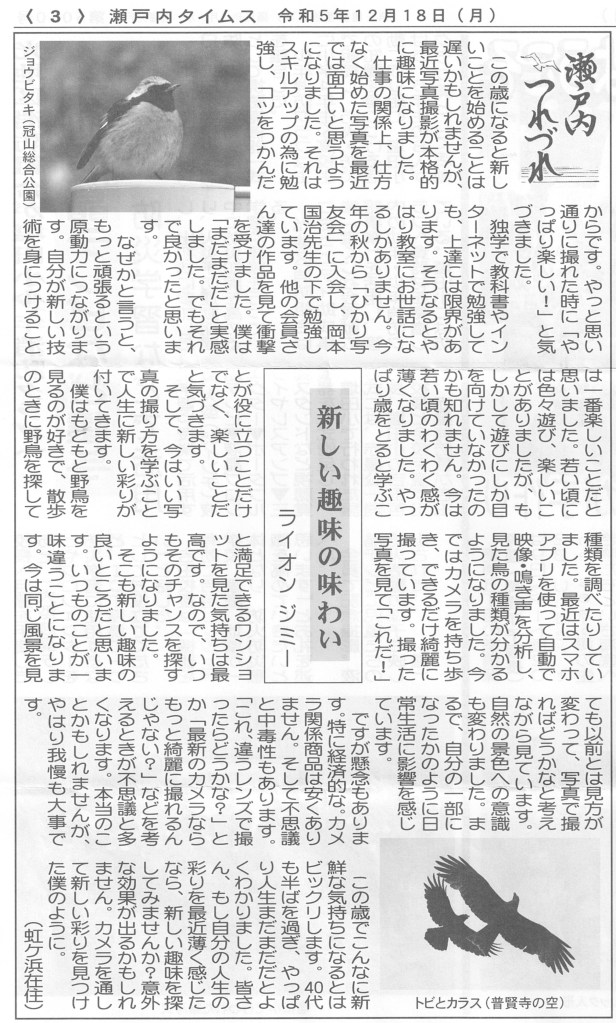
Setouchi Tsurezure Series #2 – New Interests

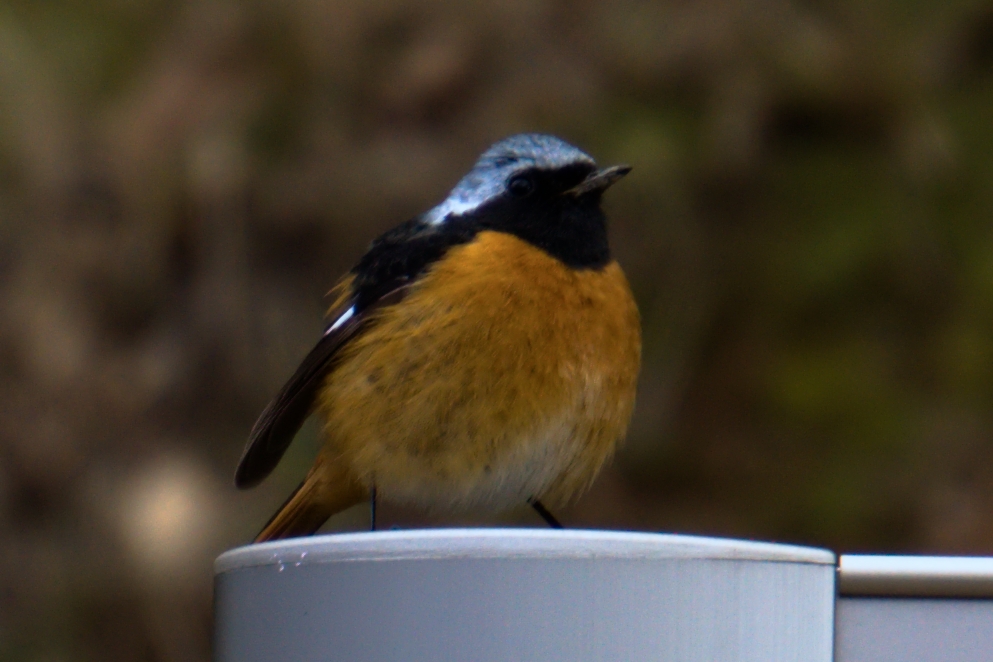
A closeup of a round, reddish and black bird.
A daurian redstart, as featured in the article below.

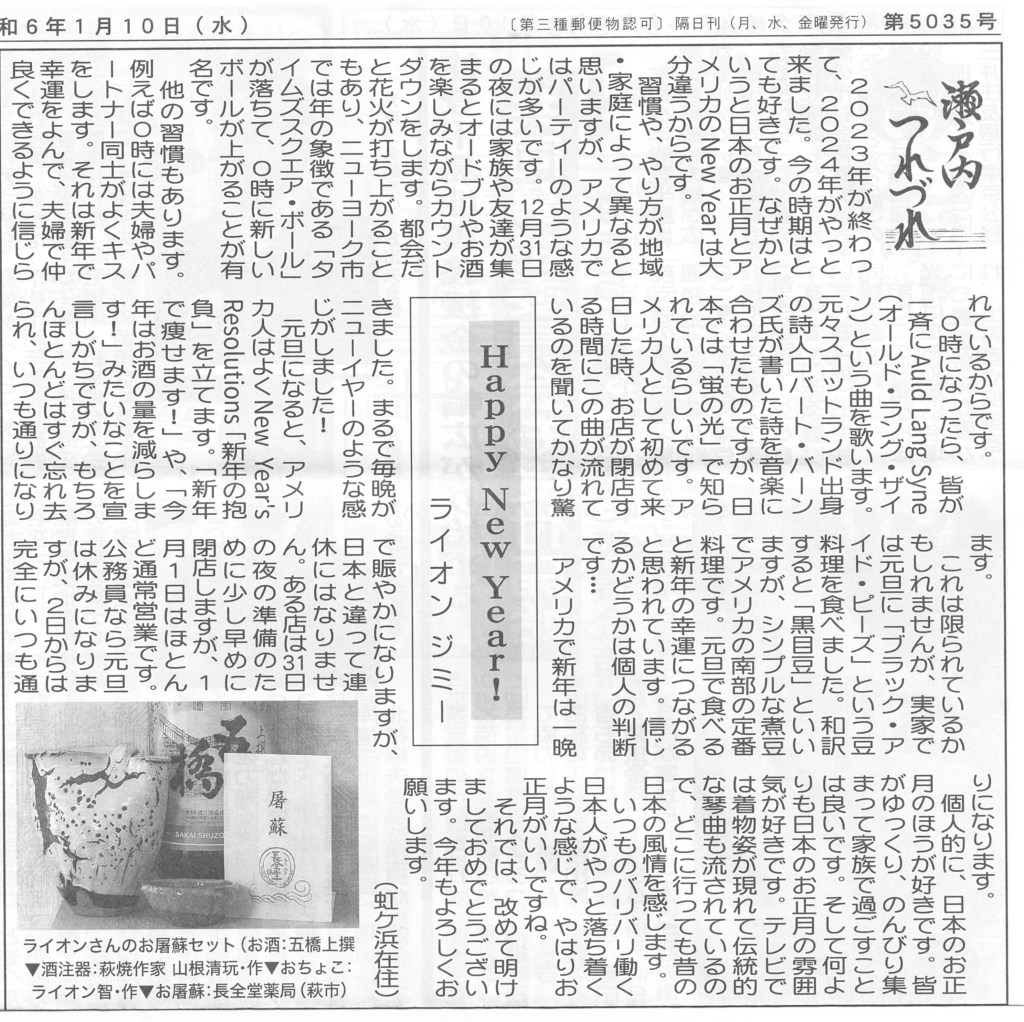
A scan of the article from the Japanese newspaper.

新しい趣味の味わい

この歳になると新しいこと始める事は遅いかもしれませんが、最近写真撮影が本格的に趣味になりました。

仕事の関係上、仕方なく始めた写真を最近では面白いと思うようになりました。それはスキルアップの為に勉強しコツをつかんだからです。やっと思い通りに撮れた時に「やっぱり楽しい!」と気づきました。

独学で教科書やインターネットで勉強しても、上達には限界があります。そうなるとやはり教室にお世話になるしかありません。今年の秋から「ひかり写友会」に入会し、岡本国治先生の下で勉強しています。他の会員さん達の作品を見て衝撃を受けました。僕は「まだまだだ」と実感しました。でもそれで良かったと思います。

なぜかと言うと、もっと頑張るという原動力につながります。自分が新しい技術を身につけることは一番楽しいことだと思いました。若い頃には色々遊び、楽しい事がありましたが、もしかして遊びにしか目を向けていなかったのかも知れません。今は若い頃のわくわく感が薄くなりました。やっぱり歳をとると学ぶ事が役に立つことだけでなく、楽しいことだと気づきます。

そして、今はいい写真の撮り方を学ぶことで人生に新しい彩りが付いてきます。

僕はもともと野鳥を見るのが好きで、散歩のときに野鳥を探して種類を調べたりしていました。最近はスマホアプリを使って自動で映像・鳴き声を分析し、見た鳥の品種が分かるようになりました。今ではカメラを持ち歩き、できるだけ綺麗に撮っています。撮った写真を見て「これだ!」と満足できるワンショットを見た気持ちは最高です。なので、いつもそのチャンスを探すようになりました。

そこも新しい趣味のいいところだと思います。いつものことが一味違うことになります。今は同じ風景を見ても以前とは見方が変わって、写真で撮ればどうかなと考えながら見ています。自然の景色への意識も変わりました。まるで、自分の一部になったかのように日常生活に影響を感じています。

ですが懸念もあります。特に経済的な。カメラ関係商品は安くありません。そして不思議と中毒性もあります。「これ、違うレンズで撮ったらどうかな?」とか「最新のカメラならもっと綺麗に撮れるんじゃない?」などを考えるときが不思議と多くなります。本当のことかもしれませんがやはり我慢も大事です。 この歳でこんなに新鮮な気持ちになるとはビックリします。40代も半ばを過ぎ、やっぱり人生まだまだだと良くわかりました。皆さん、もし自分の人生の彩りを最近薄く感じたなら、新しい趣味を探してみませんか?意外な効果が出るかもしれません。カメラを通して新しい彩りを見つけた僕のように。

Setouchi Tsurezure Series #1 – Introduction


A scan of the article from the November 18, 2023 issue of the Setouchi Times.

初めまして、ライオンジミーです。これから時々瀬戸内タイムスさんで記事を書きます。よろしくお願い致します。

まずは自己紹介しようと思います。

僕はアメリカ・カンザス州の田舎で生まれ育ち、隣のオクラホマ州のタルサ大学でドイツ語と哲学を勉強しました。その後アイオワ州で大学院生としてドイツ語・語学修士の学位を取りました。そして、ドイツのベルリンにて勉強を続け、知人の仕事の紹介で2004年に初来日しました。

日本に来る前はこの国と何も縁が無かったこともあり、言葉しも文化も分からない状態でした。それでも山口県での生活が気に入ったのは、日常の生活リズムや景色が何となく地元カンザスにいるような感覚だったからと思います。約2年後には素敵な女性と出会い、翌年結婚しました。すっかり山口県に根付いた生活の日々。現在は光市で家族三人で暮らしています。

思い返せば来日して19年。やっと日本語が困らない程度に話せるようになりました。更に日本文化にも興味が沸き、自分に合う過ごし方ができています。

当初は英会話講師として働きましたが、2016年に独立し、今は英訳・ライター業です。日本語を英語に訳したり、自分で取材して記事を書いています。

今回は日本語で文章を書いているので、緊張で汗をかきながらキーボードを打っています。もし変な日本語でしたらお許し下さい。

翻訳の仕事は多様性が豊かです。観光や文化、文学等の原稿を慎重に読み、自分の理解を深め、そして英語に書き直すという作業です。最近は横溝正史のミステリー「悪魔が来たりて笛を吹く」を英訳し、今年2月にイギリスで出版されました。

日本各地の観光サイトからも依頼がくることで、行った事がない場所でもどんどん詳しくなり行った気持ちになれます。非常に面白い仕事です!

地元の中小企業のウエブサイトも英訳していますが、山口県内の仕事はほとんど日本酒関係です。

僕はかなりの日本酒マニアで、以前も瀬戸内タイムスさんに紹介して頂いた際も、県内の酒蔵を全て巡り、アメリカでそれらを紹介する本を出版しました。これからも地元の酒蔵の力になれたら嬉しいと思います。

もちろん美味しいものですが、日本酒の魅力はやはり職人技の塊であることです。お米から酒を造るには職人の知識・経験・勘が欠かせない事で、かなり興味深いです。日本酒の興味に釣られて最近酒器にも興味が沸き、陶磁器を集めています。萩焼はもちろんですが山口県のあちこちに才能溢れる陶芸家がたくさんいます。

これから瀬戸内タイムスさんでは自分の好きな物がテーマになります。ということは、地元の隠れた職人や文化、美しい自然や、おいしい日本酒がほとんどだと思います。そしてたまには陶磁器についてお話ししたいです。

やはり、山口県は歴史でも文化でも自然でも恵まれているのです。

Hooded Crane Pangs

The rare hooded crane once nested here in Yamaguchi Prefecture in the hundreds. Most now winter in southern Kyushu island, but a few—a bare handful—nest in the rural community of Yashiro, a part of Shunan city about 25 minutes’ drive north of here. The town has a dedicated observation center that overlooks some of the rice fields that they frequent, with a CCTV monitor aimed at another spot.

I went to the nesting grounds today to see if I could spot any. A sign on the observation center wall said there are currently four nesting in Yashiro, and the monitor showed two of them. There was a field scope set up for a more direct look, so I actually got to see two of the only four hooded cranes currently on the island of Honshu… But just barely. My 210mm lens could pick them out.

Two large birds with gray bodies, white heads, and red patches around the eyes, can be seen in a distant field.

Then I saw that the spot was close to a public road. So, I went closer.

I was eventually able to see them pretty well through my lens, but there were all these signs “No crane watching,” “Please take pictures from the observation center” and the like. The signs implied that taking pictures of the birds would frighten them or drive them away.

But… I was standing on a public road. There were cars driving by—including an employee of the observation center who glared me as he rumbled by in his truck. There was a restaurant right there with a parking lot where, presumably, people opening and closing their car doors. It seemed like a relatively lively spot. And I was just walking along, probably a good 150 meters away.

I was conflicted. I wanted to watch them, but the officials didn’t want me to.

On the one hand, I get that they don’t want crowds of people filling the area, or anyone sneaking into fields and scaring the birds away and/or messing up the rice fields. It would be bad both for the birds and the local community. On the other, it’s not bird lovers or photographers who are destroying the habitat and driving the birds away on a daily basis. I get that they can’t exactly ask local farmers to scale back their livelihoods for the sake of birds, and birders are indeed just following a hobby.

Now, I’m not sure what to think about myself. I did something I was asked not to, because the reasoning behind the request seems misguided. But I’m not above the rules. Are they rules, though?

Not Quite a Resolution

The new year resolution is a tradition, as is the breaking of the new year resolution. So, I tend to shy away from them. But I do enjoy the idea of new starts, so there are some things I’m doing differently this year.

The first is that I’m trying to bring more beauty into my life. The past few months, I’ve been working with potters more closely, and I’ve realized that using their work as part of daily life is a simple way to elevate the quotidian. And so, rather than just focusing on sake wares, I’m using handmade pottery for everything I can.

A tall white porcelain cup that narrows at the bottom. The glaze shows a finger-shaped open patch at the bottom.
A porcelain cup by Jaeho Choi perfect for shochu, water, or other cold beverages. The Meiji era Arita ware plate below it is also great for serving stir-fry!

One of the last emotional holdouts for me was coffee. It’s a hard thing on cups, with its staining and oils, so the idea of drinking it from fine pottery was always somewhat uncomfortable. But when I talked to my potter friend Yagi Hiroyuki about it, he explained that he used a porcelain clay mix and a tighter glaze for coffee cups for that very reason, as well as layering food-grade silicon for cheaper wares. And then, he offered me a cup to test… So, now my daily coffee come from a handmade artisan piece.

A pinkish, rounded coffee cup reminiscent of Hagi ware.
A Hagi-ware coffee cup.

I’ve also realized that shochu cups are… Well, cups. So, why not use them for drinking other things, like water? No more plastic, no more cheap store-bought stuff… My day is now decorated with fine pottery from artists whose faces I know, whose hands I have shaken.

A short, wide ceramic cup with white glaze speckled with black. The sides are carved in random ways so that dark lines seem to rise from the glaze.
A shochu cup by Yagi Hiroyuki, now being used for water.

It’s a little thing, but one I’m glad of. And one I recommend others think about, too. There are plenty of affordable pieces by artists with skill and creativity all over Japan, and the world. Look around you. It’s good for the soul to eat and drink from functional art.