An American living in Yamaguchi prefecture, Japan. Translator, writer, and cat servant. Author of Discovering Yamaguchi Sake, translator of The Devil's Flute Murders, Strange Pictures, and more.
I’ve been venturing out to the river on my bike on various morning and evening trips the past couple of weeks to see if I can spot any kingfishers, but mostly to no avail.
I decided to try the middle of the afternoon today for a change, and from a good 100 meters away I figured I had made the right choice. Can anyone guess how I knew?
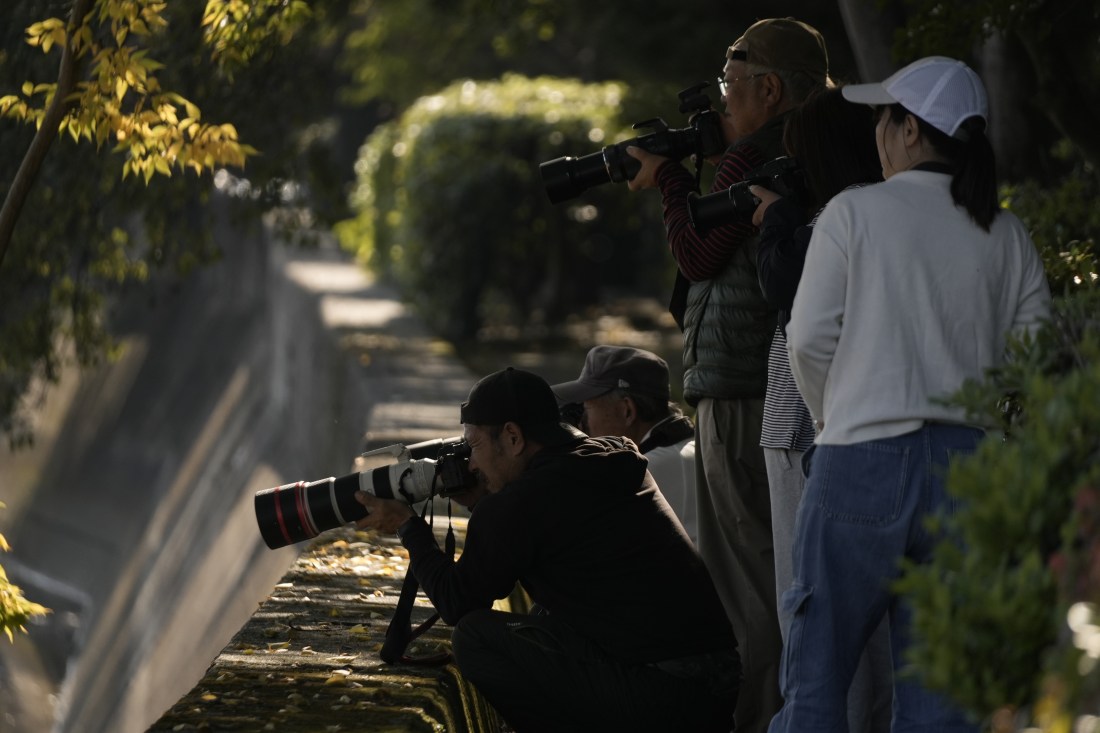
Hunters
Yes, all those people and all that camera gear could only mean one thing: there was a kingfisher lurking.
We all took… Jeez, probably a couple hundred pictures each (burst shot on a digital camera really burns through a memory card), but hey, what else is several thousand dollars worth of camera and lens for?
Hunted
Once our prey disappeared into the reeds, we all scattered without so much as a “See you.” Ah, such is life. Nice afternoon, though.
I signed up for ARCs from weird horror publisher Tenebrous Press, and this one showed up recently.
I try to be judicious with my reading time and don’t hesitate to stop reading books that don’t interest me. I finished this, and was happy to do so… With some caveats.
Essentially, it’s an epistolary story about love growing over email, between a character name Aku and another, Atticus “Finch” Davani. These are the “Penpals” of the title.
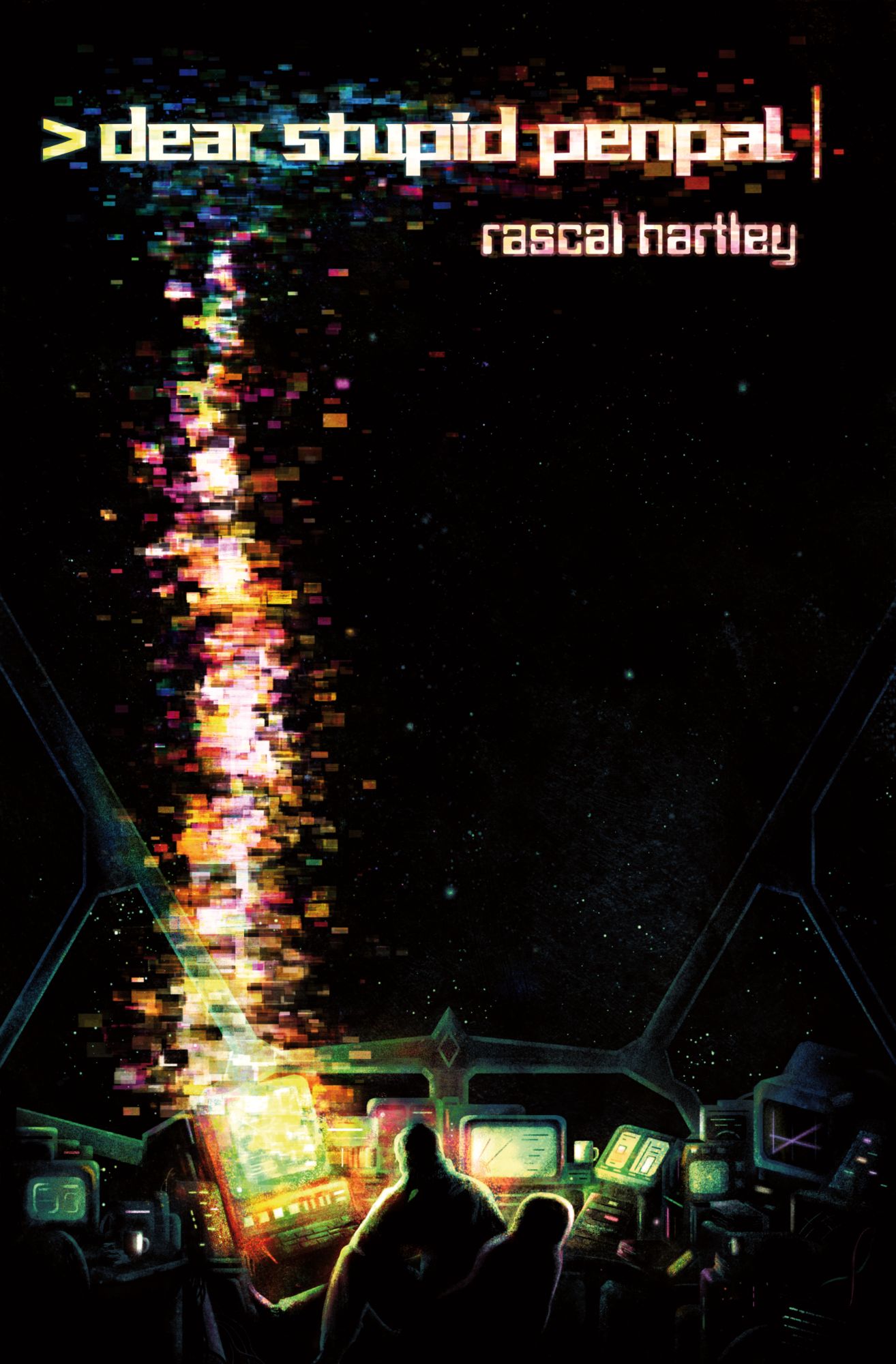
Dear Stupid Penpal by Rascal Hartley
Finch is on board a spaceship and Aku back on earth, and they fall in love as they communicate across the void. Complications and drama ensue.
There are things I really liked about this one. Aku in the story is a poet, and his voice is actually poetic. Some of the writing in his letters is achingly beautiful.
Hartley did a wonderful job in general with voice and pace. There were lots of fun little interacts that felt really natural.
And, I suppose given the day and age, it’s important to mention that this is a queer love story, of several flavors, with wide representation: disability, religion, and color.
So, I want to commend Hartley on writing a beautiful story that moves quickly.
If that sounds like something you’d like, in a near future weird SF/light horror story, then I think you’ll really enjoy this one. Stop reading this review and go pre-order/read this book.
And if, by any chance, Rascal Hartley is reading this, good job! Seriously. Now, go live your life happily.
But, like I said, there are caveats. So if you’re curious about some nitpicky details, read on.
Warning: this part has some spoilers, because a basic plot point that I would normally put in a summary ends up being used as major turning point in the story… Oddly.
**Spoilers Start**
So, as mentioned, Finch is on a spacecraft. An interstellar one. Sent to explore the vast reaches of space beyond the solar system using a hyperdrive system.
And along the way, the crew suddenly has the terrifying, shocking realization of the existence of… Time dilation. One of the most basic of all SFnal concepts. One that I, a philosophy/linguistics student with no grasp of physics or math, have known about since elementary school.
I mean, once I saw the mention of “hyperdrive” I started thinking, “These folks sure are blasé about never seeing their friends or families again.”
Because, for those who don’t know, (theoretically) when you travel fast enough to reach other stars within a single human lifespan, you’re at a significant enough portion of light speed that time travels much, much more slowly for you than those not traveling. Your people back on earth will outstrip you, aging and dying while you live on.
But none of the crew of this highly advanced spacecraft with FTL communication equipment etc. knew about that?
Sure, we can assume the government is despicably trying to hide that this is essentially a mission from which there’s no return to normal life, but the media didn’t notice it before the launch?
None of their friends had ever read any SF books?
The actual scientists aboard that ship didn’t think about it until after they left?
I have to be honest, I just assumed the crew was utterly unqualified for the mission when that became clear. It’s obvious Atticus shouldn’t be there. I mean, he’s kind of an idiot. So, perhaps the government chose people it saw as useless and disposable to be the guinea pigs for this inaugural trip. They didn’t choose the best and brightest, that’s for sure.
But! If you can ignore all that and not think too deeply about two people who have never met falling so deeply in love over email that their love lasts *literal millennia* then this is a fun book that actually has many more plot points that remain unspoiled by this review.
I’m using that term “talk” cautiously, because I’ve had public effects and appeared on TV in Japanese before, but in terms of “standing at a podium giving a prepared presentation in Japanese,” my first time was October 21st, 2025.
The Crowd
The Hikari Community Development Support Center, which hosts local clubs and plans public events, invited me to be part of their annual local seminar series. I think my book and city newspaper column caught their eye, but it might also be that two former students from my business English days are on staff.
Whatever the case, I was scheduled to speak from 10 to 11:30, with a short break in the middle. I prepared a two-part talk, “Rediscovering Yamaguchi Prefecture.” The name is a play on my old TV segment, and featured since if the things I love most about this place.
Mostly, it was some of my favorite pictures taken here. Most of them are on this site somewhere.
I also included a segment on local sake, of course.
I’d say it went pretty well, but my Q&A segment ended up being way too long because I was just too damned tired to keep talking. And no one wanted to ask questions.
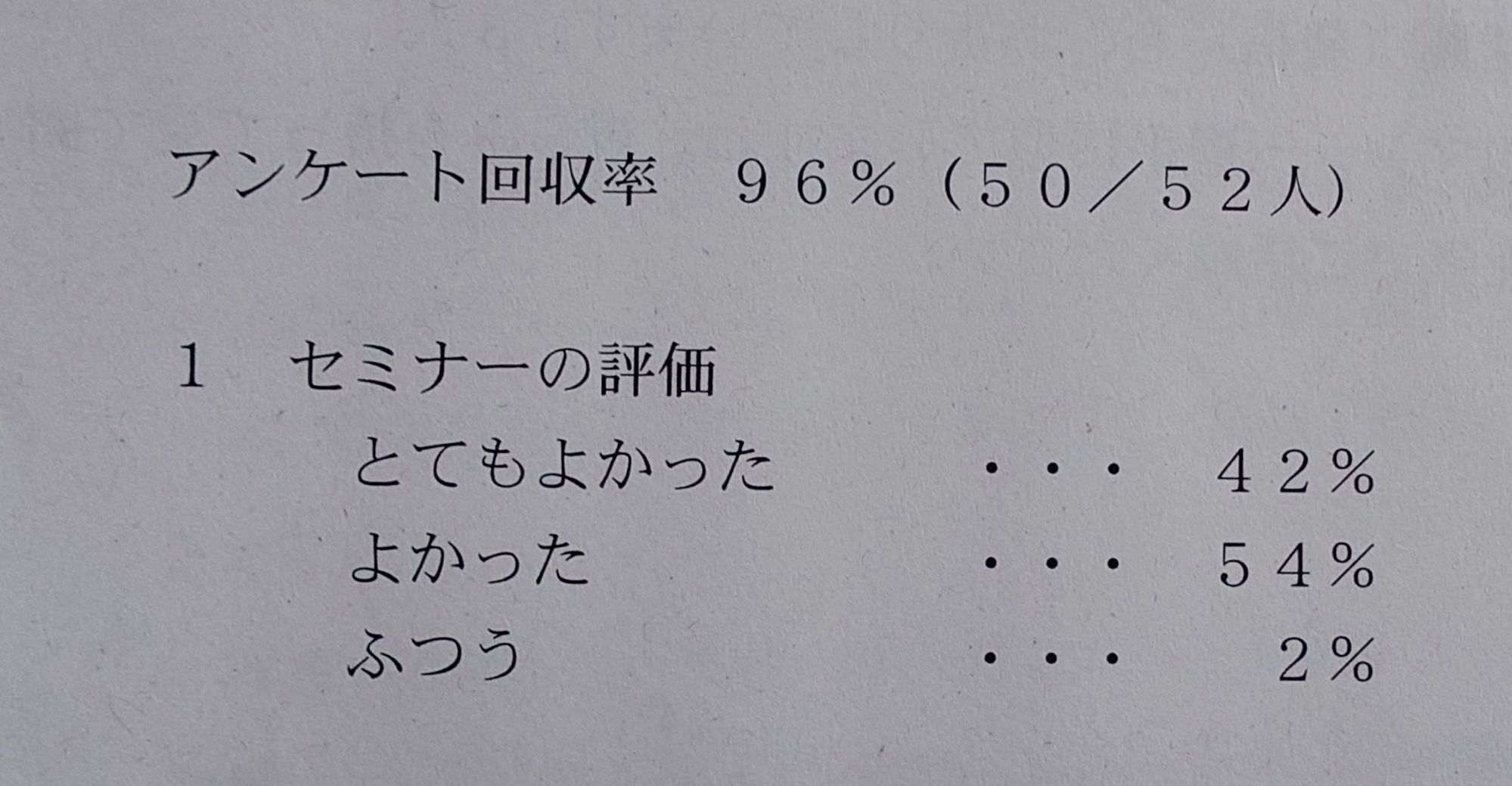
Anyway, they took a survey of the audience afterwards and the reaction was really good.
I had a bunch of 2L sized prints left over from photo club meetings that I put out for people to take home and almost all were give afterwards, so that’s felt good, too.





 Jim Rion - Translator & Writer