ブログ・Blog

The Jason Ogg Theory of Luck

I’m a lucky guy, all in all. Bad things have happened in my life, but I’ve made it through them more or less intact. I have a loving, healthy family. A career that is basically ideal. And through it all, I’ve been able to experience the world in ways I never dreamed of.

I sometimes feel like I’m so lucky it’s kind of scary. Because luck can turn on you in an instant, can’t it? All this can disappear like a tears in the rain (IYKYN). That thought has haunted me in a very real way, and I think I’ve developed a weird psychological tick because of it.

The thing that made me understand my own way of interacting with life’s vicissitudes was a bit in one of Terry Pratchett’s Discworld books, about the blacksmith Jason Ogg. Because of the fundamental importance of a skilled blacksmith, and the magical nature of the Discworld, Jason Ogg can shoe anything. Donkeys, unicorns, even Death’s pale horse. But to have the power to shoe anything that comes to you for shoeing, you have to shoe anything that comes. If Death comes to you to shoe his horse, you shoe his horse. If your drunk friends bring an ant for shoeing as a joke, you shoe the ant. If you deny the request to use a power, you lose the power.

A blessing must be used, or you lose it. That is how I have come to interact with what I view as my luck. In practical terms, that means that if a chance that seems “lucky” comes along, I take it.

When someone emailed me years ago asking if I was interested in coming to Japan to teach English, I wasn’t, actually. But it seemed like a lucky chance, so I took it. And now I have lived in Japan, happily, for two decades.

When my barber asked if I wanted to go out to dinner with him and his niece, whom I had never met, I went. I married his niece a year later.

When my wife and I went for a walk one day in the neighborhood and saw a house with a for sale sign in the window, we took a tour and made an offer that day because it felt perfect to me. We’ve lived in it for almost 11 years now, and never plan to move.

This tendency of mine, to say “yes” to pretty much every major opportunity that comes down the line has also guided my career. It’s how I survived the bankruptcy of the English school I first worked at, it’s how I became a semi-regular TV guest, and it’s now guiding my literary translation work.

As if to reinforce the idea, the lucky chances keep coming, and I’ve not had to say “no” to any yet. That idea, that I have not had to say no, is perhaps the other half of my theory of luck. Because, if you want to say yes to opportunities, you need to be able to take them. You need skills, flexibility, time, attitude… You need to be open and prepared. Which is why I study things almost constantly, because you never know when you’ll need to know, oh, trends in the Japanese mystery publishing industry.

Anyway. I was just thinking about this, because sometimes I wonder what would have happened if I had said “no” to some of the things that have come along. But all in all, I’m glad I didn’t.

Setouchi Tsurezure #6 – Spring is Come

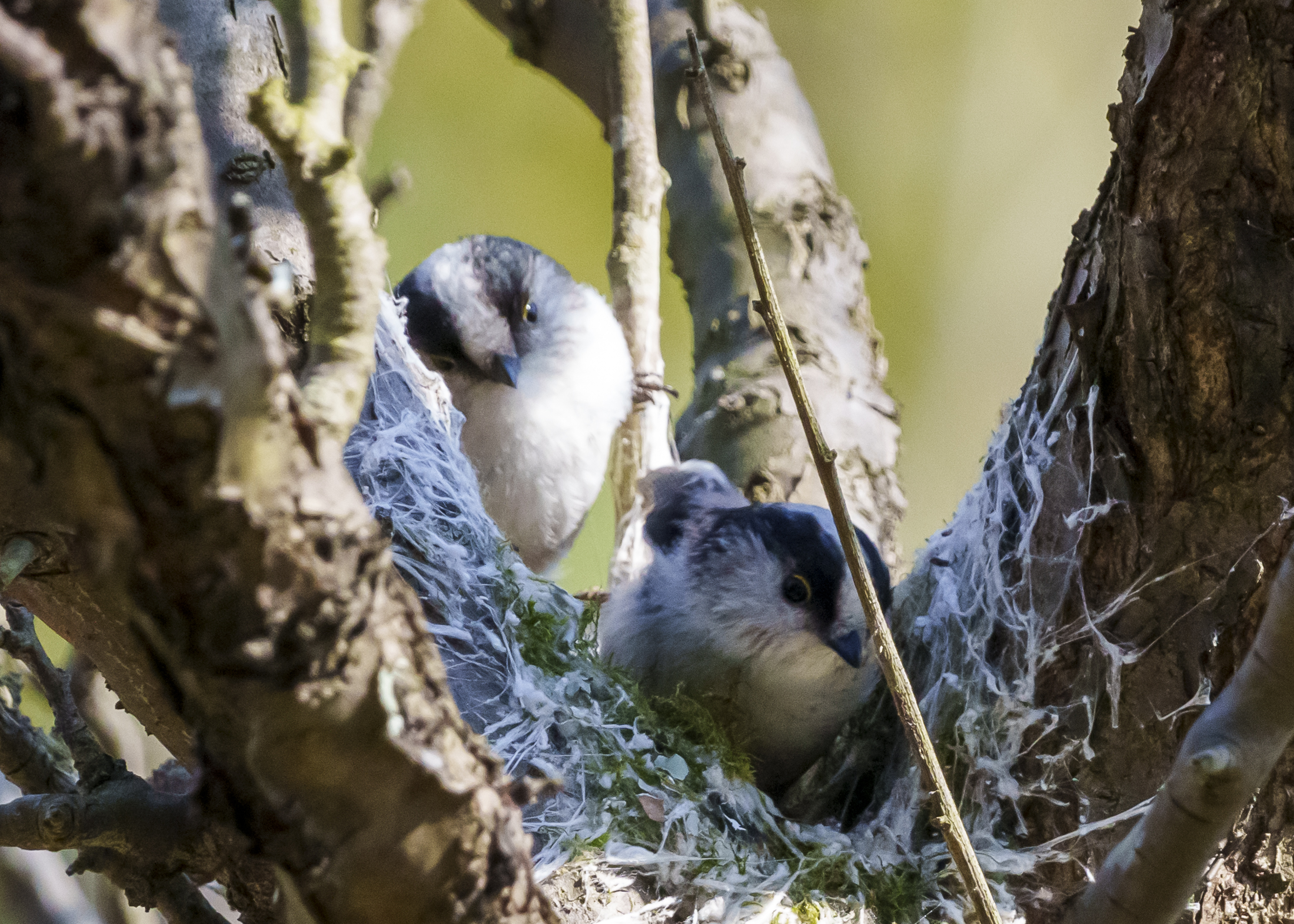
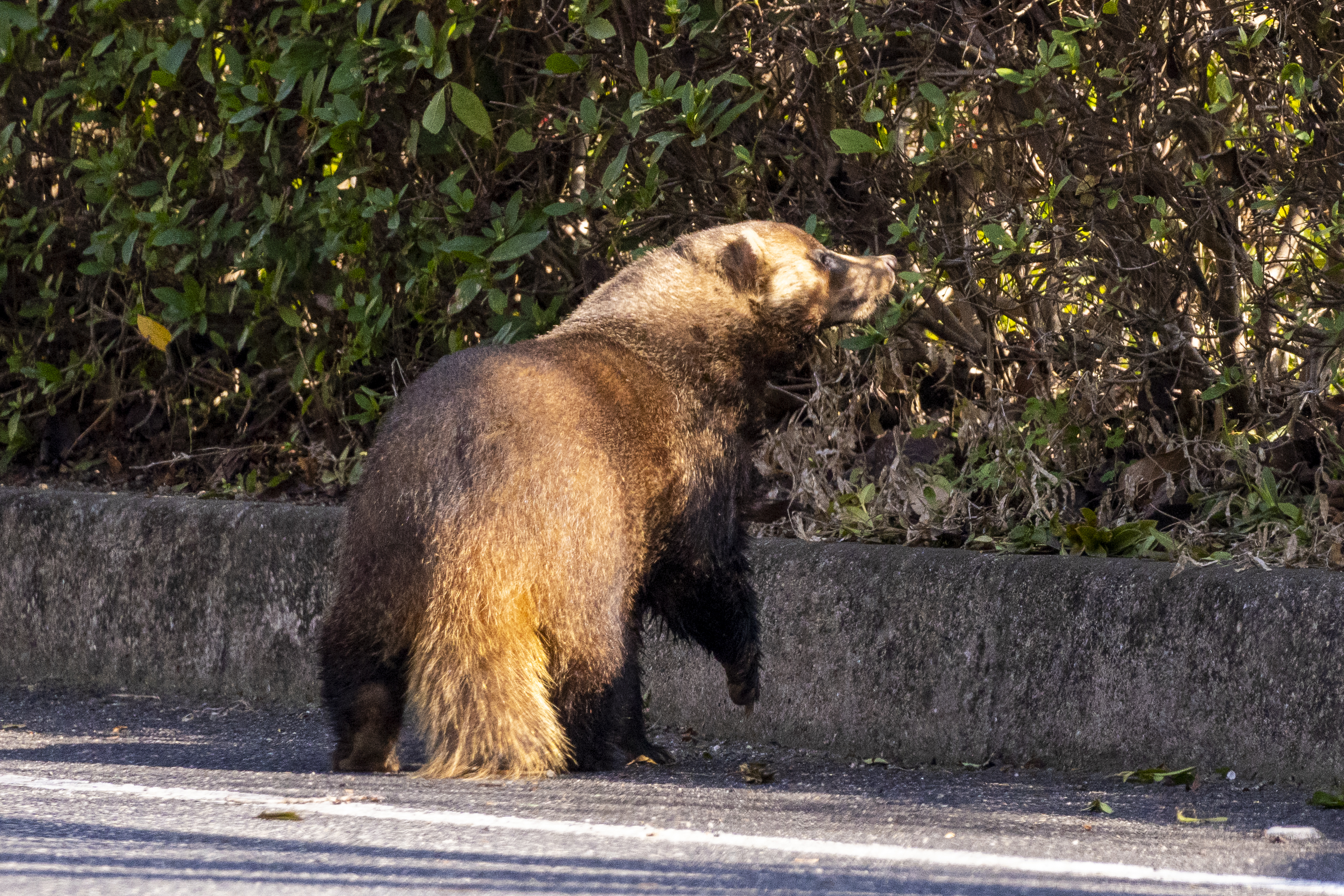
My sixth column for the local Setouchi Times newspaper was about my encounter with spring at a local park. It was one of my favorites, mostly for the pictures. I spotted a Longtailed Tit couple building a nest from spiderweb and moss, and while I was shooting pictures of them, a tanuki came waddling by. It was nice.


冠梅園で春がやって来る

ライオン ジミー

先日、大好きな冠総合公園の梅林へお散歩に行ってきました。梅の花がすでに散り、空気がまだまだ冷えていました。それでも自然界の春の賑やかな空気をふんわりと感じることができました。野鳥のさえずりを聞きながら山を登って、瀬戸内海の眺めを味わっていると、まだ葉の無い木に小さな鳥の動きに気を取られました。見るとエナガでした。

エナガは小さくて丸くて、とてもかわいい小鳥です。外を歩く度にいつも探しています。今回のエナガは同じ方向へ行ったり来たりして、くちばしに何かを咥えている姿を見せてくれました。

それで気づきました。春の巣作りだ!

そっと、そっと追いかけてみると梅の木の股で蜘蛛の糸と苔でエナガの夫婦が一生懸命巣を作っていました。幸いにもカメラを持っていたので写真も撮れました。

「親が子供の為に頑張って安全な家を作るのは大変だな」と思いながら見守っていました。

しばらくすると近くの道に大きな茶色の何かが通り過ぎました。

「今度はなに?」と訝りながらまたそっと、そっと追いかけました。

するとタヌキさんがおそらく小川でエサを探したあとの帰り道でした。

僕の事を完全に無視して近くの植木をクンクンしながらのんびり歩いていました。その丸い背中を見ると「ふっ」と笑って、また写真をいっぱい撮らせてもらいました。

これも新鮮な経験でありながら、なんとなく懐かしい場面でもありました。

僕の実家があるカンザス州では毎日のように野生動物と触れ合えました。でも日本に来て以降は滅多にない事でした。リスやウサギ、鹿、アライグマなどの存在がない光市はある意味で少し寂しいと思うこともありますが、あの日やっぱり「懐かしい動物がここにもいるんだ」と感じました。

小さな癒しとして有難いひと時でした。

これから自然界はますます元気になると思います。動物も、植物も動きだして、段々と生気あふれる世界に戻ります。その日々の変化を見ると時間の流れと季節の移り変わりをもっと深く感じます。人間が自然界から離れて暮らすようになった現在ではそれが忘れられがちの事でもありますが忘れちゃいけない事だと思います。

人間も、自然界に縁がまだまだあります。

皆さん是非外に出て大自然が春を迎えている事を観察してみてください。

きっと僕みたいに癒しを見つけることができると思います。

20 Years

I stepped off the plane in Osaka on June 9, 2004. Though I didn’t know it yet, I was home.

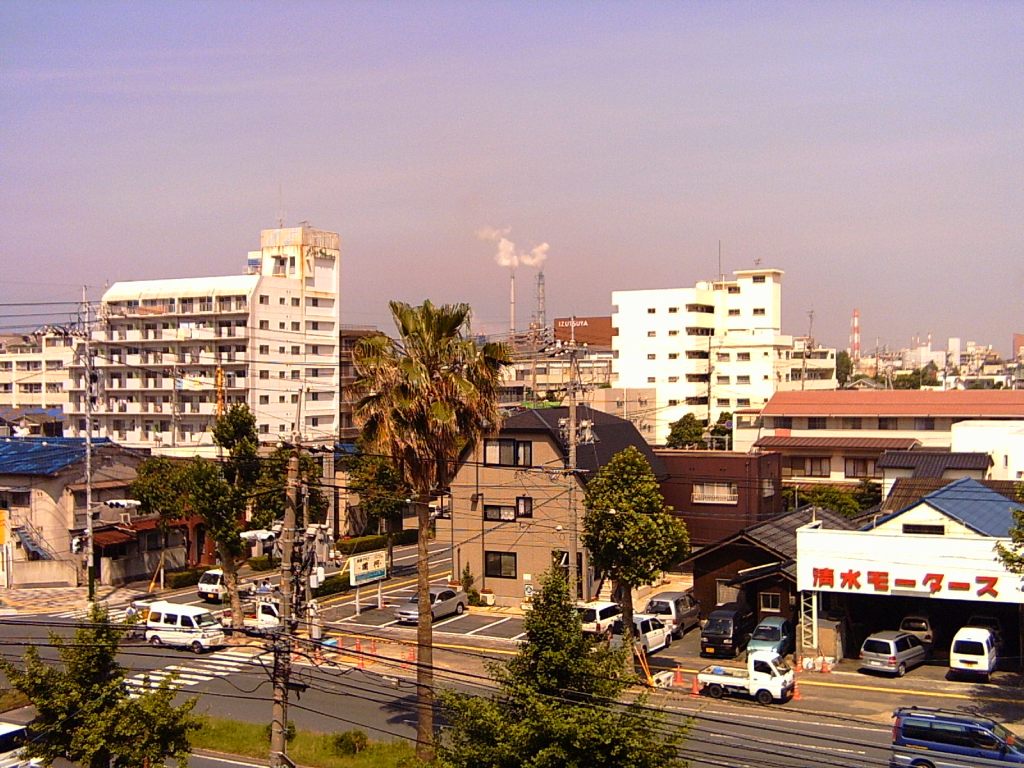
A street scene in Japan.
The view out my window in Ube, Yamaguchi, on June 10, 2004. My first morning in Japan.

My memories of that first day are blurry. I remember buying my first bottle of “Milk Tea,” syrupy sweet and delightful, at an airport kiosk. Riding the shinkansen for the first time, transferring to the local line, and being terrified I would miss my stop in Ube. Jetlag made that first day a hard one, but I awoke the next morning in JAPAN! It was pretty wild.

The big Shidax (now gone) down the road from my apartment made things easier…

My first Karaoke in Japan. Can’t you feel the passion?

It’s hard to really believe that I’ve lived in Japan for 20 years. I only lived in Kansas, where I was born and raised, for 18. I left the United States for good at 24 (spent a bit of time in Russia and Germany before I came to Japan). I see no reason for me to leave Japan in the future, so it really does seem that this is where my bones will rest.

Looking back on why that might be, I can only say that it feels right. I settled into Japan relatively easily, after the first couple of years. The obvious influence is my marriage (17 years and counting) but even the pace of life and basic values of Japan suited me quickly. Or, perhaps I should say this part of Japan, because Osaka and Tokyo are not for me.

The truly surreal thing is, coming to Japan was never even on my radar as a young man. Apart from a brief anime phase in college, I was not a big otaku or whatever. If anything, I was hoping to live in Europe, given my MA in German Language/Literature. But I was never much a one for plans. I was always the type who took what chances came my way, and the chance to visit Japan came my way.

I’m glad it happened. It’s a nice life for me, and has brought me a wonderful family to boot.

I’m lucky, and grateful.

But man. 20 years. That’s a long time, isn’t it?

Enough with the LLM BS, Already

I know that, in doing this, I contribute to the problem in its own way, but I simply can’t bear it anymore.

The AI frenzy I have seen among my fellow translators has to stop. It feels like I’m watching otherwise intelligent, literate folks suddenly spouting flat earth theory.

LLM/Generative AI/Whatever you want to call it doesn’t actually do what it says it does. It isn’t a useful tool. It doesn’t think, it doesn’t translate, it doesn’t explain. LLMs are sophisticated statistical algorithms that spit out words they got off the internet in “likely arrangements.” Any meaning that those words seem to have is provided solely by the reader. Any time you ignore the fact that nothing of what LLMs generate is rooted in factual reality, you are deceiving yourself. The idea that some part of the communication might be “wrong” is, in itself, a mistake. It’s all generated the same way, from statistical analysis and algorithmic generation. The good and the bad are both equally likely. Seemingly accurate BS and clearly inaccurate BS are both equally BS.

The industry calls LLM mistakes “hallucinations” but they’re really just expressions of the nature of the beast.

https://www.lakera.ai/blog/guide-to-hallucinations-in-large-language-models

The great success of LLMs is only in that they *feel* right, so no one really takes the time to check if they are, actually, so. It certainly seems amazing that the words string together in clear sentences that we can interpret as more or less connected to our prompts. But we are professionals at working with words. We should be holding our work to a higher standard that “Eh, it feels right.”

Because folks, there’s nothing under there. It’s empty. Let’s take a recent Facebook post froma a translator I saw. It was a query about the pros and cons of different translations of a tricky term. The results included sources, for example, and a lot of double talk that boiled down to “it all depends on the context.” If you actually took the time to read those sources, though, none of them actually supported any of the points of the response. They were just linked by including the terms in question. Sometimes. One of them was actually Vietnamese, which is odd given that the query was in English and talking about Japanese. But it had a (poor) English gloss of a phrase including the term, so… Source?

That is what LLMs *do*. They were trained not to be right, but to sound right. To be really convincing liars. (Which is actually a pretty easy thing to get away with when discussing elevated academic ideas, because they’ve been dominated by empty bloviating for decades, anyway. I’m sure LLM generated philosophy and linguistics papers are already filling journals, because no one ever read or understood that shit anyway.)

The trick of LLMs is, quite literally, a scam. As in, they seem to have evolved parallel to techniques designed specifically to fool people. The datasets were trained to generate sentences that felt right, rather than be right, by having them rated by non-expert users in developing nations. It is, as the kids say, all vibes. And the result is that the patterns are now set to be convincing, but nothing more.

You can see what I’m getting at here:

and here:

https://softwarecrisis.dev/letters/llmentalist/

The upshot is, if you adopt LLMs into your work flow, you are intentionally adopting a bullshit engine. Nothing that comes from an LLM should ever be trusted. There is no accountability for the inevitable errors and fabrications that they bring to your work. If ChatGPT were an employee, you’d fire them almost immediately for fraud. Which you would know if you applied critical thinking to the results you’re getting, rather than allowing the facade of legibility convince you that “The Machine Understands!”

What we as translators should be doing is not wondering how to use AI, we should be educating our clients about the dangers of trusting. Any work that is done by AI is without value. Literally. If the results of AI are good enough for a given task, it was never worth doing in the first place. Which is not to say that everything we do is equally valuable. Indeed, corporate boilerplate has always been BS, so a BS engine might, in fact, be exactly what you need to do that. Whether you feel comfortable engaging in that cycle is another matter.

And that’s not even getting into the heavy environmental cost of each query, or the deeply immoral and exploitative labor practices that have lead to the current status, or the terrible people running these shows.

I know that it seems like this is the way the world is going, but we don’t have to embrace the idiocy.

Anyway, all this is to say, enough already. Damn.

Setouchi Tsurezure #5 – First Photo Show

My fifth column for Setouchi was about my experiences with my first photo show, as part of my Hikari Shayukai club. The photos I showed all ended up with someone word-play/punnish types of names, which I know the editor likes. He chose to run one with two ducks appearing to kiss, which I call “仲ががいい。。。カモ.” The name means “Good friends… Maybe” but the “Maybe” is a bit of a pun on the Japanese word for ducks.
You had to be there.


初写真展

2月16日~20日に冠山総合公園で、ひかり写友会の写真展に参加しました。まだまだ初心者なので作品を出品するのは大変緊張しました。それでも非常にいい経験になりました。

まずは他の会員と岡本先生の出品作をゆっくり観察できたことはとても良い勉強になりました。見る時には皆が優しく説明してくださり、細かい技術を教えて頂く事ができました。具体的なレッスンがたくさんありました。

期間中5日間で1,000人以上が訪ねてくださり、その中でたくさんの人と写真の話しをしたり感想を伝えあったりして写真に対して自分の考え方を見直すことができました。そして今回の一番大きい収穫は自分の作品を別の角度や視線で見ることができたということです。そのおかげで自分の写真がどう見られるのかなど「客観視をする力」を高めることができました。

いまだに写真を撮る際、自分が見た面白さや感動を伝える事がどういう事か分かりませんでした。けれどこういう機会があったおかげで一般の方の意見を聞き、少しでも撮った写真を他の人はどう見るのかを想像できるようになりました。まだまだ完璧には程遠いですが、なんとなくこの先の道が見えてきた気がします。

今回の出品作は三つです。一つは瀬戸内タイムスの読者様が以前ご覧になったことがある虹ヶ浜の松林で撮った流木の写真「龍木」でした。二つ目は二羽のナガオカモの「仲がいい・・・カモ」そして最後は萩市外の野焼きの様子を写した「秋の香り」でした。来場者の皆さんからのコメントをみると「仲がいい・・・カモ」が圧倒的に人気であることわかりました。もしかすると一瞬の動きが切り取れた事が良かったのではと思います。

自分の中では「龍木」が作品として自信があったので、その差で深く考えました。やはり動物や野鳥の行動を通して感情を動かすことは大事だと気付きました。

最近は自分の作品をいくつか萩市の下瀬信雄先生にお見せする機会がありました。先生が優しく褒めてくれましたで、やはりカモの写真を一番気に入ってくださいました。先生曰くそれは写真家として一番大きな悩みであって、解決方法は自分で探さないといけないらしいです。

先生がとても重要な課題を出してくれました。それは「誰も撮った事がない写真を撮る。」出来るのか分かりませんが頑張るしかないとおもいます。