Hooded Crane Pangs

The rare hooded crane once nested here in Yamaguchi Prefecture in the hundreds. Most now winter in southern Kyushu island, but a few—a bare handful—nest in the rural community of Yashiro, a part of Shunan city about 25 minutes’ drive north of here. The town has a dedicated observation center that overlooks some of the rice fields that they frequent, with a CCTV monitor aimed at another spot.

I went to the nesting grounds today to see if I could spot any. A sign on the observation center wall said there are currently four nesting in Yashiro, and the monitor showed two of them. There was a field scope set up for a more direct look, so I actually got to see two of the only four hooded cranes currently on the island of Honshu… But just barely. My 210mm lens could pick them out.

Two large birds with gray bodies, white heads, and red patches around the eyes, can be seen in a distant field.

Then I saw that the spot was close to a public road. So, I went closer.

I was eventually able to see them pretty well through my lens, but there were all these signs “No crane watching,” “Please take pictures from the observation center” and the like. The signs implied that taking pictures of the birds would frighten them or drive them away.

But… I was standing on a public road. There were cars driving by—including an employee of the observation center who glared me as he rumbled by in his truck. There was a restaurant right there with a parking lot where, presumably, people opening and closing their car doors. It seemed like a relatively lively spot. And I was just walking along, probably a good 150 meters away.

I was conflicted. I wanted to watch them, but the officials didn’t want me to.

On the one hand, I get that they don’t want crowds of people filling the area, or anyone sneaking into fields and scaring the birds away and/or messing up the rice fields. It would be bad both for the birds and the local community. On the other, it’s not bird lovers or photographers who are destroying the habitat and driving the birds away on a daily basis. I get that they can’t exactly ask local farmers to scale back their livelihoods for the sake of birds, and birders are indeed just following a hobby.

Now, I’m not sure what to think about myself. I did something I was asked not to, because the reasoning behind the request seems misguided. But I’m not above the rules. Are they rules, though?

Not Quite a Resolution

The new year resolution is a tradition, as is the breaking of the new year resolution. So, I tend to shy away from them. But I do enjoy the idea of new starts, so there are some things I’m doing differently this year.

The first is that I’m trying to bring more beauty into my life. The past few months, I’ve been working with potters more closely, and I’ve realized that using their work as part of daily life is a simple way to elevate the quotidian. And so, rather than just focusing on sake wares, I’m using handmade pottery for everything I can.

A tall white porcelain cup that narrows at the bottom. The glaze shows a finger-shaped open patch at the bottom.
A porcelain cup by Jaeho Choi perfect for shochu, water, or other cold beverages. The Meiji era Arita ware plate below it is also great for serving stir-fry!

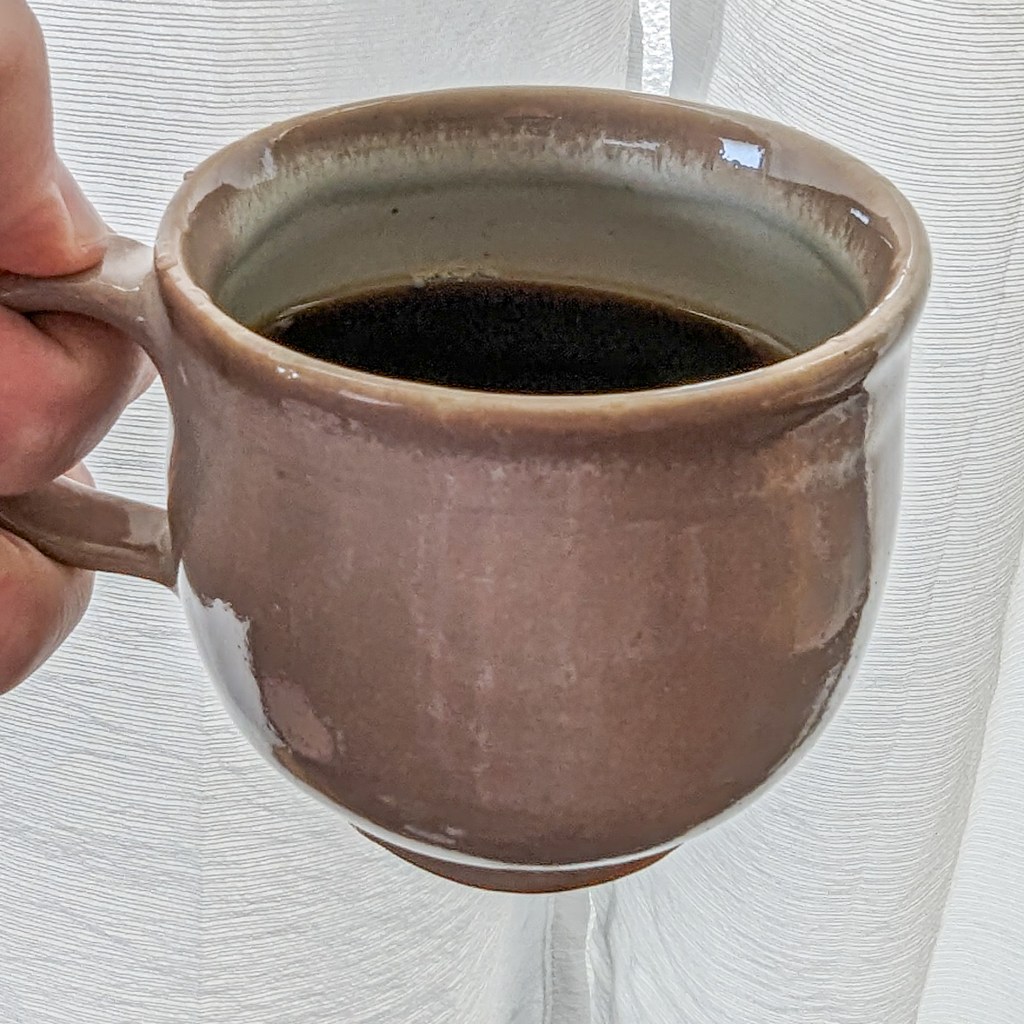
One of the last emotional holdouts for me was coffee. It’s a hard thing on cups, with its staining and oils, so the idea of drinking it from fine pottery was always somewhat uncomfortable. But when I talked to my potter friend Yagi Hiroyuki about it, he explained that he used a porcelain clay mix and a tighter glaze for coffee cups for that very reason, as well as layering food-grade silicon for cheaper wares. And then, he offered me a cup to test… So, now my daily coffee come from a handmade artisan piece.

A pinkish, rounded coffee cup reminiscent of Hagi ware.
A Hagi-ware coffee cup.

I’ve also realized that shochu cups are… Well, cups. So, why not use them for drinking other things, like water? No more plastic, no more cheap store-bought stuff… My day is now decorated with fine pottery from artists whose faces I know, whose hands I have shaken.

A short, wide ceramic cup with white glaze speckled with black. The sides are carved in random ways so that dark lines seem to rise from the glaze.
A shochu cup by Yagi Hiroyuki, now being used for water.

It’s a little thing, but one I’m glad of. And one I recommend others think about, too. There are plenty of affordable pieces by artists with skill and creativity all over Japan, and the world. Look around you. It’s good for the soul to eat and drink from functional art.

Photo Club Update – Hail the Conquering Newbie

Yesterday was my first photo club meeting as an official member (for background see this previous post) and it was a great one.

In addition to getting some great feedback on my own pictures, I’m learning critical eye skills by looking closely at lots of pictures other people have taken

One of the key points I took away this time was to be more aware of the “main character” of any picture and really commit to it. I guess I have a tendency to try to add lots of context in both writing and photography, which in the latter case leads to too much extraneous background.

Of course, this is all a matter of taste, which is always up for argument, but I can definitely see the teacher’s point.

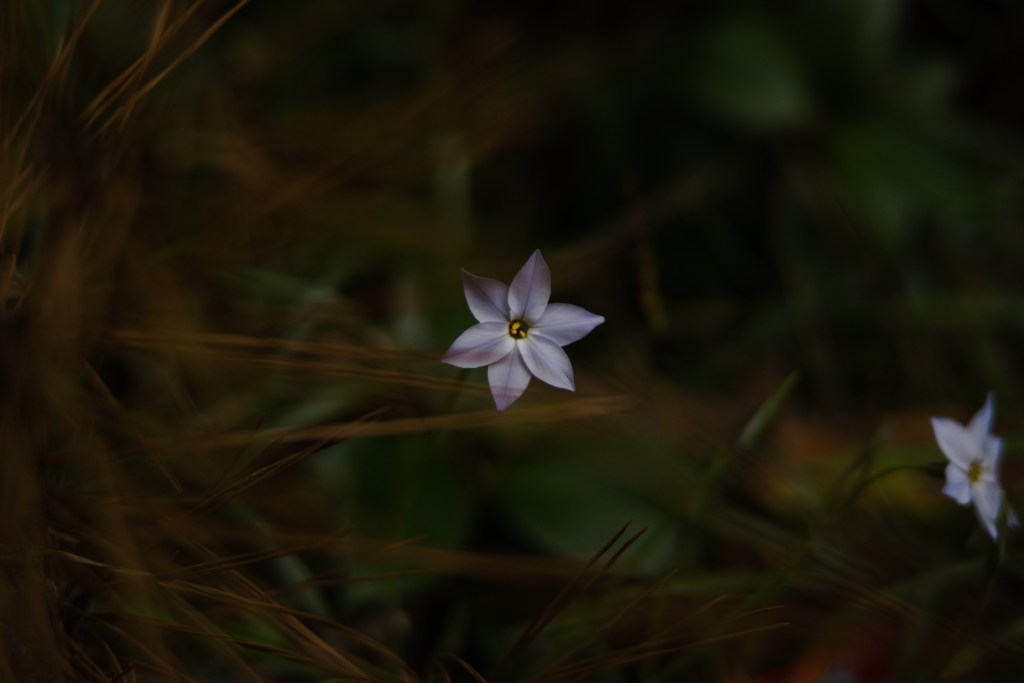
For example, he liked the muted color, gloomy lighting, and overall subject of this starflower picture:

 Muted picture of a white, six-petaled flower. There are brown leaves and pine needles barely recognizable in the blurred background.

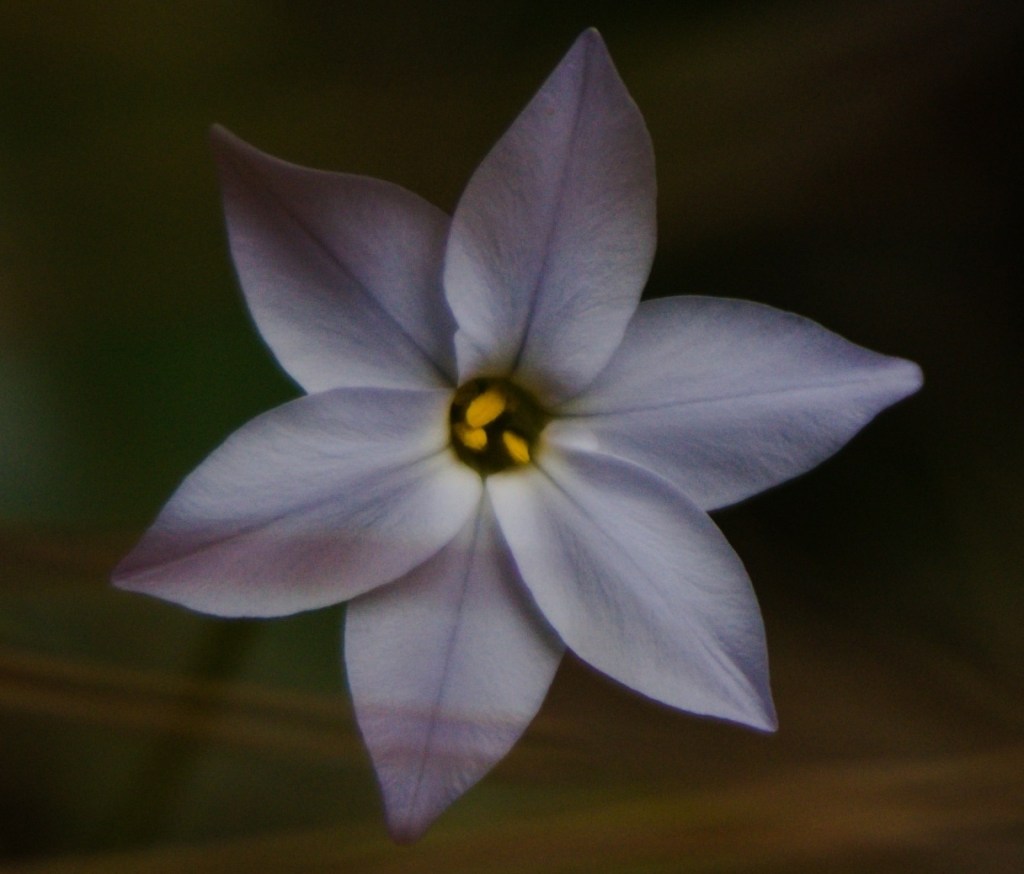
But said I should really have just tightened in on it, like this:

He’s right, of course.

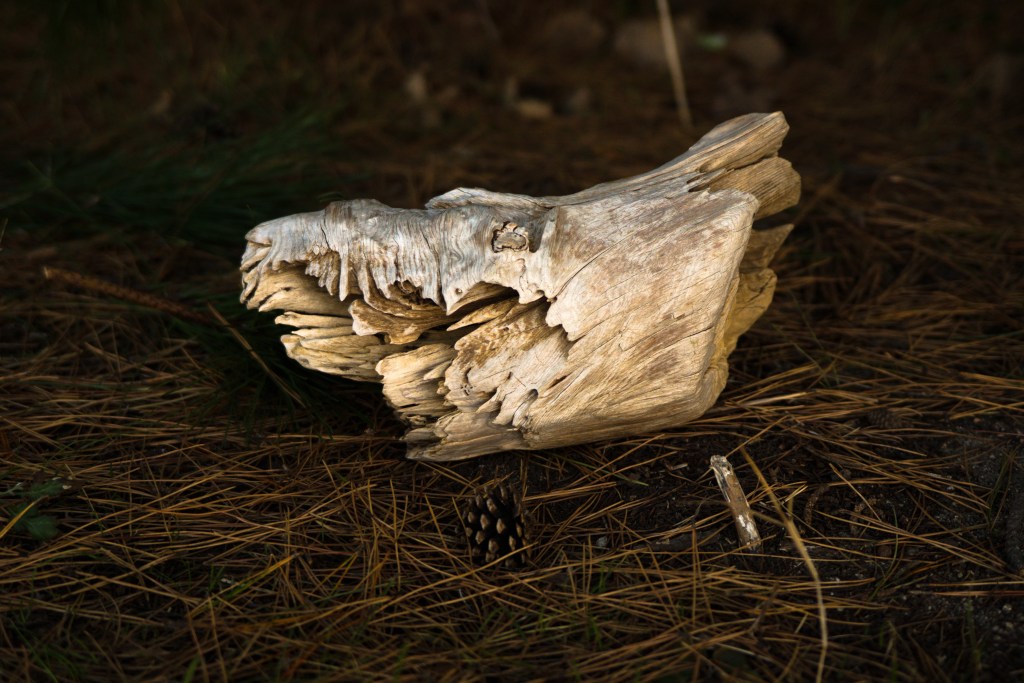
At the same time, he liked and had good things to say about most of my pictures, and I even got the “best shot of the month” with this one I have posted before:

A piece of driftwood against a blurred background of dead pine needles and pinecones.
龍木

Everyone loved it, and the teacher had no notes.

So, I’m off to a good start!

Never Too Old to Polish

As I get older, the more I find that simply learning things is perhaps my favorite hobby. Trying new things and getting better at them. Adding and polishing to the skills I use to interact with the world.

To that end, I’ve been trying to get better at photography. This is not a new thing, as anyone who remembers my aborted attempts to post photos here might know, but it is also not something I’ve felt was making any progress. But that might have been too critical.

I recently joined a local photography club. The first meeting was quite eye opening, because they run it essentially as a monthly photo contest. Members each print out ten or so of what they consider their best pictures. The teacher, a professional photographer with something like 50 years’ experience, goes through each one and makes comments on technique or recommendations for improvement where he sees fit, then chooses the best couple of each person’s shots.

Then, he decides one overall winner for the day and gives them a little prize.

In just over an hour and a half I got a good half-dozen new ideas to bring into my own photography. So worth it for 500 yen a month. For example, the teacher really emphasized what he called sei to do, or stillness and motion. This means trying to show movement, say, in a landscape photograph by slowing down the shutter speed and catching water blurring as it rushes past or the blur of weeds blowing in the breeze. It’s not a universal, of course, but one way to make a photograph stand apart.

And although I didn’t know to bring any printouts, I showed a few of my camera pics through my smartphone and got some excellent compliments.

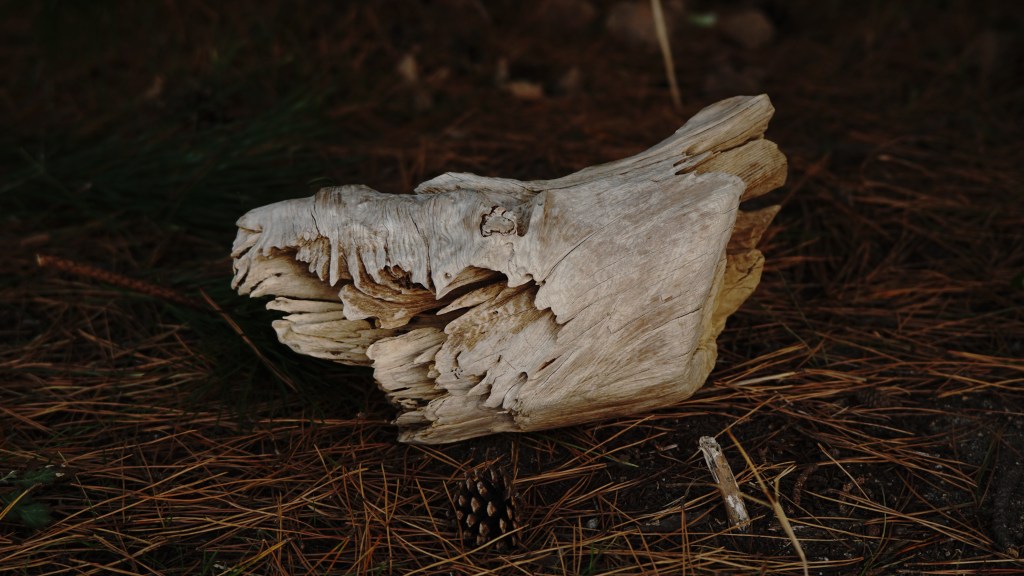
This one, for example, he loved due to the depth of field and the overall ambience:

A piece of driftwood that looks something like a dragon's skull on a bed of dead pine needles.

I look forward to learning more, and maybe even taking home one of those monthly prizes!

Simple Pleasures of Birdwatching

I have long been a fan of birds in general, which sounds like a silly thing to say but is merely the truth. Being close to birds reveals such cleverness, such expressiveness, that it’s hard not to anthropomorphize them. Yet I have never really taken the time to get the kind of detailed knowledge that would allow me to, say, identify all the wild birds around me by call, or plumage, or flight pattern.

So, when I saw an ad in the local paper for a free birdwatching class at Suo no Mori Lodge, a nearby forest lodge, I signed right up. The class happened last Sunday, the 21st, and it was a hoot (har, har).

I learned the basics of the above, but I also found that simply being in a focused environment where every bird that passed was a subject worthy of scrutiny, that was worth paying close attention to, was a kind of blessing. Birds are all around us here in Hikari, so they often just melt into the background noise, but when you actually try to see them they are a treasure.

For example, I learned that I’ve been using “sparrow” as a kind of catch-all term for “little, round, brown birds in the bushes” but there are several species that all fit that name, and all of which have their own adorable-ness to enjoy.

There’s nothing really profound coming here, but I will say that focusing your awareness on the simple, common natural environment around you is deeply rewarding. If you have the chance, take it.

And now, the pictures, which are what you really want.

  • The silhouette of a bird—perhaps an oriental dove or a brown-eared bulbul—on an electric wire, with trees in the background.
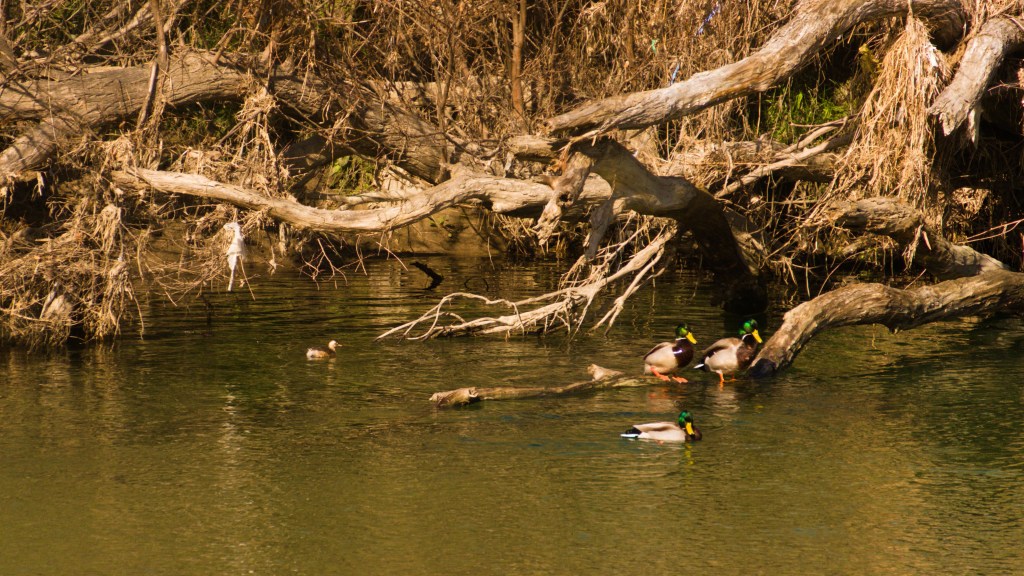
  • Two male mallard ducks are perched on a tree branch projecting out of a river. Another is swimming in front of them. and a female is swimming off to the left among the other branches.
  • Two small birds in silhouette are on the side of a gravel road. They are meadow buntings, which look a lot like sparrows.
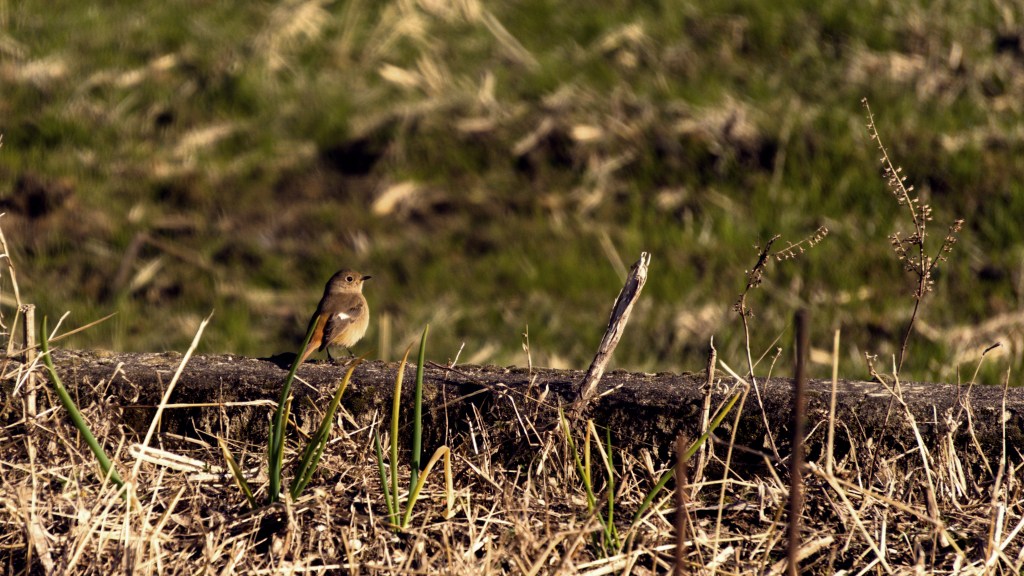
  • A small, round, brown bird with white patches on its wings—a female Daurian redstart—sits on a low concrete wall with weeds in the foreground and background.
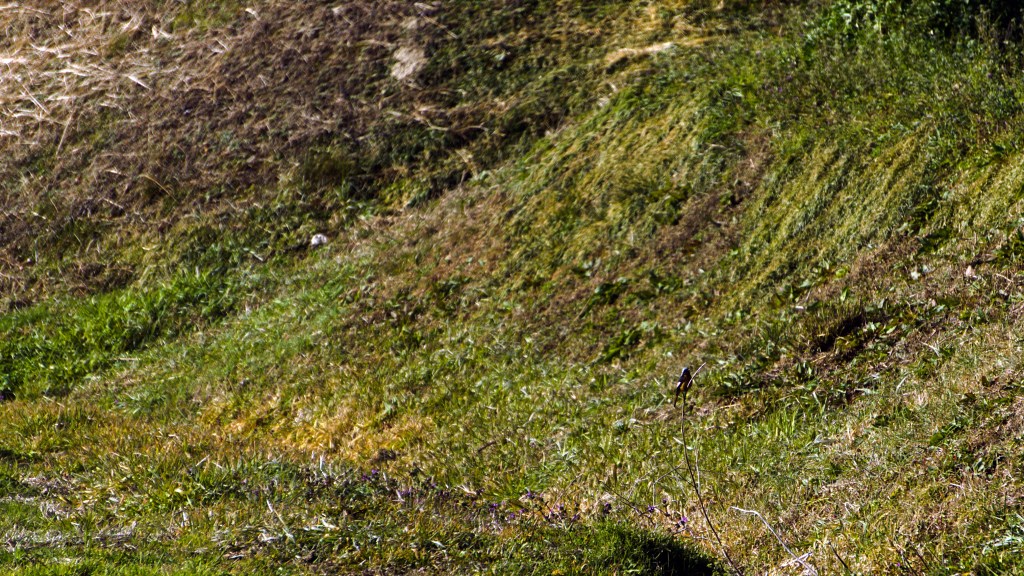
  • A male Daurian redstart is perched at the very tip of a single tall weed far in the distance, with a green hillside in the background.
  • An overgrown camellia bush in full flower with a small, green warbling white-eye bird perched near a flower.
  • The foreground is filled with camellia blossoms, and a small green warbling white-eye is perched among them.
  • In the far distance, a sandpiper is wading in a green river near a gravel bank.
  • A small, yellow-brown shrike is looking at the camera from its perch on a telephone wire.