
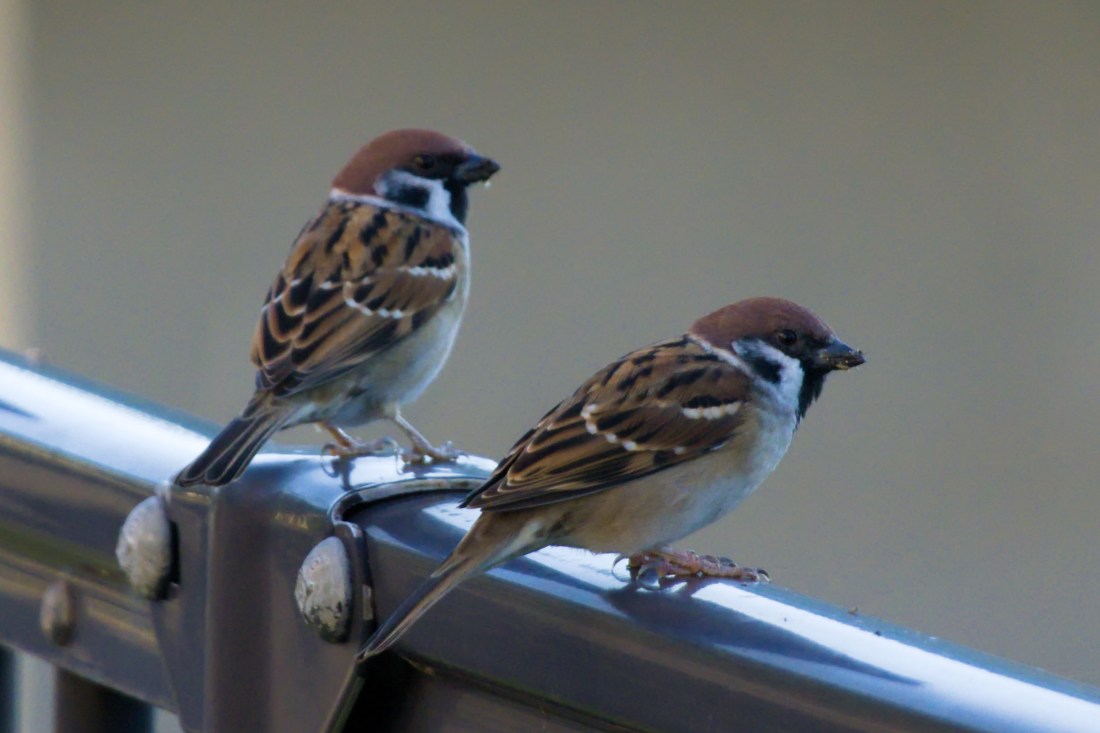

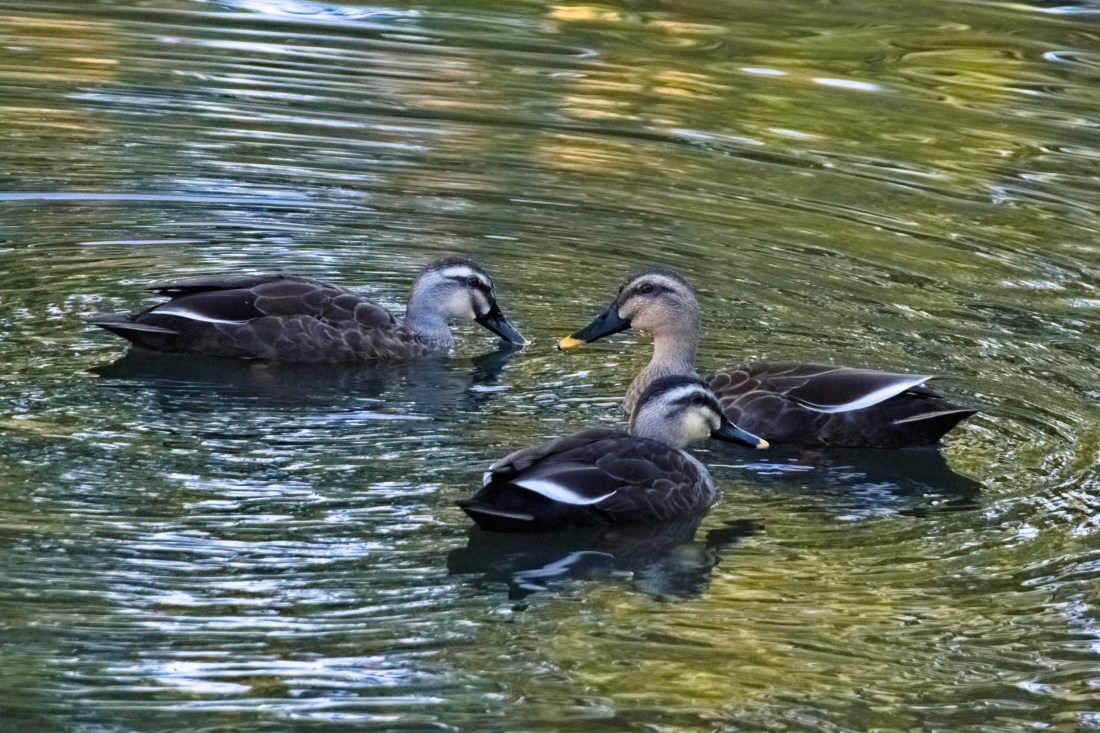
The weather here has turned—well and truly, finally—to winter. Which means both dusky days, and winter birds.
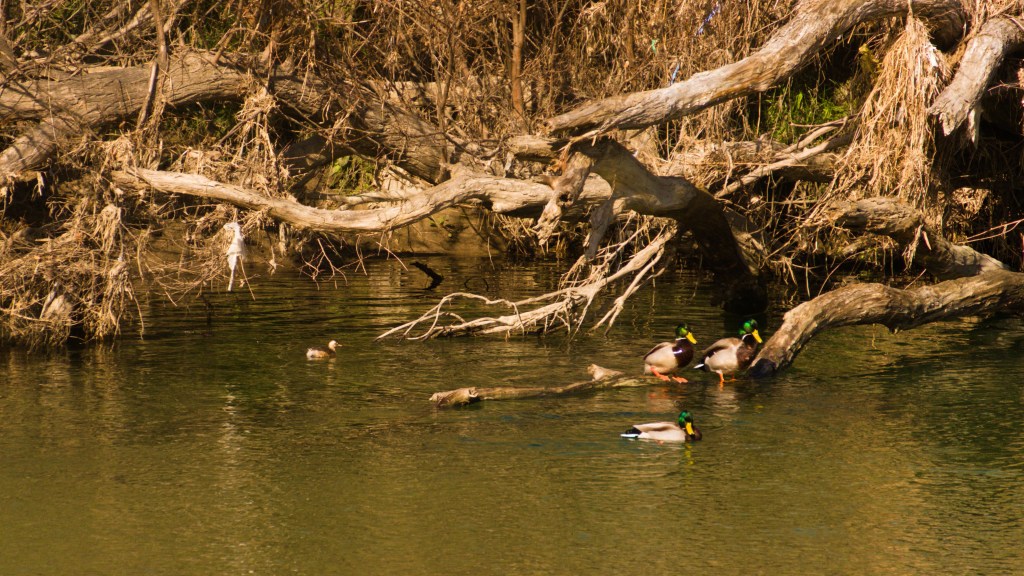
Many of the birds I associate with winter, like white eyes or long-tailed tits, are present year round but are more visible because of bare branches. Others, like the ducks that stop on the rivers, are just passing through. All are welcome sights, though, making the cold walks worth it.
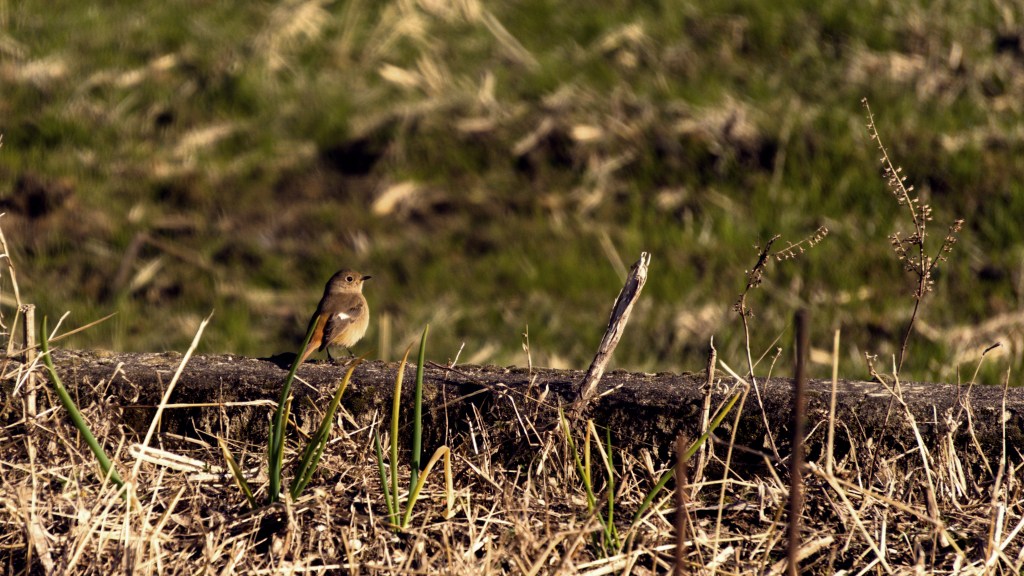
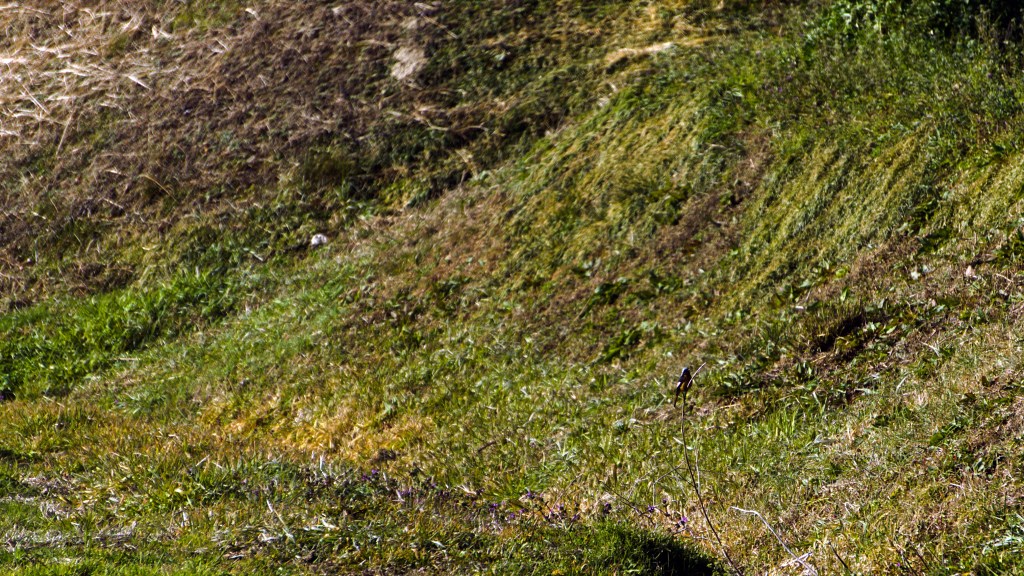
Here are some I spotted today, December 21, 2024. For the record.


The rare hooded crane once nested here in Yamaguchi Prefecture in the hundreds. Most now winter in southern Kyushu island, but a few—a bare handful—nest in the rural community of Yashiro, a part of Shunan city about 25 minutes’ drive north of here. The town has a dedicated observation center that overlooks some of the rice fields that they frequent, with a CCTV monitor aimed at another spot.
I went to the nesting grounds today to see if I could spot any. A sign on the observation center wall said there are currently four nesting in Yashiro, and the monitor showed two of them. There was a field scope set up for a more direct look, so I actually got to see two of the only four hooded cranes currently on the island of Honshu… But just barely. My 210mm lens could pick them out.

Then I saw that the spot was close to a public road. So, I went closer.
I was eventually able to see them pretty well through my lens, but there were all these signs “No crane watching,” “Please take pictures from the observation center” and the like. The signs implied that taking pictures of the birds would frighten them or drive them away.
But… I was standing on a public road. There were cars driving by—including an employee of the observation center who glared me as he rumbled by in his truck. There was a restaurant right there with a parking lot where, presumably, people opening and closing their car doors. It seemed like a relatively lively spot. And I was just walking along, probably a good 150 meters away.
I was conflicted. I wanted to watch them, but the officials didn’t want me to.
On the one hand, I get that they don’t want crowds of people filling the area, or anyone sneaking into fields and scaring the birds away and/or messing up the rice fields. It would be bad both for the birds and the local community. On the other, it’s not bird lovers or photographers who are destroying the habitat and driving the birds away on a daily basis. I get that they can’t exactly ask local farmers to scale back their livelihoods for the sake of birds, and birders are indeed just following a hobby.
Now, I’m not sure what to think about myself. I did something I was asked not to, because the reasoning behind the request seems misguided. But I’m not above the rules. Are they rules, though?
I have long been a fan of birds in general, which sounds like a silly thing to say but is merely the truth. Being close to birds reveals such cleverness, such expressiveness, that it’s hard not to anthropomorphize them. Yet I have never really taken the time to get the kind of detailed knowledge that would allow me to, say, identify all the wild birds around me by call, or plumage, or flight pattern.
So, when I saw an ad in the local paper for a free birdwatching class at Suo no Mori Lodge, a nearby forest lodge, I signed right up. The class happened last Sunday, the 21st, and it was a hoot (har, har).
I learned the basics of the above, but I also found that simply being in a focused environment where every bird that passed was a subject worthy of scrutiny, that was worth paying close attention to, was a kind of blessing. Birds are all around us here in Hikari, so they often just melt into the background noise, but when you actually try to see them they are a treasure.
For example, I learned that I’ve been using “sparrow” as a kind of catch-all term for “little, round, brown birds in the bushes” but there are several species that all fit that name, and all of which have their own adorable-ness to enjoy.
There’s nothing really profound coming here, but I will say that focusing your awareness on the simple, common natural environment around you is deeply rewarding. If you have the chance, take it.
And now, the pictures, which are what you really want.




 Jim Rion - Translator & Writer