I’m a member of a photo club, the Hikari Shayukai, and we have a public exhibition at a local park every spring.
This year’s just finished, so it’s time for a bit of reflection.
Unlike past years, the exhibition this time was held the week after the annual ume blossom festival, so we knew from the start that attendance would be lower than usual. Oh top of that, we had heavy rain three days out of five. The Saturday and Sunday were sunny, luckily, but still we had less than half the 1,000 or so we usually get.
Still, people did show up, and I had some very interesting interactions with guests over my pictures.
Here are the pictures I showed, and stuffed of the thoughts I have on them now.
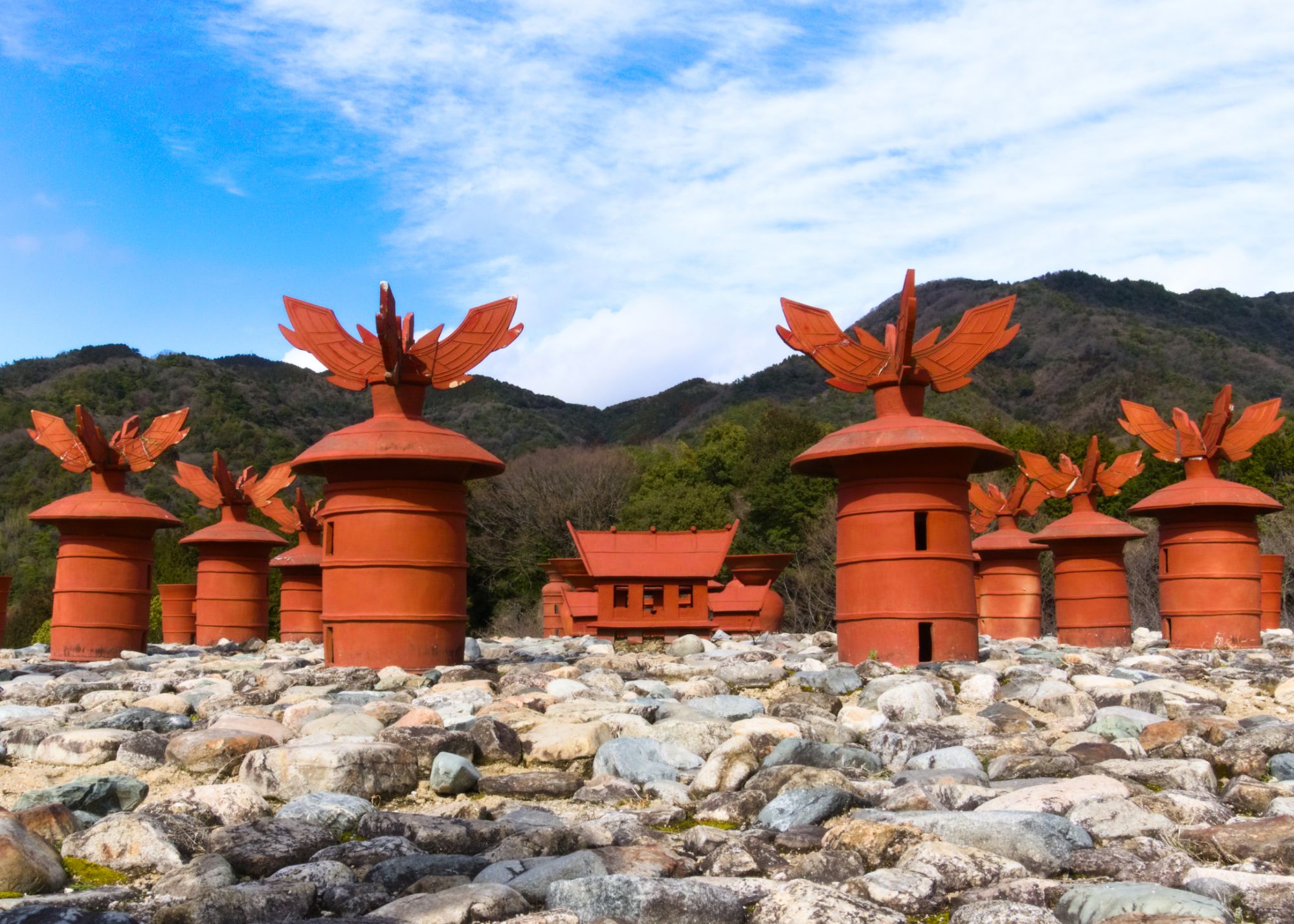
Haniwa
This picture was taken atop a local kofun, or ancient burial mound. I like the colors of the clay haniwa against the blue sky. The biggest reaction to this one was surprise at the location. Even people who live in the town where it was taken didn’t seem to know the mound was there.
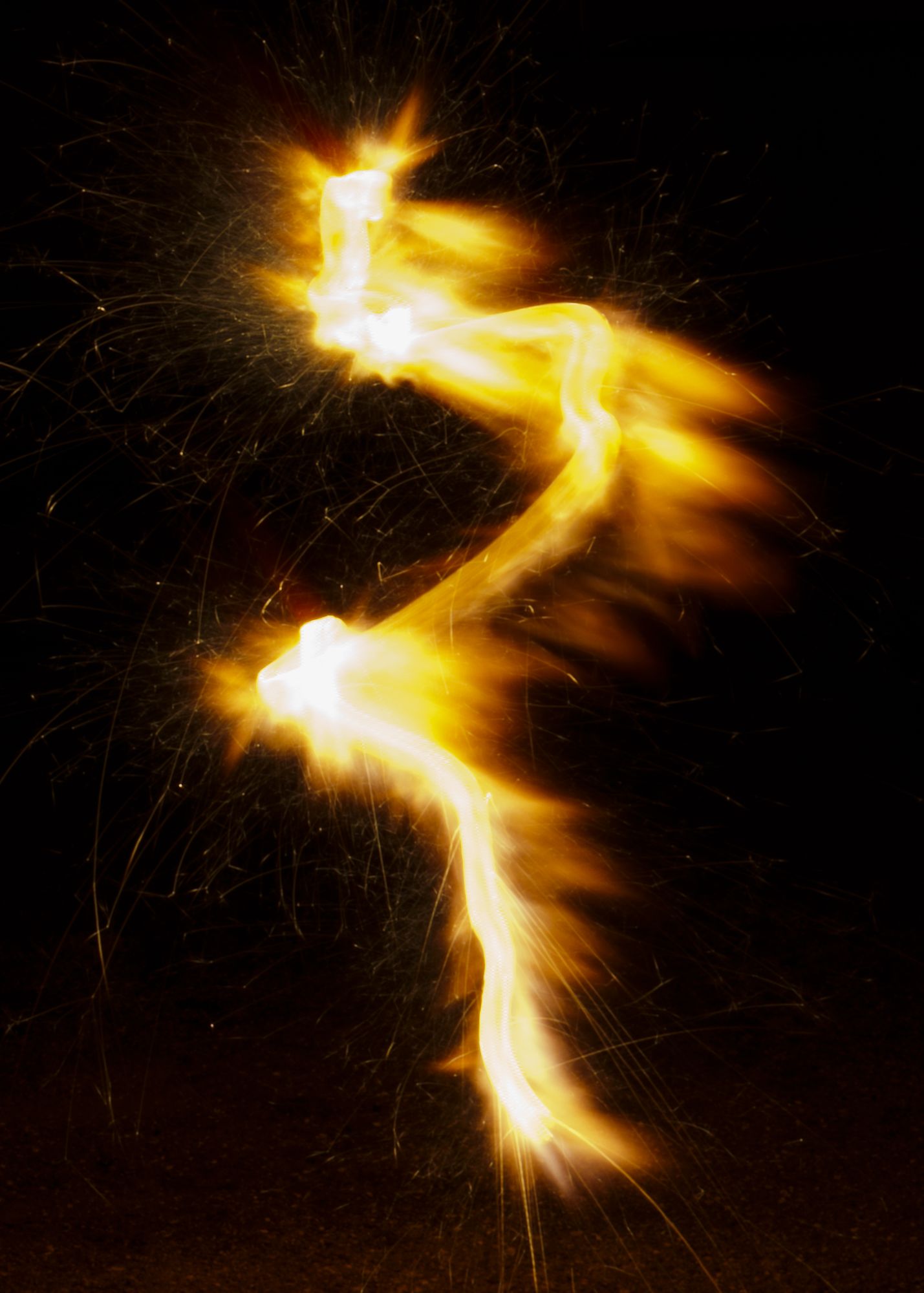
Fire Dragon
This is a bit of a miracle picture. I had my son hold a lit sparkler-type firework and move it while I took a long exposure, and this is the shape it took.
Reactions to this were mostly bafflement. What is it? How did you take it? But there was a lot of wonder about it, which is mostly what I wanted.
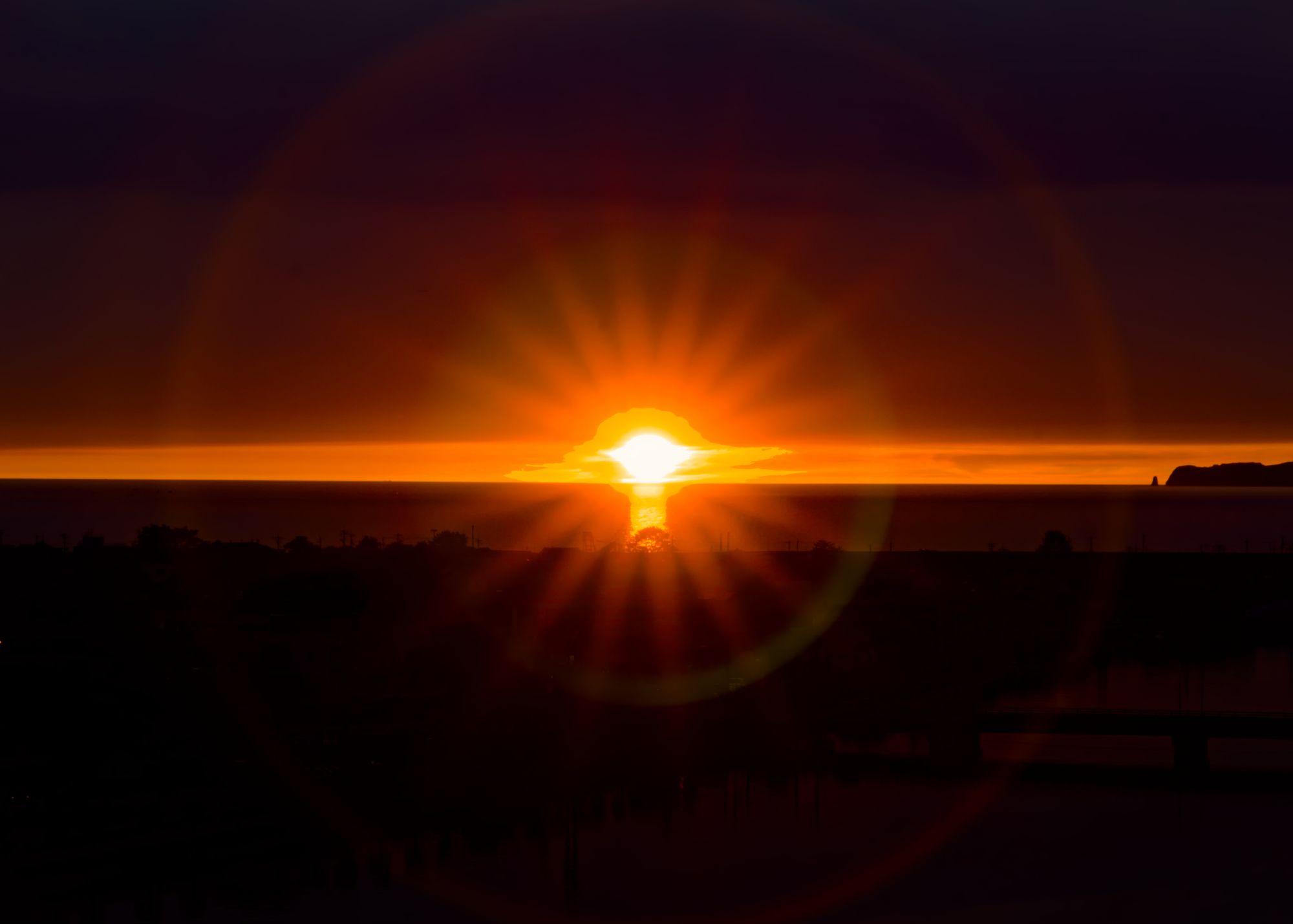
Sundown
This seemed to have a lot of impact. The vibrance of the colors and the banding of the sky, along with the sunstar, really caught people’s eyes. But what got me was how many people wanted to know exactly where I took it, down to the name of the little island at the right edge of the photo.
I don’t know the name. I’m not sure if it matters?
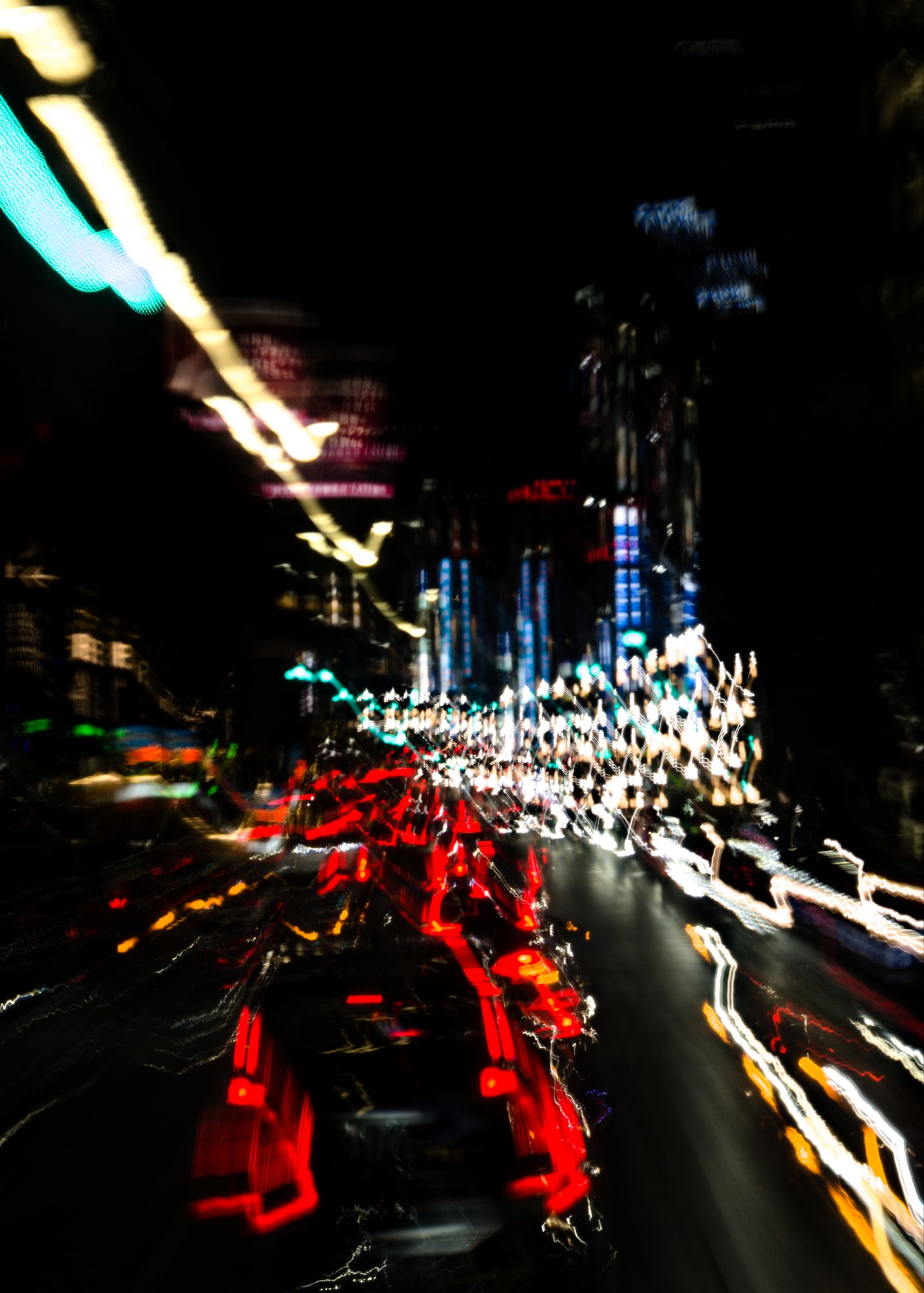
Traffic
I’m not even sure how to explain this. I took it through the window of a double decker sightseeing bus rolling through Roppongi, Tokyo. I wanted to catch the chaos of the night lights and the feeling of the big city at night. I mostly just wanted to play around with light.
Most people just ignored it, but some seemed almost entranced by it. I got a lot of guys with cameras asking how I took it, and why. They got up close and seemed to try to decipher each pixel.
I’m ok with that reaction.
It’s always great to get the reactions of non-photographers to my pictures. It gets clarify my successes and failures.
And it just feels more meaningful to show prints like that
The Ark is a mystery/thriller in the honkaku mode. It tells the story of a group of seven friends from university who meet up and hike to an old abandoned underground facility one of them found. They end up deciding to stay the night and a family of three also show up, rather mysteriously, then they all get trapped when an earthquake blocks the door.
Complications start piling up, and then bodies start piling up, and the whole thing becomes a tense, claustrophobic journey into pitch-black nihilism. This is a book where the ending hits like a punch in the gut.
Translators often talk about the linguistic challenges of the job, of trying to find the right way to convey the author’s message and so on.
It’s less common, I think, to talk about the emotional element.
The act of translation starts (and proceeds, and ends!) with reading. Reading deeply. Reading repeatedly. Eking out all the nuance and meaning I can from a work. I can’t speak for everyone, but when I translate a book I get emotionally invested in a way I rarely do otherwise. I have to, or the whole thing falls flat.
Which means that in translating a dark work like this, I am immersed in all that bleakness and cold-blooded murder for literal months.
It was hard to translate The Ark. Unpleasant. It weighed on me.
Which is not to say there is anything wrong with the book. It’s tight, clever, and written from a place of real care for the genre. It’s a good book. Very good.
But it’s not a happy one. I was glad when I was finished with this one.
And now it’s out there for readers to experience for themselves. There are some who will love the weight of the tension, like a mountain hanging above your head. Others will hate the breathless atmosphere of creeping doom, like water slowly rising up to steal your breath. But for fans of deduction-focused mysteries and darker tales, I think this one will satisfy indeed.
The December sun was setting over the quiet inland sea as I walked alone along the river, slowly approaching the nearby mouth. I call it a river, but it’s more of a stream. Not even ten meters wide, a meter deep at most, rolling with reed-covered sandbars and clumps of trash washed down from the towns dotting its length. This town was the last of those, standing where the river flows into the sea.
Here, it met the beach and flowed over it in a winding curve that changed with every rainstorm as the sand shifted in its own fluid way. Above the beach, there was a massive plate of riveted steel on hydraulic pivots—a floodgate to block the river in case of tsunami or storm surge in the autumn typhoon season.
I visited this place nearly every day. The river mouth was a prime spot for birds, especially kingfishers. They streak over the water like flying jewels, all turquoise and sienna and keen eyes and sharp beaks. Too beautiful to be so common.
I approached slowly, not wanting to spook any birds that might be there, which was silly because the passing cars and bikes took no such pains. Still. It is always better to go slowly when seeking beauty.
It was late in the day, and the setting sunlight flowed heavy and golden over the calm river surface, like honey. There were two bridges near the gate, one a bit upstream for cars and a pedestrian bridge downstream just inside the floodgate, and the bridges framed a section of river like a painting.
I moved to the middle of the upstream bridge to watch a handful of eastern spot billed ducks approaching from under the gate. I took a few shots as they passed beneath me, then noticed the silhouettes.
Beyond the gate, the beach had encroached on the river mouth, leaving a long tongue of sand that nearly blocked it entirely. A narrow channel let the water out at one side, but the near-total blockage meant you could essentially walk across the whole width of the river. Someone was doing that now, I assumed, because though they were hidden by the far bridge and the gate, the sun revealed their shapes.
The sun approaching the distant horizon cast their wavering silhouettes on the golden water. Children, from the size and the way they seemed to take such glee in movement. Running, chasing, leaping, the ground they tread casting a pool of shadow to be their stage.
I focused and shot, trying to capture the frantic motion. I was mesmerized by the shimmering dark forms, their limbs stretching and fading into the wave-dancing light.
Soon, the children ran off along the beach. Their whoops and screams faded into the distance.
The light was fading by the moment as the sun sank lower. I took one more fruitless look around for birds, then decided to simply enjoy the play of darkening color across the water. But when I looked again, there was a single shadow there, standing, still.
The figure seemed to reach out. The distortion of the waves made it seem almost to be waving at me. Beckoning. Whoever it was had no way to even know I was there, of course. The gates and bridge blocked me, and I could cast no shadow. But, still, I was drawn.
I once more followed the river toward the sea, climbing a gentle slope up toward the stone and concrete walkway that lined the beach for most of its length. When I reached the top, and the sandbar came into sight, I saw no one. The sand was empty.
I looked to each side. No one in sight. No figures running, no children hiding. I descended from the walk toward the river and checked for any nooks or crannies along the gate where someone might hide. Nothing
Where could they have gone? No one had come past me on either side of the river. No one lurked in the shadow of the bridge.
But there had been someone.
I walked to the sand bar. It was pocked with footprints, a meaningless jumble left by who knew how many feet.
I stood where I thought the beckoning figure must have been. I looked toward the sea, where the sun was just beginning to edge the horizon. I turned back to the water. The patch of golden light was staining red in the dusk, and the pool of darkness at my feet grew upward, swallowing my legs. But, no. Not just mine. There were two silhouettes there. Mine and…
A still figure, dark on the water, stood to my right. Where I had walked just a moment ago. The warmth of the sun on my back could not dispel the chill that ran down my spine. The hairs on my neck stood tall. I was frozen in place, the camera hanging from my neck, my arms limp.
The dark figure on the water’s surface reached out. Toward me.
A cold hand slipped into mine as the sun finally sank and darkness spread upon the surface of the water.
It pulled me forward, and I found no resistance within me. Together, we stepped forward into the cold dark. It was deeper than it looked. Than it should have been.
But no. I opened my eyes to find I still stood on the sand, dry and alone. The sun had set, and the sky was masked in streaks of purple and scarlet. The water was dark and bare.
I began my way home along the dusk shrouded river and through streets now lit in islands of white light, but I could not help but feel that I no longer walked alone.
I feel like “artist” is one of those terms that people should hesitate to self-apply, because the meaning and impact of art is subjective on the part of the audience. The practice of creation, it seems to me, should be goal enough for itself. You have something in you and it wants to get out. What happens after that, when people encounter whatever it is that you put out into the world, is where art is born. When people are moved, or inspired, or angered, or utterly untouched. So, if someone experiences art in your creation, they can call you whatever they want.
So, the way I see it, calling yourself an artist feels to me a bit like calling yourself sexy. You can do it, but what really matters is what other people say.
I am well aware that many (most?) other people are going disagree with me on that. As well they should. I’m certainly not one to tell others how to define themselves or what they do. This is more about how I have never, ever, considered myself engaged in “art” or being “an artist.” Writing, translation, photography, this is all stuff I do because it’s just what I do. Because I want to, or need to. Not because I’m trying to to be “an artist.” I don’t really think much about if what I am making is “art.”
Until, maybe, now.
I have written before about being in the Hikari Shayukaiphotography club. Two years in, I’ve grown increasingly unsure about it. It has motivated me to just keep taking pictures, which has helped improve my basic technique immensely. And the regular exposure to other people’s vision and dedication has been valuable, too. But I worry about the aesthetic gap between the teacher and me. I am frequently frustrated because I fail to see why he chooses many of the “winning” photographs he did. They often strike me as bland, or common, or sometimes utterly incomprehensible. Regardless of the actual merits of a given photo—something I’m not nearly as qualified to judge—I just felt unable to understand the teacher’s expectations and standards, hence my ongoing failure to meet them.
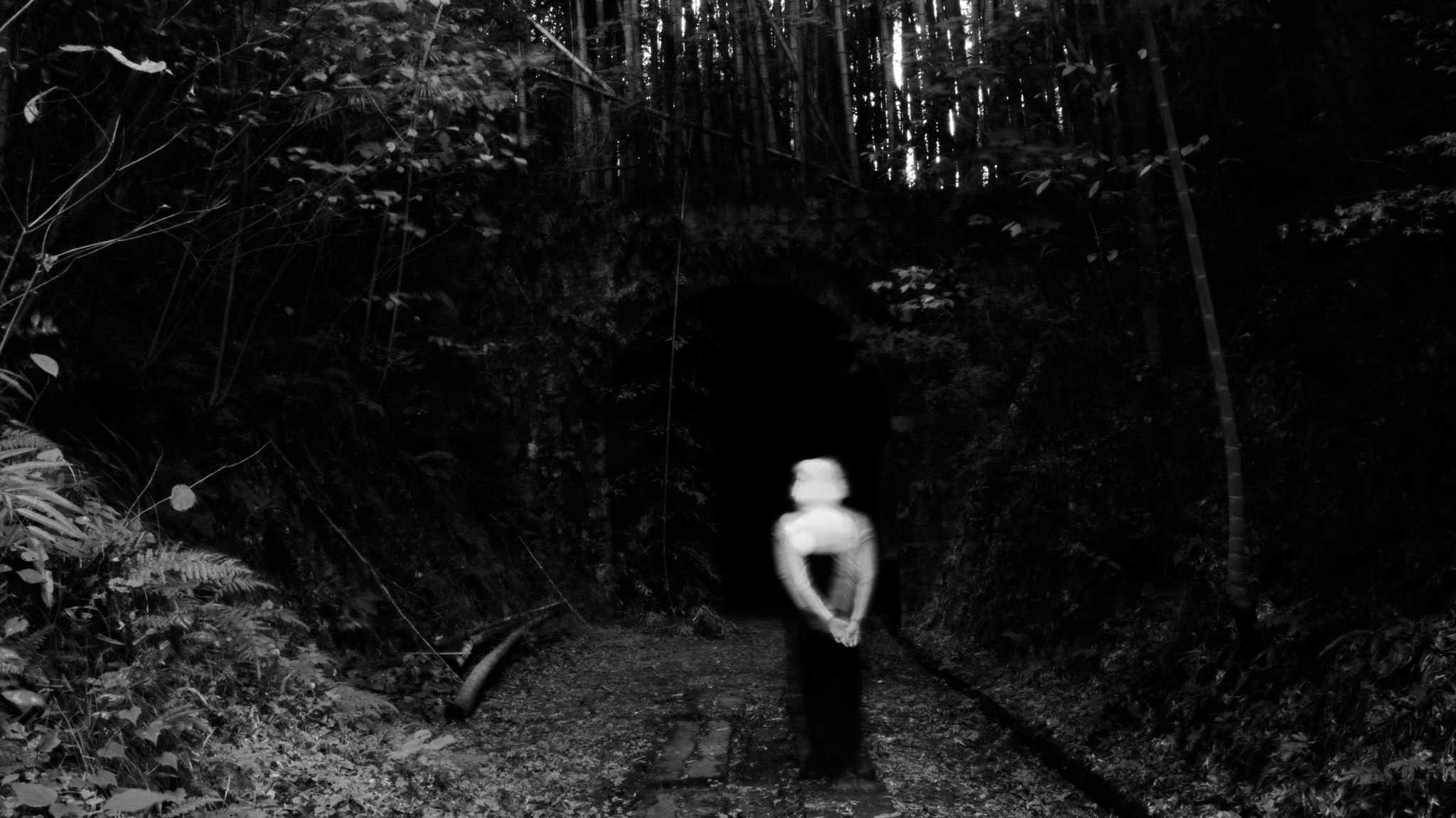
For the last meeting, I didn’t have a lot of my regular selection of landscapes, birds, or city windows to submit, so I decided to say to hell with it and include some selections from a recent photo shoot I did for creative purposes, taken without any consideration for the club meeting at all. My wife and I went out to an abandoned railway tunnel and she posed for me to take some, well, ghost pictures. I set the shutter for a long exposure and she would move in front of the tunnel to create blurred, spectral images. After a bit of post processing in black and white, they really worked. Some of them were downright chilling. Which is exactly what I wanted.
I had a vision, took action, and achieved that vision. That felt good.
I submitted three of the series, and when the teacher saw them, he immediately and emphatically got it. He took them as a set and understood what I had been trying to achieve without any hesitation. Not only did the set get chosen as the top submission for the month, he recommended I enter them into the Yamaguchi Prefectural arts competition next spring. In the two years I’ve been attending these club meetings, that’s the first time he’s made such a specific, and emphatic, recommendation.
Which sounds, to me, like someone who knows the topic deciding that something I created is art. That felt really good.
Now, I know what you’re probably thinking. “Show us the goods! Where’s this art at?!” And I’d love to show you the pictures, but I was specifically told not to publish them anywhere yet because that could disqualify them from competitions. Which, I mean, if this guy who actually judges photography competitions thinks I have a chance, who am I to argue?
What I can do is show one of the series rejects, which gives a sense of the mood but wasn’t quite what I was aiming for.
Even now, I can see what’s wrong with it… The hands are too clear, the posture carries the wrong emotion, and the hat distracts. But it’s close. And like I said, the sense is there. Maybe this one isn’t art, but hey, who am I to say?





 Jim Rion - Translator & Writer